Check out our Grand National Runners A-Z Guide or our Grand National Runners hub with star ratings to help you find the horse to back.
What Is the Maximum Field Size for the Grand National?
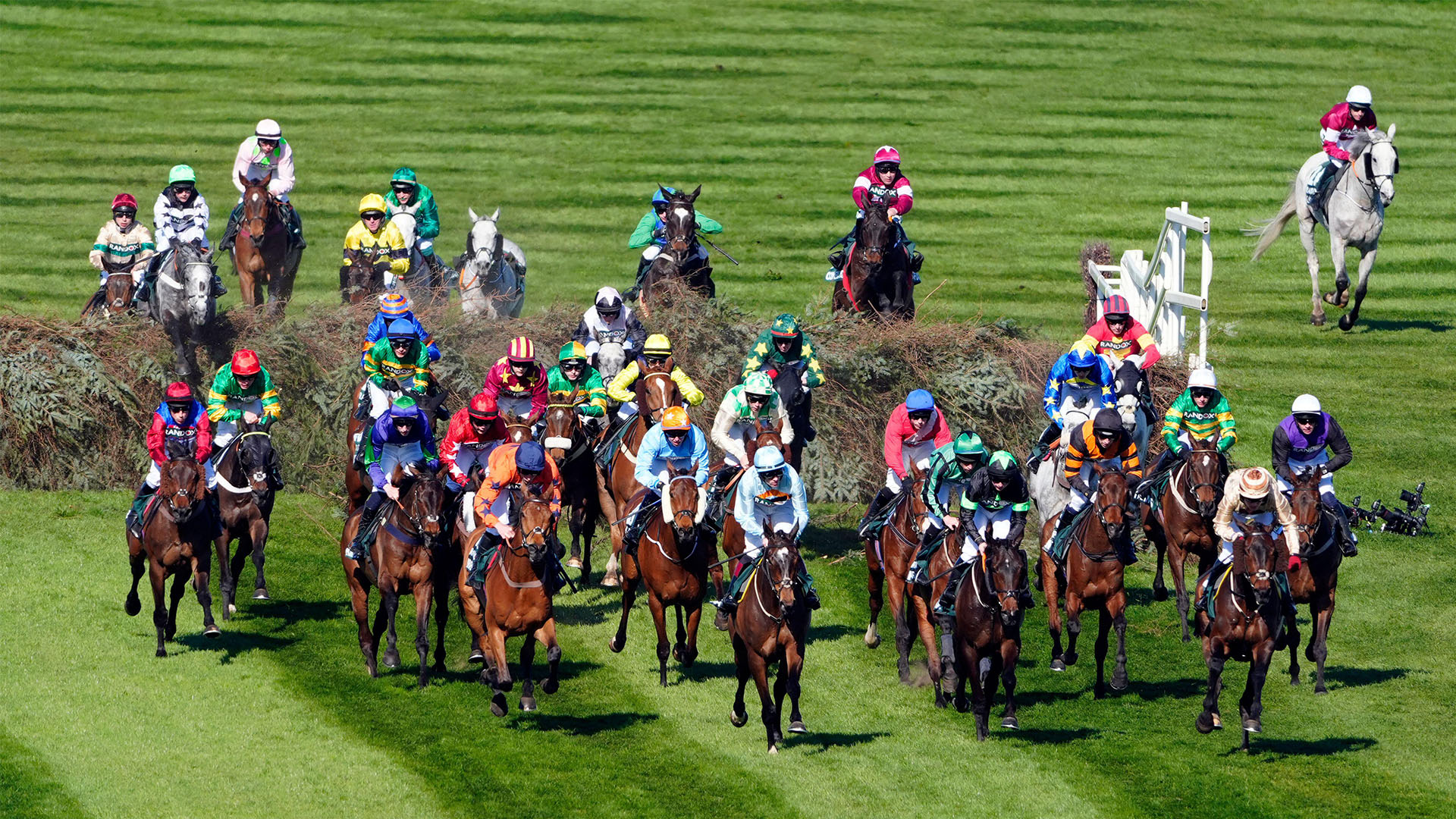
The maximum number of runners is 34 for the 2026 Grand National. This reduced limit was introduced to improve early-race safety by:
- Increasing space between horses approaching the first few fences
- Reducing bunching at key early obstacles
- Minimising the likelihood of fallers caused by traffic rather than jumping errors
Prior to this, the limit was 40 runners, a level that had been in place for decades. The drop to 34 is one of the most significant modern regulatory changes to the race.
Sky Bet Exclusive
GET £5 IN FREE RACING BETS
WHEN YOU BET £10
CLAIM OFFER HERENew customers only. Eligibility restrictions. Further T&Cs apply.
Why the Field Size Was Reduced
The decision to lower the maximum field came after a comprehensive safety review, with the following goals:
- 1. Less congestion approaching the first fence
- 2. Improved visibility for jockeys across the field
- 3. More consistent spacing throughout the early stages
- 4. Lower risk of chain-reaction incidents
These changes were supported by refined fence designs, a moved start position, and updated race-day procedures.
How Horses Qualify for the Grand National
The race is a Premier Handicap ran over 4¼ miles, and qualification requires a combination of official ratings, experience, and entry procedures. Key criteria include:
Minimum Official Rating
A horse must hold a rating of 125 or higher to be considered.
Proven Jumping and Distance Attributes
Aintree’s National fences require:
- Experience over regulation fences
- Stamina shown at 3 miles or further
- Consistent completion record
These factors strongly influence a trainer’s decision to enter.
Initial Entries
Initial entries typically open in late January or early February, with around 90–110 horses usually put forward.
Handicap Weights
Weights are released in February, after which some trainers reassess whether their horse is suited to the assignment.
The Grand National Entry Timeline
The process unfolds across several weeks:
Initial Entry Stage
- Horses are entered and assessed for eligibility.
- Numbers at this stage can exceed 100.
Weights Announcement
Once weights are published, connections can decide whether to proceed, especially if they feel conditions or the handicap mark are unfavourable.
Scratchings Stages (Two Major Cuts)
Numbers are reduced through set deadlines:
- First scratchings stage: Usually leaves around 70–80 horses.
- Second scratchings stage: Typically narrows the group to around 50–60.
Five-Day Declarations
At this point, the list drops further as connections make final decisions based on ground, fitness, or form.
Final 48-Hour Declarations
This confirms the 34-runner field, with a small number of reserves named (usually up to four).
Do Reserves Still Get Into the Grand National?
Reserves can run in the Grand National, but only under specific circumstances.
- Reserves are allowed to replace non-runners up to 1pm the day before the race.
- After this point, the field is fixed even if further withdrawals occur.
- Aintree has adopted this rule to avoid late chaos in betting markets and broadcast graphics.
Reserves do not always gain a run; it depends entirely on withdrawals within the permitted window.
What Causes Horses to Withdraw?
There are several common reasons a horse might come out of the race:
- 1. Ground Conditions Trainers may withdraw if the going becomes significantly softer or faster than expected.
- 2. Injury or Setback Given the size of the task, any minor issue may justify precautionary withdrawal.
- 3. Unsuitable Weight Once weights are locked, a horse cannot be rehandicapped; connections sometimes decide the burden is too great.
- 4. Tactical or Seasonal Decisions
A trainer may redirect a horse to a different spring target if form or preparation changes. These decisions ensure that only horses in the right condition line up on the day.
How Many Horses Usually Run?
Even with a maximum of 34, the actual number of runners may be slightly below this if late withdrawals occur without eligible reserves. Typical modern fields:
- Pre-2024: Usually a full 40
- 2024 onward: Often 32–34
The expectation for 2026 remains a full 34-runner line-up, given the depth of staying chasers in training.
How Field Size Affects the Race Dynamics
The reduced field size has already been reflected in:
- More Even Early Positioning – Fewer runners ease the funnel into the first six fences.
- A Smoother Race Rhythm – The pack spreads more naturally, benefiting both experienced stayers and hold-up types.
- Lower Chance of jumping interference – Less traffic means fewer sudden slowdowns that can lead to interference.
- More Predictable Pacing – Jockeys report clearer sightlines and safer jumping around the first circuit, as their horse gets into a vision.
These subtle shifts enhance both safety and competitive integrity.
Summary: How Many Horses Run in the Grand National?
- Maximum field size: 34 runners
- Reduced from 40 to improve early-race safety
- Horses must meet strict entry and rating criteria
- Scratchings and declaration stages narrow the field from 100+ initial entries
- Reserves may replace non-runners until the day before the race
- The 2026 Grand National is expected to attract a full-sized field












.jpg)



.jpg)