Check out our Grand National Runners A-Z Guide or our Grand National Runners hub with star ratings to help you find the horse to back.
Understanding the Grand National course is essential for both bettors and racegoers, as each fence presents its own difficulty and can influence the outcome of the race. We take a look at the notable jumps, their difficulty ratings, and the challenges horses and jockeys face.
Paddy Power RACING OFFER
GET £5 IN FREE BET BUILDER BETS WHEN YOU PLACE A £10 BET ON RACING
CLAIM OFFERNew customers only. T&Cs apply. 18+.
The Grand National Course Overview
- Distance: 4 miles 2½ furlongs (6.907 km)
- Fences: 30, including 16 on the first circuit and 14 on the second
- Field size: Up to 34 runners
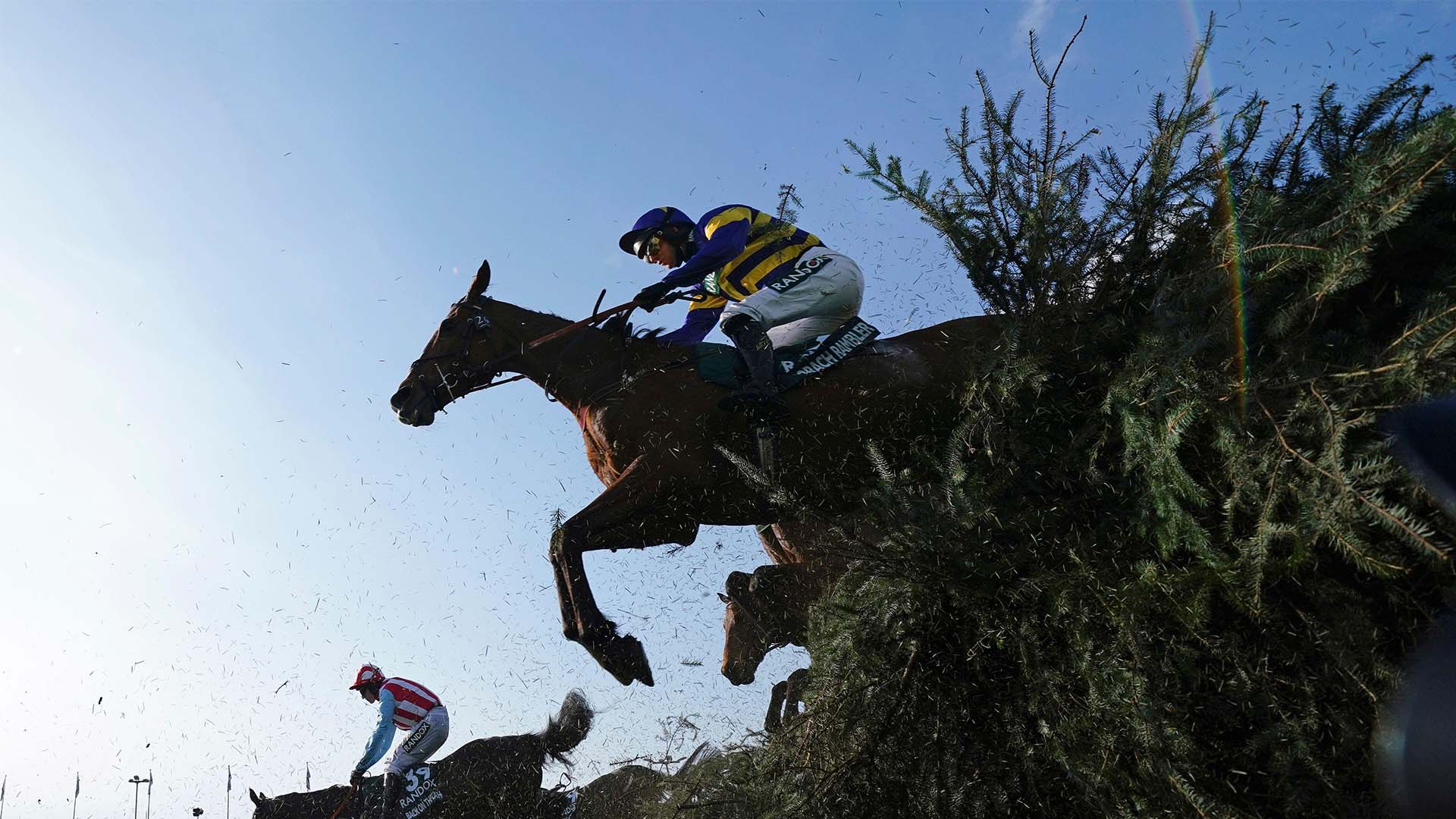
Aintree’s fences are larger and more demanding than standard National Hunt obstacles, making experience and stamina critical.
Key Fences and Challenges
Becher’s Brook
Location: Fence 6 on the first circuit, 22 on the second
Difficulty: High
Challenge: The landing side is lower than the take-off, creating a deceptive drop and a unique challenge that isn’t seen in regular steeplechases.
The Chair
Location: Fence 15 on the first circuit, 30 on the second
Difficulty: Very high Challenge: A large fence with a 6-foot open ditch on the landing side and also is the highest fence in the race.
Canal Turn
Location: Fence 8 first circuit, 24 second
Difficulty: Medium-high
Challenge: Requires a sharp 90-degree turn immediately after the jump. Positioning is crucial to avoid crowding and interference.
Valentine’s Brook
Location: Fence 9 first circuit, 25 second
Difficulty: High Challenge: Similar to Becher’s Brook with a drop on landing; stamina and jumping technique are vital.
Foinavon Fence (23rd)
Location: Fence 23
Difficulty: Medium
Challenge: Named after the 1967 winner Foinavon, this fence gained infamy after it’s namesake was the only horse to successful jump it in 1967.
Other Notable Fences
Water Jump (14th) – Adds an extra challenge to stamina and balance.
Open Ditches – A type of jump seen in plenty of chases across the season, but the total number really tests techinique
Difficulty Ratings & Tactical Considerations
High Difficulty: Becher’s Brook, The Chair, Valentine’s Brook
Medium Difficulty: Foinavon, Water Jump
Strategic Importance: Horses must conserve energy for the later fences, especially those with a steep drop or sharp turn. Jockeys must balance pace, positioning, and jumping precision.
Misjudging even one fence can compromise finishing chances.
Course Challenges for Horses
- Stamina test: The long distance demands horses maintain rhythm and energy.
- Jumping accuracy: The different fences provide a unique challenge for both horse and jockey to pass
- Crowd navigation: Large fields require tactical positioning; horses trapped mid-field may struggle.
- Mental focus: Horses must stay alert despite noise, obstacles, and crowding.
Key Takeaways
- Certain fences, like Becher’s Brook and The Chair, are frequent turning points in the race.
- Understanding the course can help identify each-way value and potential shocks.
- Understanding where your horse is likely to be positioned can be key, a horse near the front at the Canal Turn gets a clearer sight of the fence compared to those in the pack.
- The Aintree course is as famous as the Grand National itself. From the deceptive drop of Becher’s Brook to the sharp turn at Canal Turn, each fence provides unique challenges.
For bettors, knowledge of the fences, difficulty ratings, and tactical demands can enhance your understanding of the race and inform smarter bets for the 2026 Grand National.












.jpg)



.jpg)