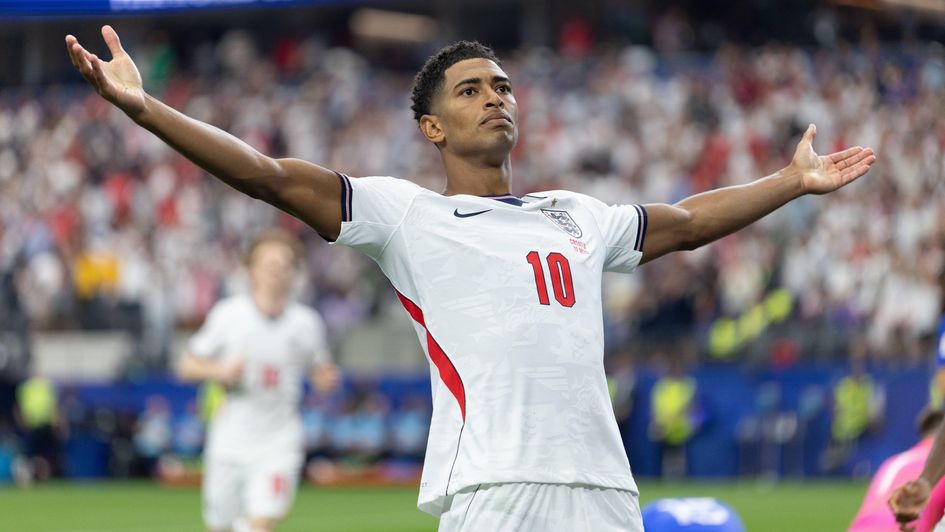
There is an argument that this England side are a little worse than the ones who came before them. Not dramatically. Not fatally. But enough that it matters.
- Published prior to the knockout stage of the World Cup
The defence has looked vulnerable. The midfield has not always controlled games in the way Thomas Tuchel would like. Harry Kane remains elite, but at 32 there are fewer moments when he can simply bulldoze opponents into submission.
England topped Group L with seven points, but the goalless draw against Ghana and long spells of frustration against Panama were reminders that this is not a side capable of steamrolling everyone in its path.
In fact, England's greatest strength is no longer the collective. It is the individual.

That feels like an unusual thing to say about a national side that has spent the better part of a decade building its identity around depth, balance and togetherness, but this England squad is different to the ones that reached the semi-finals of the 2018 World Cup and Euro 2020, or the final of Euro 2024.
There are more obvious flaws.
But the biggest X-factor in their favour is that they have Jude Bellingham at the peak of his powers.
That is not simply because he is England's best player, although he probably is. It is because he increasingly resembles the kind of footballer around whom World Cups are won.
Every successful tournament seems to be defined by one or two players capable of dragging their team through moments when systems stop working and collective superiority disappears.
Think Diego Maradona in 1986, Zinedine Zidane in 1998, Andres Iniesta in 2010 or Lionel Messi in 2022.
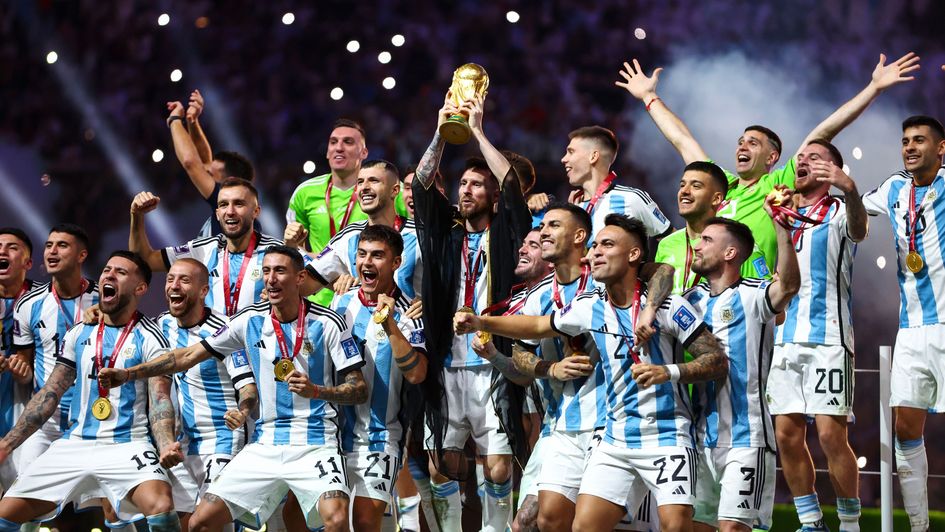
Those sides all contained outstanding supporting casts, but each also possessed an individual capable of deciding matches almost through force of personality. England may finally have their own version.
The group stage has already offered two reminders. England endured a gripping yet error-strewn first half that ended with the two sides deadlocked at 2-2. Then Bellingham burst into life early in the second period, driving into the penalty area to score the goal that transformed the contest.
The Panama game followed a similar pattern. England monopolised the ball but struggled to prise open a compact defence until Bellingham once again supplied the breakthrough before creating Kane's late goal to seal victory and top spot in the group.
Neither game was won purely because of Bellingham, but both were unlocked by him.
That distinction matters because knockout football is rarely about producing flowing, dominant performances from first whistle to last. More often, it is about surviving long periods of frustration before one player produces the decisive moment.
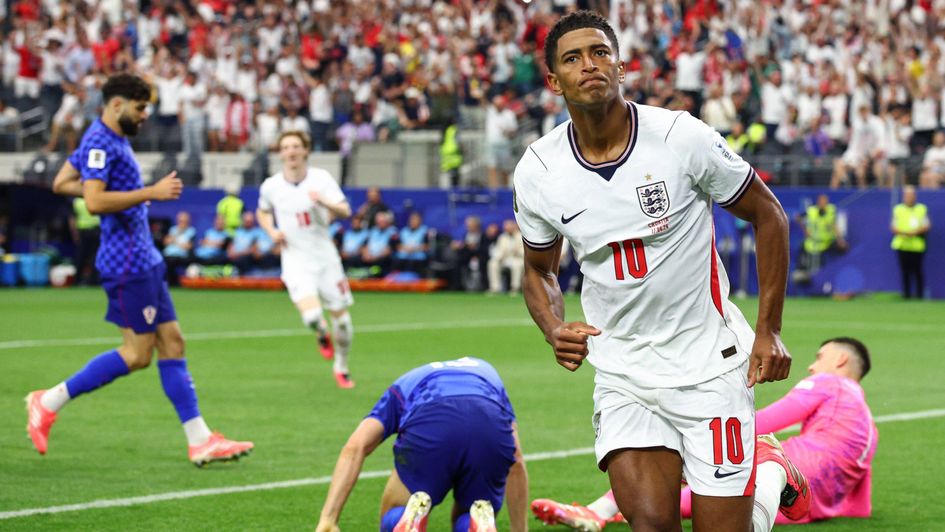
Few players in world football are better equipped to do that than Bellingham because his game has become remarkably complete over the past three years.
His evolution at Real Madrid has been one of the most fascinating tactical stories in European football.
At Borussia Dortmund, Bellingham established himself as arguably the game's finest modern No. 8. He covered extraordinary distances, won duels, progressed the ball through midfield and attacked the penalty area when opportunities presented themselves, but he remained fundamentally an all-action central midfielder.
Carlo Ancelotti saw something more.
During Bellingham's first season in Madrid, he was deployed as a No.10 behind split strikers Vinicius Junior and Rodrygo. Rather than building attacks from deep, he repeatedly crashed into the spaces between centre-backs, arriving late into the box and becoming Madrid's primary goalscoring threat for much of the campaign.
It represented a dramatic shift in responsibility, and Bellingham embraced it to such an extent that he finished the season with the best scoring return of his career.
The arrival of Kylian Mbappe inevitably altered Madrid's structure. Bellingham has since spent much more time operating deeper, helping control games in Madrid's midfield rather than acting as a second striker. His goal tally has fallen, but his influence has not.
If anything, he has become an even more rounded footballer, capable of dictating possession one moment before driving 60 yards to support an attack the next.
That adaptability gives Tuchel enormous freedom.

England can ask Bellingham to drop alongside Declan Rice during build-up, press aggressively from midfield, operate behind Kane or arrive in the box as an extra forward depending on the demands of each match.
Few elite players perform all those roles naturally. Even fewer can switch between them during the course of 90 minutes without disrupting the team's balance.
It also explains why his England role often looks more advanced than his current one at Madrid. Tuchel understands that, while Bellingham can solve problems almost anywhere on the pitch, the closer he is to the opposition penalty area, the greater the chance he decides the game.
Recent history suggests he relishes exactly those moments.
His dramatic overhead kick against Slovakia rescued England at Euro 2024 when elimination seemed certain. He has scored decisive goals in El Clasico, produced commanding performances in Champions League knockout ties and repeatedly delivered when the pressure has been greatest.
There is now enough evidence to conclude that this is not coincidence. Bellingham has developed an unusual knack for recognising when matches require somebody to seize control.
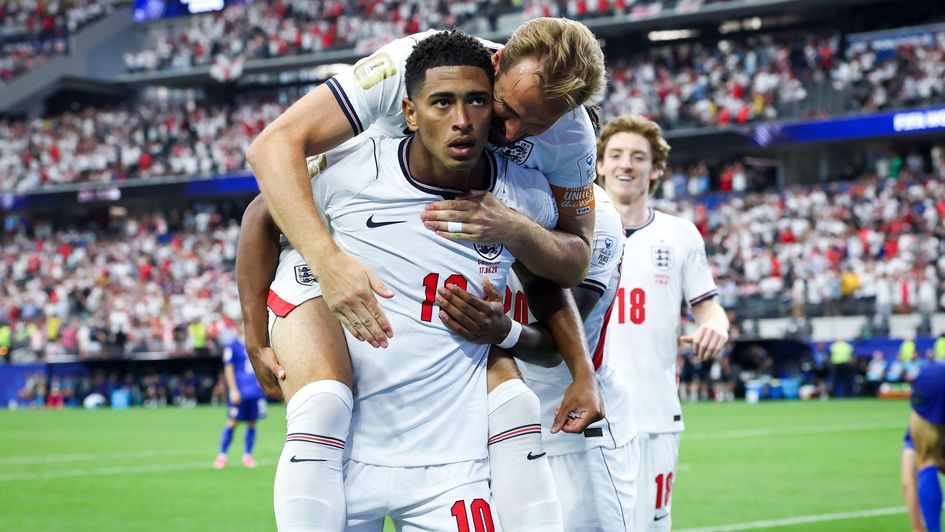
That quality could prove especially valuable against DR Congo.
England will be favourites in the Round of 32, but this is unlikely to become an open, expansive contest.
Sebastien Desabre's side have reached the knockout stages through discipline, organisation and defensive resilience, and they will almost certainly look to frustrate England before exploiting opportunities on the counter-attack.
It is precisely the sort of game that has caused England problems in recent tournaments.
The encouraging aspect for Tuchel is that England have already experienced similar tests in this competition. Ghana and Panama both defended deep, restricted space and challenged England to find solutions. One match ended in frustration. The other ended because Bellingham produced the moment that nobody else on the pitch could.
That is ultimately why England should travel into the knockout rounds with genuine optimism despite their imperfections.
This may not be the deepest squad the Three Lions have taken to a major tournament in recent years. But international football has always had a habit of rewarding teams that possess the tournament's defining individual.
Bellingham has the makings of being that man.
More World Cup content from Sporting Life
- World Cup betting guide
- Group A: Mexico; South Africa; South Korea; Czechia
- Group B: Canada; Bosnia; Qatar; Switzerland
- Group C: Brazil; Morocco; Haiti; Scotland
- Group D: USA; Paraguay; Australia; Turkiye
- Group E: Germany; Curacao; Ivory Coast; Ecuador
- Group F: Netherlands; Japan; Sweden; Tunisia
- Group G: Belgium; Egypt; Iran; New Zealand
- Group H: Spain; Cape Verde; Saudi Arabia; Uruguay
- Group I: France; Senegal; Iraq; Norway
- Group J: Argentina; Algeria; Austria; Jordan
- Group K: Portugal; DR Congo; Uzbekistan; Colombia
- Group L: England; Croatia; Ghana; Panama
- Outright preview
- Golden Boot preview
- Golden Ball preview
- FREE World Cup wallchart
- FREE World Cup sweepstake kit
- World Cup: All you need to know
- Fixtures, results and live scores
Safer gambling
We are committed in our support of safer gambling. Recommended bets are advised to over-18s and we strongly encourage readers to wager only what they can afford to lose.
If you are concerned about your gambling, please call the National Gambling Helpline / GamCare on 0808 8020 133.
Further support and information can be found at begambleaware.org and gamblingtherapy.org.