Why did Tyson Fury come out of retirement again?
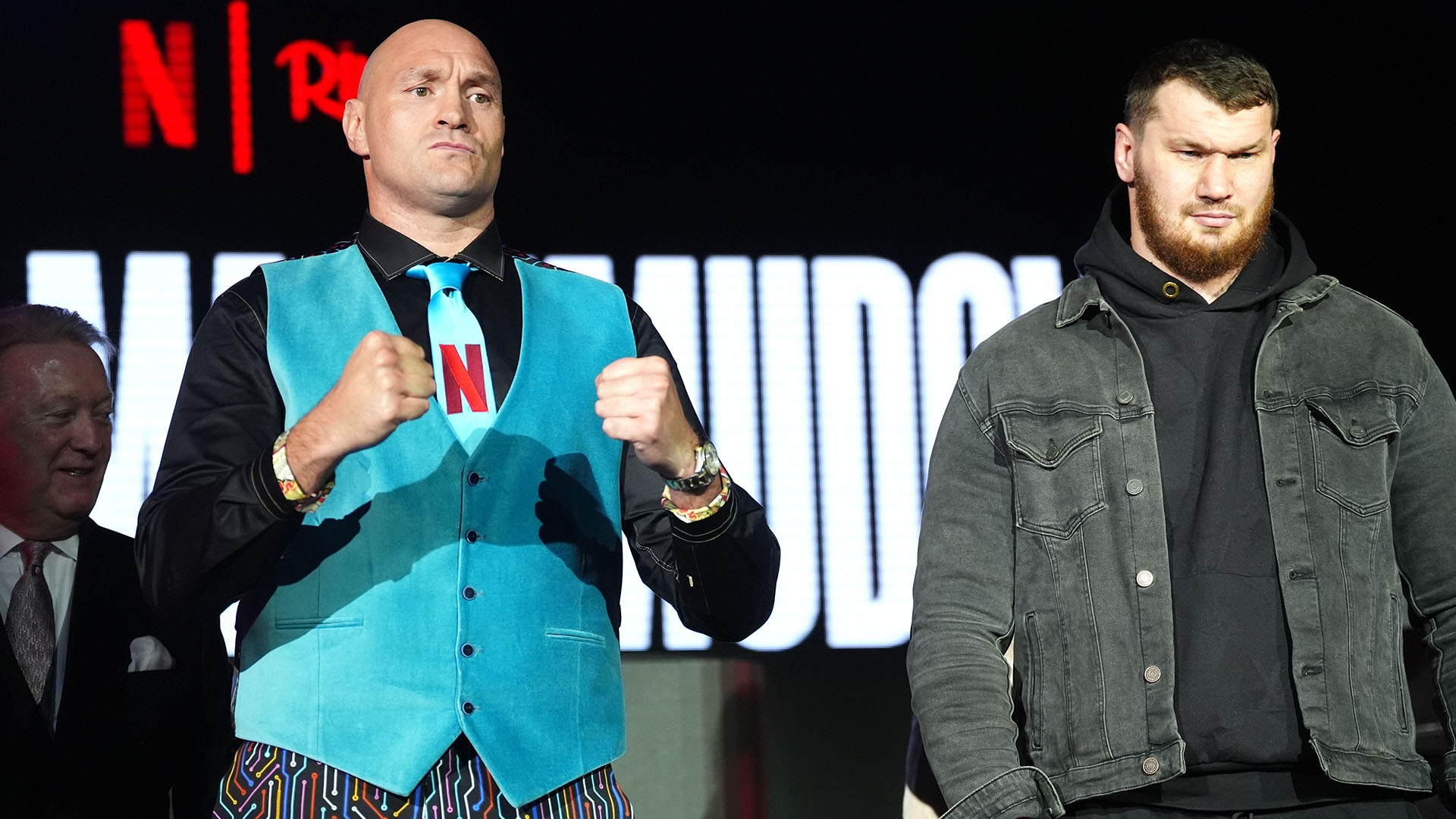
Tyson Fury vs Arslanbek Makhmudov marks the latest and perhaps most intriguing return of a fighter whose career has been defined as much by his absences as his achievements. On Saturday 11 April 2026, the Tottenham Hotspur Stadium will witness the fifth professional comeback of the self-styled ‘Gypsy King,’ a man who has spent the last year insisting his days in the squared circle were over.
After the definitive nature of his two-fight series with Oleksandr Usyk in 2024, many observers believed the physical and mental toll of a twenty-year career had finally reached its natural conclusion. However, the announcement of this twelve-round heavyweight contest suggests that the pull of the ring remains an irresistible force for the 37-year-old.
Sky Bet Exclusive
50/1 TYSON FURY TO WIN
CLAIM OFFER HERENew customers only. Eligibility restrictions. Further T&Cs apply.
The Psychological Pull of the Heavyweight Throne
To understand why Fury has opted to end his fifteen-month hiatus, one must first look at the psychological landscape of the heavyweight division. Historically, the greatest champions have found the transition to civilian life notoriously difficult. For Fury, a man whose identity is inextricably linked to being the "lineal" champion, the reality of life without a training camp appears to have been a significant factor. In interviews conducted in early 2026, Fury alluded to the "void" left by competition, stating that the routine of retirement lacked the high-stakes pressure he requires to remain disciplined.
The decision to return is not merely about staying busy; it is about the resolution of a narrative. The twin defeats to Usyk—the first undisputed heavyweight champion of the four-belt era—left a blemish on a record that was previously defined by invincibility.
For a fighter of Fury’s ego and stature, ending a career on the back of successive points losses was likely a bitter pill to swallow. This comeback against Makhmudov represents a calculated attempt to reclaim the "winning feeling" and prove that his 2024 form was a result of stylistic difficulty rather than physical decline.
The Makhmudov Factor: Why This Opponent?
The choice of Arslanbek Makhmudov as the comeback opponent is particularly telling. Known as "The Lion," Makhmudov is a 6’5” powerhouse with a record of 21-2 and 19 knockouts. He is not a "soft" touch or a traditional "tune-up" opponent. By selecting a fighter with genuine knockout power, Fury is sending a message to the division. He is not looking for an exhibition; he is looking for a stern test of his remaining reflexes.
Tactically, Makhmudov provides the perfect foil for a returning Fury. The Russian-born fighter is a traditional, heavy-handed "slugger" who relies on physical intimidation and early stoppages. For Fury, this is a technical puzzle he has solved many times before, most notably against Deontay Wilder. If Fury can navigate the danger and outbox a man of Makhmudov’s physical stature, he immediately re-enters the conversation for the top three spots in the global rankings.
Tactical and Technical Analysis of the Return
From a technical perspective, this version of Tyson Fury is expected to return to the "SugarHill" Steward fundamentals that saw him dominate the early 2020s. In the Usyk fights, Fury often looked cluttered, struggling to find the right balance between his traditional elusive movement and the aggressive, front-foot style he adopted later in his career. The year away has likely allowed his body to recover from the chronic injuries that hampered his 2024 camps, specifically the rib and eye issues that caused multiple delays.
Key Technical Considerations:
Distance Management: Fury must use his 85-inch reach to keep the shorter, more compact Makhmudov at bay.
Feinting and Psychology: Makhmudov has historically struggled when opponents do not stand still. Fury’s elite-level feinting will be used to freeze the Russian’s output.
Clinch Work: Expect Fury to use his 270lb frame to lean on and exhaust Makhmudov in the middle rounds, a tactic that has become a staple of his veteran years.
Potential Scenarios and Division Impact
There are three primary scenarios that explain the timing of this return. The first is the "Legacy Correction." Fury wants to ensure his final professional act is a victory, potentially setting up a long-rumoured domestic blockbuster with Anthony Joshua in late 2026. The second is the "Physical Reset." Fury may believe that at 37, he still has one final peak left in him, and the year of rest has acted as a "fountain of youth" for his central nervous system.
The third scenario is more pragmatic: the "New Era of Exposure." With the bout being broadcast globally via Netflix and backed by Sela’s Whisper production team, the commercial scale of this event is unprecedented. For a fighter who thrives on the grandest stages, the opportunity to be the face of a new era in sports media was likely too significant to ignore.
Expert Reasoning and Conclusion
The consensus among boxing analysts is that Fury’s return is motivated by a blend of competitive vanity and the lack of a suitable replacement for the "high" of championship boxing. While the heavyweight landscape has shifted—with younger talents like Daniel Dubois and Jared Anderson making strides—the "Gypsy King" remains the most significant commercial draw in the sport.
Ultimately, Tyson Fury has come out of retirement because the story of his career felt unfinished. The path to Makhmudov is a path toward self-validation. Whether his body can still execute the commands of one of the greatest boxing minds in history remains the primary question. If he succeeds on April 11, the retirement of 2025 will be remembered merely as a long training camp for his final act. If he fails, it will be the definitive proof that the clock has finally run out on one of the most remarkable careers in the history of the heavyweights.





.jpg)
.jpg)


.jpg)


.jpg)

.jpg)


.jpeg)