
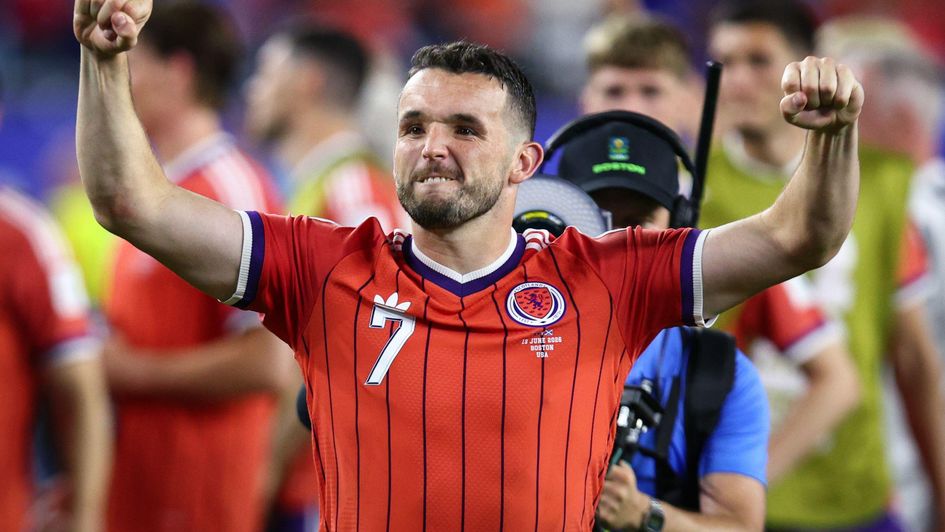
For 36 years, Scotland waited for a World Cup victory. When it finally arrived in Boston on Saturday night, it was never likely to be pretty.
Steve Clarke's side opened their 2026 World Cup campaign with a hard-fought 1-0 win over Haiti courtesy of John McGinn's first-half strike, securing Scotland's first victory at football's biggest tournament since defeating Sweden at Italia '90.
The celebrations at full-time reflected the significance of the moment. The performance itself, however, suggested a team carrying the weight of history on its shoulders.
Scotland looked tight. Understandably so. For all the progress made under Clarke, this was still a nation returning to the World Cup after a 28-year absence. The players knew the importance of the occasion. They also knew Haiti represented the fixture they simply had to win.
The result was a display that often lacked fluency. Scotland created opportunities, with Scott McTominay striking the post before McGinn's deflected effort broke the deadlock, but there was an anxious edge to much of their work. Haiti remained competitive throughout and ensured there would be no comfortable final half-hour for the Tartan Army.
Yet perhaps that nervousness should now be viewed as a positive. The pressure game is over.
Scotland entered the tournament knowing Haiti were the most realistic source of three points in a daunting group containing Brazil and Morocco. Failure to win would have left Clarke's side staring down the barrel of elimination before the tournament had properly begun.
The victory has changed everything.
The expanded 48-team format has altered the mathematics of qualification. As well as the top two teams in each group, eight of the 12 third-placed sides advance to the knockout stage.
In practical terms, three points on the board after one game places Scotland in an extremely strong position. Another point could conceivably be enough. A narrow defeat and a respectable goal difference might even keep them in contention heading into the final round of fixtures.
That reality should liberate them.
Scotland's greatest strength under Clarke has never been dominating opponents. It has been frustrating them. This team is at its best when expectations are modest and the tactical picture is clear. They are more comfortable being the side that works harder, defends deeper and attacks with purpose rather than possession.
The underdog role suits them.
Against Haiti, they were favourites. Against Morocco and Brazil, they will not be. That is why the next two matches may actually fit Scotland better than many observers assume.
Take Morocco first. The 2022 World Cup semi-finalists arrived in North America with plenty of hype and justified some of it in their opening 1-1 draw against Brazil. Ismael Saibari's superb finish gave them the lead and they deserved their point. Yet they hardly looked unbeatable. Brazil created chances, Morocco had moments of vulnerability and the contest felt more like an evenly matched game between two good sides than a meeting of genuine contenders.
More importantly from Scotland's perspective, Morocco's strengths are familiar. They are organised, technically accomplished and dangerous in transition. Clarke has spent years preparing Scotland for exactly those kinds of opponents in European qualifying and Nations League football.
Then there is Brazil. Mention the name and Scottish supporters instinctively think of yellow shirts, samba football and the overwhelming talent of Ronaldo, Rivaldo and co. from their last World Cup meeting in 1998.
The reality of this Brazil side may be rather less intimidating.
The draw with Morocco exposed several issues. Carlo Ancelotti admitted afterwards that he was dissatisfied with his team's start and concerned by how often they lost possession and individual duels. Vinicius Junior produced a moment of brilliance to rescue a point, but Brazil spent large periods looking vulnerable against a well-drilled opponent.
That does not mean Scotland will suddenly become favourites when the teams meet in Miami. Far from it. Brazil remain stacked with elite-level players and possess match-winners across the pitch.
But fear can be a self-fulfilling prophecy at major tournaments. The version of Scotland that appeared against Haiti looked burdened by expectation. The version that has produced some of Clarke's best results over recent years has been driven by defiance.
Nobody expects them to beat Brazil. Plenty will assume Morocco have too much quality. Good. That is precisely where Scotland want to be.
The biggest achievement of the Haiti victory may not be the three points themselves. It may be the freedom those points provide. Scotland no longer need to chase qualification. They no longer need to worry about making the tournament a success. In all likelihood, they are already within touching distance of the knockout rounds.
From here, every match becomes an opportunity rather than an obligation.
And if Brazil and Morocco thought they were facing a nervous Scotland team this week, they may soon discover that the far more dangerous version is the one with nothing to lose.
More World Cup content from Sporting Life
Group previews
- Group A: Mexico; South Africa; South Korea; Czechia
- Group B: Canada; Bosnia; Qatar; Switzerland
- Group C: Brazil; Morocco; Haiti; Scotland
- Group D: USA; Paraguay; Australia; Turkiye
- Group E: Germany; Curacao; Ivory Coast; Ecuador
- Group F: Netherlands; Japan; Sweden; Tunisia
- Group G: Belgium; Egypt; Iran; New Zealand
- Group H: Spain; Cape Verde; Saudi Arabia; Uruguay
- Group I: France; Senegal; Iraq; Norway
- Group J: Argentina; Algeria; Austria; Jordan
- Group K: Portugal; DR Congo; Uzbekistan; Colombia
- Group L: England; Croatia; Ghana; Panama
Outright previews
Safer gambling
We are committed in our support of safer gambling. Recommended bets are advised to over-18s and we strongly encourage readers to wager only what they can afford to lose.
If you are concerned about your gambling, please call the National Gambling Helpline / GamCare on 0808 8020 133.
Further support and information can be found at begambleaware.org and gamblingtherapy.org.