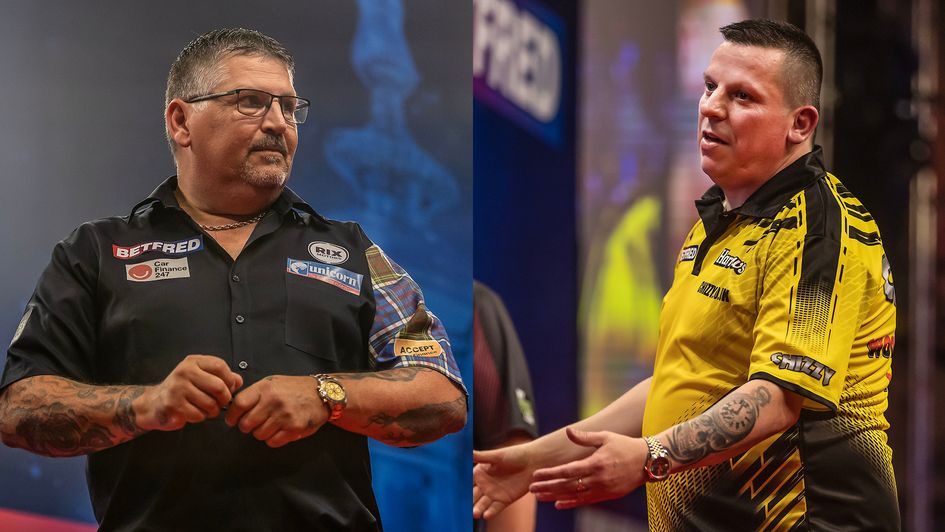
Paul Nicholson gives insight into what makes a supreme double-start darts player ahead of the World Grand Prix.
First-round fears
Every player is aware just how much the first round is a slippery slope due to it being best-of-three sets but from a fans perspective, that’s one of its charms and why the World Grand Prix is my favourite event after the World Championship.
With so many big names on the chopping block match after match, some people ask why the first round isn’t a longer format – but I think it’s more exciting like this.
WATCH: THE TOP 40 HIGHEST EARNERS IN DARTS HISTORY
I never had a problem with playing best of three but I know a lot who do because it punishes you dearly for a slow start – especially in a format that only appears once on the calendar.
You therefore have to look at players who have a good track record in this event and those who have experience of hitting the ground running from the very first match.
Debutants are hard to predict because we don’t know how they’ll find the format. The only time a player making their debut reached the final – apart from the inaugural edition - was Dirk van Duijvenbode so it’s obviously very hard to do.
Being a great finisher makes you a great starter?
Don’t assume that players with great checkout percentage stats this season are guaranteed to be better at hitting starting doubles.
Obviously it helps being confident on the outer ring but it is psychologically a different challenge. Pinning the double at the end of a leg tends to be when you get the most anxiety on a shot in a normal game of darts but starting a leg with one is a very different feeling.
It’s about rhythm, comfort and knowing what your strategy is.
Dave Chisnall is a very good starter and so is James Wade – even though his recent record in the event isn’t too great. But Rob Cross is a great example of someone who is a very good finisher who continually struggles with the double-start format.
Double troubles?
There are some players who can’t wait for the World Grand Prix because double-start is in their wheelhouse – whether that’s because of where they grew up or had it forced upon them when they played local darts.
I loved this event and actually wanted more double-start tournaments during the season as I grew up in the North-East where this format is played a lot locally.
However, for much of the UK and abroad, double-start is very unnatural for players because they just don’t play it, so when this comes around, many of them get found out.
Gerwyn Price came out and said he didn’t like double-start darts and then goes on and wins the tournament back in 2020 and has also finished runner-up – so that shows what he’s made of and how he evolved.
Game plans
The likes of Michael van Gerwen and James Wade have more experience of this event and the format so when it comes around, they always seem strong and unruffled.
They have that plan and know exactly what they’re going to do before they get up on stage.
Other players who don’t have a plan end up getting confused. Terry Jenkins once got up on stage, forgot it was double-start and went straight for treble 20!
I remember Mark Webster telling me how he used to prepare for this event. A month before it began he would spend hours on double top. Just double top.
Mervyn King would always go for double 16 and then straight up to treble 20, whereas I used to go double 16 and then to treble 19 because of the transition not being too far. My next visit I’d go up to treble 20s.
Players like us would therefore completely ignore the prospect of ever going for a nine-darter because the only way you can do that is starting on double top or the bull.
Dirk van Duijvenbode made his debut in 2020 but he had a plan that helped him go all the way to the final. He went for double 18s or double 16s – it was irregular, but it was a plan and it worked. If you don’t have one, you’ll be scrambled and panic.
The plan isn’t just your favourite double. What if your first dart blocks it? You need a second favourite double you are ready to go for without hesitation. Don’t look past two options because otherwise you’ll get confused. That’s what the debutants need to realise before they get up there.
It’s a great format and a real leveller, which is why I love watching it so much.
Darts: Related content
- Watch: Highest Prize Money winners in darts
- Is £1million for the world champion too much?
- 2025 Premier League Season
- 2025 PDC Darts Calendar
- How Littler won £1million in one season
- Should there be a Ryder Cup of Darts?
- Phil Taylor's crazy World Matchplay statistics
- What's easier, a nine-darter or a 147?
- Watch: Ranking the major winners in history
- Watch: Royal Rumble and other new tournament ideas
- Watch: How much do darts players earn?
- Watch: Is Luke Littler the next Phil Taylor?
- Watch: Building the perfect darts player
- Watch: How to become a darts professional
- How legends would fare today
- Troubles and triumphs
- Tournament ideas for darts
- 'What If' moments in darts
- Agony of missed match darts
- Good, Bad, Ugly: Nicholson on darts shirts
- Referees in darts
- Calling the shots in darts
- Weird actions in darts
- Hidden talents in darts
- Superstitions in darts
- Routes to glory
- Paul Nicholson's five darts drills
- Paul Nicholson's five mental tips
- Paul Nicholson's five practice games
- Worst losers in darts
- World number ones in darts
- Best players never to be number one
- Five characters in darts
- Do averages lie?
- Greatest Tournaments Ever
- Paul Nicholson's Ally Pally tales
- Watch all the Ally Pally nine-darters
- Players everyone hates to face
- Players everyone loves to face
- How to make it as a pro?
- How much money do players earn?
- Greatest darts rivalries
- Rivalries to cherish
- Be canny with counting
- Phil Taylor's greatest display
- Greatest World Championship displays
- World Cup of Great Darts performances
- Sky Bet's darts odds