How Lester Piggott's legendary career was recorded over five decades in the pages of Timeform's Racehorses annuals.
The first Timeform Racehorses annual came out in 1948, the year Lester Piggott rode his first winner. Over the course of the next fifty years or so, the publication’s writers would have plenty to say about the great jockey. The essay on Ardross, the dual Gold Cup winner who also provided him with his 4,000th winner on the Flat in Britain when successful in the 1982 Geoffrey Freer Stakes at Newbury, highlighted some of Piggott's outstanding qualities.
‘Piggott stands out today among British jockeys as Richards did in his prime and is the outstanding present-day personality in British racing, a brilliant jockey whose success has been enormous…Piggott has every attribute that a great jockey should possess: equable temperament and patience, exquisite hands and balance, first-class judgement of pace, consummate nerve, the ability to ride a strong finish and last but by no means least, an excellent appreciation of the form-book and a thorough comprehension of the peculiarities and racing characteristics of any horse he rides.
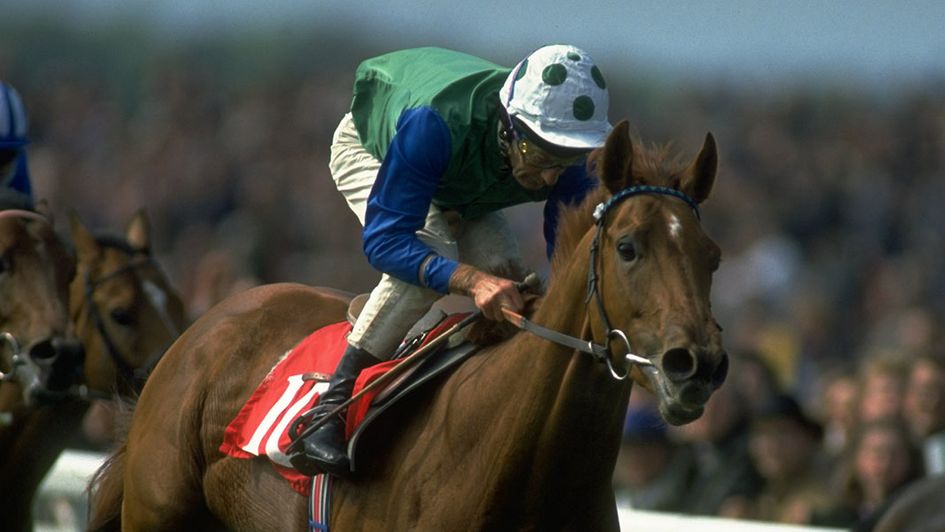
Among Piggott’s attributes, his ‘ability to ride a strong finish’ is what many will best remember him for, particularly on a couple of his Derby winners. First, Roberto’s essay in 1972 which described Piggott as ‘the strongest jockey in the country’ and then The Minstrel in 1977:
‘Anyone who saw the finish would find it difficult, in all conscience, to minimize the part Piggott played in making Roberto the winner. He well and truly lifted him home!’
‘Racing will be very much poorer when this brilliant, dedicated and most knowledgeable jockey decides to retire. No-one rides Epsom better or a finish stronger, and his handling of The Minstrel was typical of the man. In just the sort of race in which many have failed their mounts over the years, Piggott gave him every chance and brought every ounce out of him in a desperately tight finish. As Never Say Die, Crepello, St Paddy, Sir Ivor, Nijinsky, Roberto and Empery before him, The Minstrel held a position close to the leaders approaching the bottom of Tattenham Hill. The way he arrived there from the middle of the field was a joy to watch – beautifully balanced, no fuss, no check, no apparent effort from his jockey; very smoothly and gently, little by little until he was third behind the front-running Milliondollarman…Hard ridden, very nearly as hard as Roberto had been, The Minstrel went a neck up in the shadow of the post.’
But as the essay on Ardross made clear, there was much more to Piggott’s brilliance than having the strength to ‘lift one home’. That was evident on his first Arc winner, Rheingold, in 1973, the horse Roberto had beaten narrowly at Epsom the year before.
‘It was an excellent example of what is often described as ‘getting first run’ and should be described as making first run. Excellent because Piggott got everything out of Rheingold that was in him, not by hard riding, but by accurate judgement of the earliest moment at which he could make his effort and be sure that Rheingold would last home.’
And again on Alleged in the same race four years later, the great trainer in question being Vincent O’Brien:
‘The story of Alleged’s Prix de l’Arc de Triomphe takes less telling than some. In essentials it’s the story of a brilliant piece of riding on a horse possessing the exceptional qualities requisite to success, backed up by all the expertise of a great trainer. Not, for once, is it the account of a cut-throat charge or a fast-changing running order; and there are fewer hard-luck stories than usual to tell. The race was dominated by Piggott, who had the audacity to take his mount into the lead after only three furlongs or so, and by Alleged, who was turned out ready to run the race of his life, showing no sign of that hard battle for the St Leger three weeks earlier. Piggott set only a steady gallop…Then coming into the straight, Piggott pressed on. By this time those closest to him…were really stretching out, so there was no question of their jockeys being caught unawares by Piggott’s sudden spurt… Alleged blinded for speed Crystal Palace and Crow, the pick of those on his heels on the turn, having been given the best possible opportunity to do so by his jockey’s tactics helped by a lack of enterprise on the part of the riders on the proven stayers.’
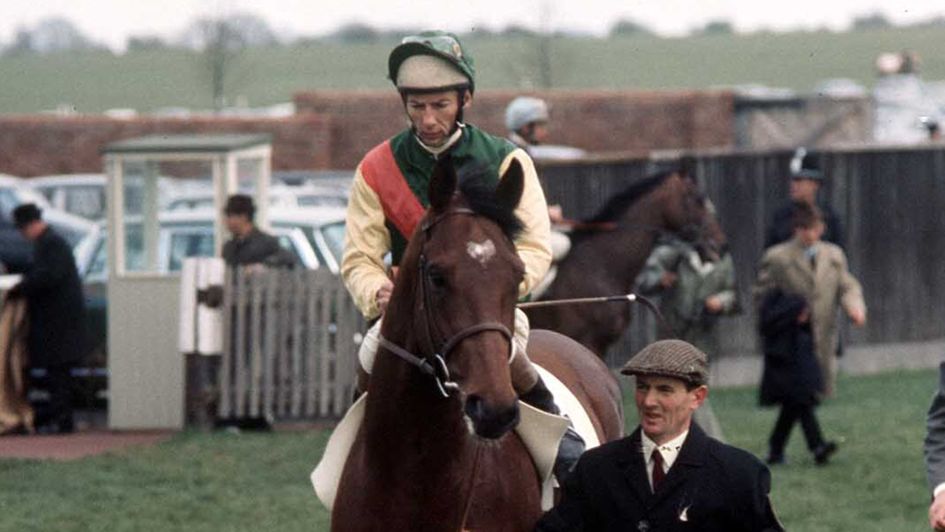
Petite Etoile’s essay in Racehorses of 1960 was an opportunity to discuss Piggott’s riding style:
‘Among the top-class sprinters who always gave the impression that they were winning with a lot more in reserve than in fact they had, we can recall in recent years Princely Gift and Right Boy, and among horses who stayed a mile and a half Primera and Petite Etoile. Besides their exceptional speed there is another factor common to these four horses. All were ridden regularly by Piggott. So it is reasonable to assume that Piggott’s style of riding has at least something to do with this impression. Piggott rides shorter than most jockeys nowadays, though on the other hand his hold on the reins is not as short as that of some Australian riders…Of course the seat favoured by Piggott is not the only important factor in his style. There is much more to jockeyship than that, and the sum total of Piggott’s attributes seem to us to have contributed in no small measure to Petite Etoile’s reputation for invincibility.’
There were occasions when even Piggott wasn’t above criticism in the Timeform annuals. Equally, though, the Timeform writers leapt to Piggott’s defence if they felt criticism of his riding was unjustified. That happened after another big race overseas, when the Maurice Zilber-trained Dahlia was beaten at odds on in the 1974 Washington International:
‘After Dahlia was beaten into third place by the French gelding Admetus and Desert Vixen, Piggott came in for criticism from the filly’s trainer for overdoing the waiting tactics. The American press, who have had some vitriolic things to say about Piggott’s riding in the past, took the same view of events as Dahlia’s trainer and were even more scathing in their criticism…We don’t blame Piggott for her defeat. Dahlia came from behind to win the race in 1973 and other horses have won the International from the position that Dahlia was in on the turn. Piggott produced her to have every chance inside the final furlong in spite of her losing ground when carried wide…Of the thousands of words spoken and written to try to explain Dahlia’s defeat at Laurel Park, those of Piggott seem the most appropriate to quote here “They can’t win all the time – they’re not machines you know”, he told baying reporters.’
On a lighter note, the essay on Son of Love in Racehorses of 1979 reported this famous incident involving Piggott on a ride in France:
‘The Grand Prix de Deauville provided the season with one of its lighter moments: Piggott rode African Hope into second place, but after dropping his whip more than a furlong from home he took that of [Alain] Lequeux, rider of Jeune Loup, who finished third, a neck behind African Hope; after crossing the line Piggott returned Lequeux’s whip with a polite “thank-you”. Lequeux and almost everyone else saw the funny side but the stewards were not amused and Piggott collected a twenty-day suspension for his action; the placings of African Hope and Jeune Loup were reversed.’
Piggott’s lengthy career still had some way to run but the final word can go to the essay on the last of his nine Derby winners, Teenoso in 1983:
‘The partnership of Teenoso and Piggott looked completely at ease at every stage of the Derby. Piggott gave his mount a superb ride, jumping him smartly out of the stalls and taking up a position among the leaders from the start, perfectly placed to avoid the scrimmaging that often takes place in a big Derby field after about two and a half furlongs, when the field comes back to the left-hand rail after negotiating the right-hand bend soon after the start…’
‘Lester Piggott demonstrated yet again why there is always a clamour for his services, particularly in the big races – and especially on Derby Day. He seems somehow to grow neither older nor less effective as the years go by – Teenoso was his thirtieth ride in the Derby – and his mastery of the Derby course in particular is complete. His great strength, demonstrated so effectively on Roberto and The Minstrel at Epsom, wasn’t called into play in 1983 but his handling of Teenoso was an object lesson in how to ride a proven stayer in the Derby. Piggott’s contribution to racing has been colossal and his place in the sport’s Hall of Fame is secure.’
Read more on Lester Piggott...
- Stars pay tribute including Frankie Dettori, Aidan O'Brien and John Gosden
- Cornelius Lysaght looks back on a man forever linked with Derby week
- Nick Robson's obituary on the racing colossus 'with an iron will to win'
- John Ingles profiles Lester Piggott's nine Derby winners
- Timeform recall record-breaking St Leger win on Commanche Run
- Keith Hamer tracks the key moments from a remarkable riding career
- Lester Piggott dies, aged 86