So our series of Cheltenham GOATS has come to an end... and we need to address the elephant in the room.
None of our writers wrote about Arkle.
Two reasons. Firstly, none of them were around at the time he was reimagining the possible, and secondly he sat outside the timeframe of the series.
But we acknowledge he has to be featured somehow, somewhere. He's the horse that remains the benchmark by which all future generations are measured; whose Timeform rating of 212 is head and shoulders above anything the modern generation has approached.
A special horse. So below Donn McClean writes about him - and Brough Scott talks about him. Here's the story of a true Cheltenham GOAT. The story of Arkle.

We’re back to iconic racing commentaries, we’re back to Sir Peter O’Sullevan.
“It’s Arkle on the stands side, Mill House on the far side. Coming up towards the line, and Arkle is holding him. Arkle going away now from Mill House. This is the champion, this is the best we’ve seen for a long time.”
As a wide-eyed child, when your grandfather regaled you with stories of Arkle, you wondered who this generation’s Arkle would be. And the answer has crystalised over the years: Arkle. There is only one. Peerless.
Himself, they called him. ‘Arkle, Ireland’, they wrote on postcards and letters, and the postman delivered. He changed the rules of racing in Ireland – one handicap if Arkle runs, a different one if he doesn't.
It took him a while to become Arkle. Just an average foal, said Dan Daly, head lad at Ballymacoll Stud, where Arkle was born, when he reflected on Arkle’s career.
By Archive, out of the chestnut mare Bright Cherry, he was sold by his breeder Alison Baker as a three-year-old for 1,150 guineas to Anne Duchess of Westminster, who put him into training with Tom Dreaper. He didn’t stand out then either, reportedly, and he didn’t stand out initially when he first ventured onto the racecourse. He finished third in a bumper at Mullingar on his racecourse debut in December 1961.
Sent over hurdles though and stepped up to three miles, he won the Bective Novice Hurdle at Navan early in 1962, and he proved his versatility when he dropped back down to two miles and won the Rathconnell Handicap Hurdle at Naas that March.
Arkle hit his straps the following season. He won two handicap hurdles before he went to Cheltenham for his debut over fences and won the Honeybourne Chase at the November meeting. He won a handicap at Leopardstown the following February under 12st 11lb, before going back to Cheltenham, for the Festival in March, and winning the Broadway Chase. Then he won the Power Gold Cup at Fairyhouse and, when he won the John Jameson Handicap Chase at Punchestown on 1st May that year, on his final run of the campaign, he brought his total to a perfect seven from seven for the 1962/63 season.
Coincidentally, in much the same way as Arkle was capturing the imagination of the racing public in Ireland, Mill House was making waves in Britain. The Fulke Walwyn-trained gelding was as impressive in winning the 1963 Cheltenham Gold Cup as Arkle had been in beating fellow novices’ in the Broadway Chase at the same meeting.

The Arkle v Mill House saga was the Ali v Frazier saga of racing, a forerunner to the Ali v Frazier saga of boxing. The unbeatable Irish horse versus the unbeaten British horse, even if Mill House was born in Ireland too.
They didn’t have to wait too long for them to meet. Mill House was sent off as favourite for the Hennessy Gold Cup in November 1963, just in front of Arkle, despite the fact that the Gold Cup winner had to concede 5lb. He beat him too, Arkle could only finish third, but Arkle had made a bad mistake at the third last fence, and his rider Pat Taaffe was adamant that that was the difference between winning and losing.
Their respective seasons funnelled towards the Gold Cup in March. Arkle won the Thyestes Chase at Gowran Park, Mill House won the King George at Kempton, and they lined up together for the Gold Cup back at Cheltenham in March. And, just as at Newbury in November, off level weights this time, Mill House was sent off as marginal favourite.
If you didn’t know the result, you wouldn't have been sure who was travelling better on the run down the hill, but Mill House jumped the third last fence better and moved on. If there had been betting in-running then, it is probable that Mill House would have touched odds-on. But when Willie Robinson had a look over his right shoulder then, he would have seen Pat Taaffe, still motionless on Arkle.
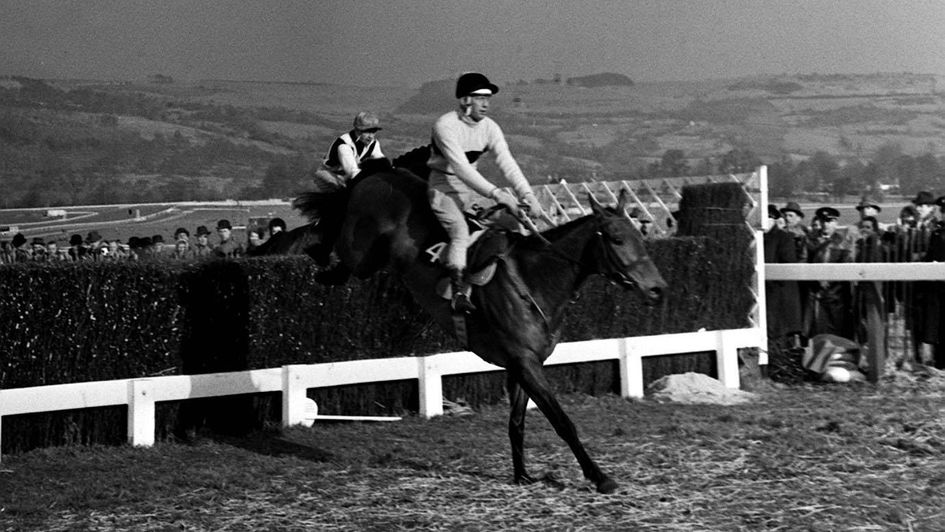
Arkle moved up on the outside on the run to the second last fence, jumped that upsides his rival, and then the two of them settled down to fight it out. It was the match that the racing public had gone to Cheltenham to see. There wasn’t much between them as they raced around the home turn, but then Arkle asserted on the run to the last, went about a length and a half up.
“It’s going to be Arkle if he jumps it."
He jumped it all right, and he came away from Mill House on the run up the hill to the roar of the Irish crowd.
Then he went to Fairyhouse and carried 12 stone to victory in the Irish Grand National.
Arkle and Mill House met three more times and, on each occasion, Arkle came out on top. They both went back to Newbury for the 1964 Hennessy Gold Cup, which Arkle won by 10 lengths, with Mill House only fourth. They lined up together again in the 1965 Gold Cup, but this one wasn’t really a contest, with Arkle coming clear and winning by 20 lengths. And they met again in the Gallagher Gold Cup at Sandown in the early stages of the 1964/65 season. Arkle was conceding 16lb to Mill House on this occasion, but it didn’t matter, he won impressively again, he won by 20 lengths and broke the track record. He broke Mill House’s heart, they said.
When Arkle lined up again in the Cheltenham Gold Cup in March 1966, there was no Mill House in opposition, and Arkle won by 30 lengths.
Three Gold Cups in the bag, and yet, Arkle’s best performances may have been in his weight-carrying performances in handicap chases. He carried 12st 4lb in the John Jameson Handicap Chase at Punchestown in 1963 and he won by 15 lengths. He shouldered 12st 7lb in the Hennessy Gold Cup at Newbury in 1964 and he won by 10. He carried 12st 7lb to victory too in the Leopardstown Chase, and he carried 12st 10lb to victory in the Massey Ferguson Gold Cup at Cheltenham in December 1964, just a week after he had won the Hennessy. In 1965, he carried 12st 7lb to victory in the Leopardstown Chase, the Whitbread Gold Cup, the Gallagher Gold Cup and the Hennessy.
Remember, one handicap if Arkle runs, one if he doesn't.
Timeform have Arkle on a rating of 212, the best National Hunt horse since ratings began. The only horse who runs him close is his stable companion Flyingbolt, who won Champion Chase in 1966, then finished third in the Champion Hurdle the following day, then won the Irish Grand under 12st 7lb the following month.
They’re just not asked to do those things any more.
There have been brilliant chasers since Arkle. Kauto Star of course, and Sprinter Sacre and Desert Orchid and Moscow Flyer, and others, but none of them come close to Himself. To put it into context, if they were to meet in a handicap, all in their pomp, and if Arkle was carrying 12 stone, Timeform would have Sprinter Sacre carrying 10st 8lb and Kauto Star Carrying 10st 7lb.
Sir Peter O’Sullevan was wrong when he said in 1964 that Arkle was the best that they had seen in a long time. Actually, he was the best that they had ever seen, the best that they would ever see.
More in the Cheltenham Festival GOAT series
More from Sporting Life
- Free bets
- Racecards
- Fast results
- Full results and free video replays
- Horse racing news
- Horse racing tips
- Horse racing features
- Download our free iOS and Android app
- Football and other sports tips
- Podcasts and video content
Safer gambling
We are committed in our support of safer gambling. Recommended bets are advised to over-18s and we strongly encourage readers to wager only what they can afford to lose.
If you are concerned about your gambling, please call the National Gambling Helpline / GamCare on 0808 8020 133.
Further support and information can be found at begambleaware.org and gamblingtherapy.org.