It’s six o’clock in the morning on the moors above Middleham and the landscape is simply magnificent.
Sky meets moor in a clash of colour, the vibrancy of an August sunrise against the muted browns and greens of the heather, parched after weeks of suffocating heat.
Not that you’d know it on High Moor Gallop, it’s bloody freezing.
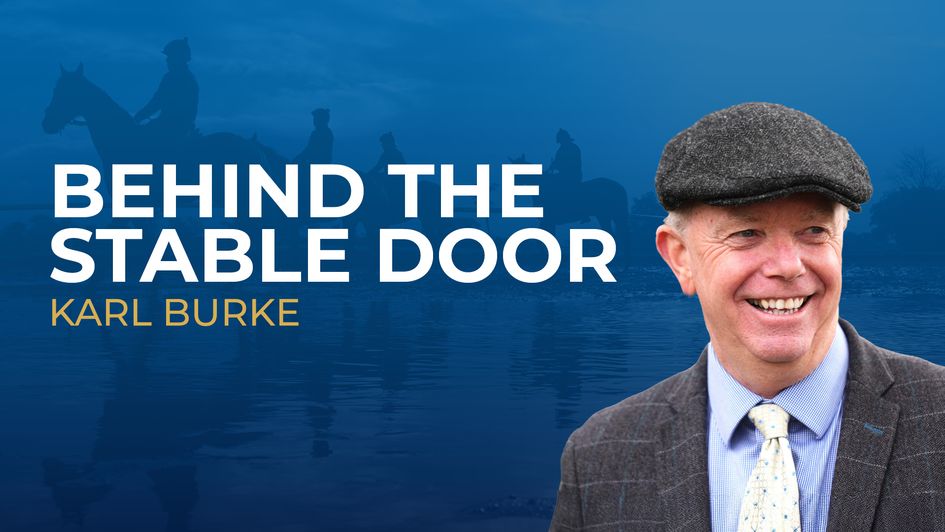
Stood next to me, carefully watching the string move up the curve of the dale, is Karl Burke, one of the UK’s leading trainers. I’ve prepared for this morning with the precision of a forensic scientist, and I’m determined to start the interview with a bang, a never-heard-before opener that will wow Karl.
“What’s the secret to training racehorses?” I blurt out.
Poirot can rest easy with that line of questioning.

“Good horses,” he responds, instantly. “You can’t train a bad horse to win a good race.”
“And what are you looking for, as they come past?”
“The way they’re moving, the way they’re breathing,” he explains. “Some horses go up lazily and might need a change, some horses that usually go up exuberantly and may not be moving as strongly or vice versa, leaving you to wonder why.”
Given the incline, it’s a struggle to believe that any horse could exuberantly tackle the challenge and I wouldn’t fancy my own chances.
“I enjoy the mornings when it’s sunny and the horses are looking well and they’ve been running well,” Karl adds. “It’s lovely to see a string of your own horses when they’re in good form.”
First lot complete, we pass the string and Karl gets out to watch the line of horses disappear into a copse of trees above Spigot Lodge, taking one last glance and stepping smartly back as the occasional horse shies into the road.
“Fresh, isn’t he?” he remarks.
“Did you always want to be a trainer?” I ask, as he returns to the car.
“I didn’t, really.” Karl confesses. “We started doing liveries whilst I was still riding, breaking horses for owners and trainers and I found I really enjoyed it. It went from there, I enjoyed seeing horses improved and when we sent them back, people were happy with them.”
It escalated quickly, after that. Having initially trained at Ginge, near Wantage, and Broadway, Spigot Lodge has been home to Karl and his wife Elaine (who I meet initially through the car window as she rides out for first lot) for twenty-five years.
Burrowed in the side of the dale, the yard is a Tardis. The main house looks out onto two neat lines of white stable blocks, joined together by the racing yard must-have item: an archway, adorned with clock and weathercock. It’s traditional, but practical – a digital clock sits at the other end of the yard, covering all bases. Past the horseshoe shaped main yard, there are a vast array of barns and modern training facilities like walkers and treadmills, tucked into every nook and cranny of the property.
My initial apprehension disappears as I’m welcomed into the busy workings of a racing yard, tagging along with Karl as he checks legs, rubs foreheads (horses only) and oversees post-lot proceedings. I’m fascinated by his keen eye – he misses nothing, which leads to my next question.
“What would the staff say I’m most meticulous about?” he laughs. “You’ll have to ask them.”
Thankfully, groom Liisi is on hand to provide an insight.
“He’s a nightmare about rugs,” she confirms. “He comes out of the office with shorts and t-shirt on, the horses are sweating and he’ll say, get the rugs out, put more rugs on! You’d think we were going to the Yorkshire Show with this lot.”
I’m still laughing as we get into the car for second lot: “So, rugs?”
“I’m a great believer in keeping them warm,” he explains, amused. “They’re athletes. I’d rather them to be a little too warm than too cold. Every yard is different but we have a great routine: each horse has three rugs and at different times, they have different combinations.
“I like them to have fresh air too. We’ve never shut a top door of a stable in twenty-five years.”
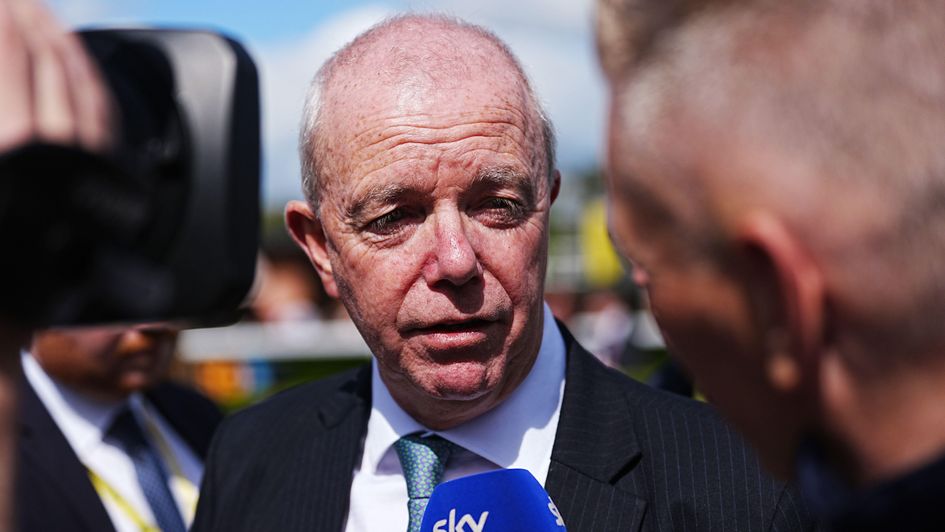
The nuts and bolts of a racing yard aren’t often spoken about and Karl is willing to give an insight into the horse husbandry.
“We’ve had a routine for the horses since we were training at Ginge and we’ve kept it the same,” he says. “You do live and learn though. Perfecting a routine to feed regime was a big learning curve.
“At one stage, Mark Johnston had started doing great things and he was advocating his feed, which was high-fat and suited Mark’s training regime. We tried switching to the same feed and could not get them fit, they just weren’t doing enough work for the feed. We had to change again rather than adjusting the routine.”
By the end of second lot, I’m about ready for a sandwich and a sit down. These are long, hard days with very little let-up. There must be a secret to success and having seen Elaine in action this morning – riding out, providing me with a much-needed cup of tea before heading out with a ragwort fork to do some weeding – I’m not surprised to hear what Karl says next.
“I couldn’t manage without Elaine. She looks after us well. I’m a terrible cook,” he pauses. “Well, I’m not sure if I’m a terrible cook because I don’t cook.”
“The walkie talkies have made a massive difference on the yard. We’ve only used them over the last ten years but as the amount of horses has doubled, it’s made life much easier. You’re not running around looking for people or shouting and bawling all the time.”
And the hardest part?
“Giving bad news,” he confirms. “I’ve never got used to it.
“So many things can go wrong during training. The horses are athletes and you have to push them, which means things can go wrong mentally and physically. Some horses want to run and some don’t, it’s as simple as that.”
Talk of individual horses makes me think about all the remarkable performers which have passed through Spigot Lodge over the last decade but when asking about Karl’s favourite training performance, it’s not Quiet Reflection, Laurens or even Venetian Sun that come to mind.
“Night City,” he says, without hesitation. “He was a well-bred horse that had won a couple of races but had started to refuse going on the gallops. We ended up buying him and won eighteen races with him. Elaine rode him every day and we used the girls’ pony to take him everywhere, he’d just follow the pony. It was probably one of our best training performances, even though he was only winning claimers around Lingfield and places like that.”
To me, training racehorses is a dark art reserved for the few and misunderstood by the many. Having spent the morning at Spigot Lodge, I’m in awe of the wizardry Karl and Elaine have, and continue, to conjure. They are true horse-people, in every sense of the word.
So, you can imagine my mortification when I’m unable to open the front gate and with a resigned sigh, pick up my phone.
“Karl…can you tell me how to get out please?”
More In The Series
More from Sporting Life
- Free bets
- Racecards
- Fast results
- Full results and free video replays
- Horse racing news
- Horse racing tips
- Horse racing features
- Download our free iOS and Android app
- Football and other sports tips
- Podcasts and video content
Safer gambling
We are committed in our support of safer gambling. Recommended bets are advised to over-18s and we strongly encourage readers to wager only what they can afford to lose.al
If you are concerned about your gambling, please call the National Gambling Helpline / GamCare on 0808 8020 133.
Further support and information can be found at begambleaware.org and gamblingtherapy.org.