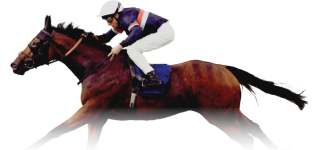
Others might have eclipsed his record since, but John Ingles looks back at Wayward Lad who, forty years ago, became the first horse to win three King Georges.
For a period from the late 1970s to the early 1980s, the Dickinson family dominated the King George VI Chase, training the winners of six of the seven editions that took place between 1978 and 1985. Tony Dickinson trained the stable’s first two winners, Gay Spartan and Silver Buck, with son Michael taking over the licence by the time Silver Buck became the fourth dual winner in the race’s history in 1980.
Frost put paid to the 1981 King George and Silver Buck’s bid to become the first triple winner, though he had the consolation of winning the Cheltenham Gold Cup later in the season. But the stable was soon to have a three-time King George winner, with Wayward Lad winning the next two editions before making history forty years ago with his third win in 1985 coming for another member of the family, Michael’s mother Monica, who took over the licence at Harewood when her son turned his attentions to the Flat.
Timeform reported that Wayward Lad ‘was being hailed as the next Silver Buck’ before he had even jumped a fence in public, though despite winning four races in his novice chase season (after winning six out of eight over hurdles in the previous campaign), his jumping was a major concern. ‘At the moment, Wayward Lad’s jumping lets him down far too often and his problems in that department will have to be ironed out if he is to have any chance of fulfilling the highest hopes entertained for him’ concluded his essay in Chasers & Hurdlers after his first season over fences.
But it was a very different story in his second season over fences with Timeform attributing his much-improved jumping to his jockey Robert Earnshaw who was given the job of schooling him as well as riding him in all his races. ‘Wayward Lad has become a splendid jumper’, noted his essay, ‘and his improvement in this department has been the key to his development into a high-class chaser.’
Wayward Lad won six of his seven chases in 1981/82, all his wins coming over two and a half miles – including the Timeform Chase at Haydock in March – with his one defeat coming at Cheltenham in January over three miles and a furlong, calling into question for some his stamina for a Gold Cup or even a King George. In terms of ability, though, Earnshaw, who had partnered Silver Buck to that season’s Gold Cup victory, stated he would find it difficult to choose between the two.

At one stage, it looked as though Wayward Lad might have lined up against Silver Buck in the King George which never was, but they did get to meet at Kempton a year later. Earnshaw partnered the hat-trick seeking Silver Buck, the even-money favourite, while John Francome switched to 7/2-chance Wayward Lad after his original mount and Dickinson’s third intended runner, Bregawn, winner of the Hennessy Gold Cup under top weight, had to be withdrawn with a muscle injury.
Also in the line-up were the 1981 Gold Cup winner Little Owl, that one’s stablemate Night Nurse, now in the twilight of his brilliant career and beaten by Wayward Lad at Worcester in the autumn, and Fifty Dollars More who had been getting almost a stone from Wayward Lad when beating him into third in the Mackeson Gold Cup at Cheltenham.
The strongly-run race had several leaders, with Little Owl taking over from Night Nurse on the second circuit before Silver Buck jumped ahead four out. Fifty Dollars More looked to be going best of all turning for home where Wayward Lad was being niggled along but at the final fence all three were in the air together. A brilliant jump from Wayward Lad on the outside proved decisive, however, and he went on to win a thriller by two and a half lengths from Fifty Dollars More with Silver Buck a length and a half back in third.
Wayward Lad’s King George was part of a bigger story that Boxing Day. He was the seventh of what turned out to be a record dozen winners for his stable on the day. Dickinson took the season by storm, becoming champion trainer with a record number of winners. Wayward Lad also played his part in another of his trainer’s famous achievements that season, finishing third behind Bregawn and Captain John in a Cheltenham Gold Cup where Dickinson saddled the first five home. Wayward Lad did well to make the race at all, having a rushed preparation after sustaining an injury since Kempton.
Wayward Lad had only four rivals to beat when bidding to retain his King George crown in 1983; Bregawn was an absentee again, being a last-minute withdrawal from a race where the going was unseasonably firm. Back under Earnshaw, Wayward Lad was sent off the 11/8 favourite having won both his starts beforehand, the first running of the Charlie Hall Chase in its current Grade 2 form (it was formerly a novice contest) and the Peterborough Chase at Huntingdon where he had to work much harder to beat Fifty Dollars More at level weights by a short head.
This time, however, Fifty Dollars More proved no threat at Kempton and Wayward Lad ran out a decisive winner, pulling five lengths clear of the Hennessy winner Brown Chamberlin (Francome’s mount this time), with Wayward’s Lad stablemate The Mighty Mac back in third. The strong pace set by the latter for much of the way contributed to Wayward Lad breaking the track record by more than eight seconds.

With a much smoother preparation than the year before, Wayward Lad was sent off the 6/4 favourite to become the first since Arkle to win the King George and Gold Cup in the same season, but it was clear from early on at Cheltenham that he wasn’t himself and he was well beaten when pulled up before two out. No explanation came to light for his poor performance.
The Gold Cup went instead to the progressive Burrough Hill Lad who was to be Wayward Lad’s nemesis again in the following season’s King George where Wayward’s Lad bid to become the first triple winner ended with a heavy defeat in a three-runner race. He’d also been beaten by Burrough Hill Lad in the Charlie Hall beforehand (the pair had been sent off the 10/11 joint favourites) but at Kempton he dropped away quickly from the home turn to finish a distant last leaving Burrough Hill Lad to fend off the other runner Combs Ditch by just a short head.
Wayward Lad added to his unconvincing record in the Cheltenham Gold Cup later in the season, finishing only eighth having still been in touch three out. But those who believed Wayward Lad was now a spent force in the top chases had to think again after he ended the season with a convincing win at Aintree in the Whitbread Gold Label Cup from two horses who had finished in front of him at Cheltenham, Earls Brig and Half Free. ‘His chances of becoming the first horse to win the King George VI Chase three times should not be dismissed’ warned Timeform in Chasers & Hurdlers at the end of that season.
On King George day 1985, however, Wayward Lad was the joint outsider of the five at 12/1 along with Half Free, while the previous year’s first two headed the betting, Burrough Hill Lad at a shade of odds on, from Combs Ditch and then Earls Brig. With heavy ground, conditions were a total contrast from Wayward Lad’s last win two years earlier. ‘If there was a more courageous performance during the season by a chaser’ said Timeform, ‘we didn’t see it’.
Taking on Burrough Hill Lad after four out, Wayward Lad fought his way into the lead at the second last and then held off Combs Ditch’s challenge on the flat for a neck win in a stirring finish. This time it was Burrough Hill Lad who disappointed, fading into fourth. Wayward Lad’s historic third King George came for a third different jockey, Graham Bradley, and it briefly made him the leading jumper by first-place earnings.
Interestingly, though, for all the significance of his Kempton victory, Wayward Lad’s Timeform essay that season led with his performance in one of the most memorable of Gold Cups. He finally looked like laying the ghost of his previous defeats in the race when seeming the winner halfway up the run-in, but as he began to falter and edge left, Dawn Run, whom he’d already passed on the run to the last, fought back to head him on the run to the line and win by a length. Timeform, though, acknowledged Wayward Lad’s part in a ‘monumental affair’ and noted that he came out best at the weights conceding the 5 lb sex allowance to the winner.
Having been so critical of his jumping as a novice, Wayward Lad’s essay in Chasers & Hurdlers 1985/86 went so far as to say ‘there is no better jumper of fences in training: swift and accurate, he can take lengths off some of his rivals at the obstacles’ before going on to conclude that he ‘has already earned an honourable place in steeplechasing’s ‘Hall of Fame’.
There were still last attempts in both the King George and Gold Cup to come in 1986/87, but Wayward Lad never landed a blow when trailing home last of five at Kempton, while at Cheltenham another faltering finish up the hill saw him fade into fifth after looking sure to be placed again when jumping the last in second. But back at Aintree in the Whitbread Gold Label Cup Chase, the twelve-year-old Wayward Lad finished his career on a high with a 28th career victory from 55 starts, boasting wins at 16 different tracks.
Cheltenham wasn’t one of them, which means that Wayward Lad always seems destined to be one of the first names mentioned among the best staying chasers never to win a Gold Cup. His King George record, excellent though it was and ensuring that his name would live on in a Grade 2 novice chase at the meeting, hasn’t quite stood the test of time either. Who could have foreseen that Desert Orchid, winner of that final King George that Wayward Lad contested in 1986, would go on to beat his record and win the race four times or that Kauto Star would do better still?
More from Sporting Life
Safer gambling
We are committed in our support of safer gambling. Recommended bets are advised to over-18s and we strongly encourage readers to wager only what they can afford to lose.
If you are concerned about your gambling, please call the National Gambling Helpline / GamCare on 0808 8020 133.
Further support and information can be found at begambleaware.org and gamblingtherapy.org.