If the foundation of Timeform's reputation grew foremost out of the ratings, a mathematical expression of a horse's ability, it was greatly enhanced by the words that appeared alongside the figures, particularly in Timeform's two Annuals, the Racehorses series, covering horses that ran on the Flat, and Chasers & Hurdlers, devoted to jumpers.
Phil Bull, Timeform's founder, was the man responsible for introducing the groundbreaking ratings, backed up by time analysis. For the words, the person who crafted more than anyone else was Geoff Greetham, who has died at the age of 79.
In all Geoff worked on 97 editions of the two Annuals, including every single one of the 45 volumes in the Chasers & Hurdlers series. In the first, 1975/76 edition, he is listed as G. Greetham, B.A., fifth of the ten people noted alphabetically as having compiled and produced the book. In the 2019/20 edition, he appears first, as Geoff Greetham (Publishing Editor).
The Foreword in 1975/76 stated the purpose of the Annual, one that remained true for the next 45 years:
'The book is published with a twofold purpose. Firstly, it is designed to provide the betting man (sic) with data for practical use in analysing the racing programme from day to day...and secondly, the book is intended to have some permanent value as a review of the exploits and achievements of the more notable of our chasers and hurdlers.'
Geoff in his writing embraced the second point wholeheartedly. And although none of the essays or long comments that appear in the annuals has an individual credit, Geoff was responsible for the majority. His essays on the Grand National winner are a tour de force, necessarily extended pieces to enable as many photographs as possible to convey the story of the race.
Geoff, alongside the editor Dave Newton, wrote the essays on most of the best horses. If something political or contentious needed writing about, it nearly always fell to Geoff to draft the piece. Essays in the annuals over the years provide a thorough guide to issues such as the whip and changes to the Grand National fences. Support for allowing the views of the punter to be heard, including improving the way in which data was made available to the public, was central to the 'Timeform view'.
In addition to writing, Geoff, for many years alongside Dave Newton, used to edit the other essays. It was a sobering experience for a young writer straight out of university to receive a piece of work covered with marks from Geoff's red pen, the piece virtually rewritten.
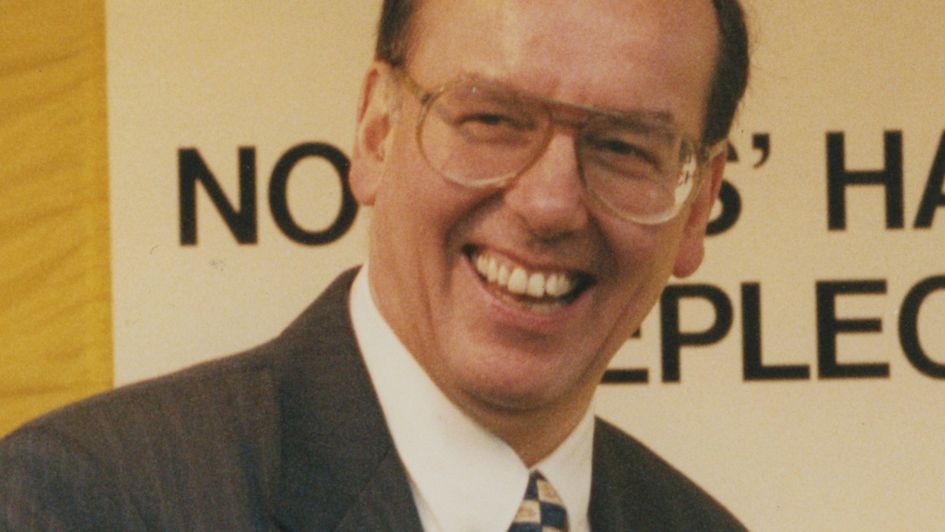
The lesson – there is a Timeform style and a way of writing that is clear and objective, and that is what is required. A sentence that required reading more than once to get the full sense of it was not a sentence that was fit for publication. Adverbs and foreign phrases would more often than not get a red line through them, 'en route' always replaced by 'on the way'. Something intended as a jokey remark required an exclamation mark, so as not to confuse the reader.
It's almost certain that Geoff never wrote a piece containing a first-person singular pronoun, unless it was in a quote.
While not everyone in editorial appreciated what was done to their work, the changes were intended to make a better book, something the wiser heads understood. And Geoff was very supportive of writers that he felt showed a particular aptitude for the task – Richard Austen, John Ingles and, more recently, Adam Houghton, would be writers whose work he would enthuse about and who he would trust with the better horses.
It wasn't just the writers on the annuals who benefited from Geoff's direction. Several generations passed through the editorial department of Timeform House, some staying longer than others, some, figuratively, still there, who were moulded into shape at his hands, however long they were there. Some went on to become national racing correspondents or moved on to other racing publications, others went to be broadcasters or commentators, bloodstock advisors, semi-retired punters, more than one became a senior BHA handicapper, one even its Handicapping Ombudsman.
After leaving university, Geoff had started his working life as a journalist, working on the Newcastle Press & Journal's racing desk. From there, the opportunity to become Phil Bull's assistant at Timeform arose, which looked an ideal opening.
Phil Bull had the reputation of a fearless punter; Geoff more or less shelved that idea for himself after going all in on Mill House against Arkle in the 1964 Cheltenham Gold Cup. However, although he had no racing background, he was fascinated by the sport and picking up a second-hand Annual from a book stall introduced him to Timeform.
Geoff was offered the job, accepted and his course was set for virtually the rest of his life. Not just his working life either. Bringing together people from all over the country, interested more in working on horse racing than in making their fortune (on Timeform wages, you must be kidding!), led to a collegiate spirit and Geoff wasn't the only person who found his life partner within the walls of Timeform House. Jane, who worked in the production department, became his second wife.
Geoff rarely ventured far outside the borders of Yorkshire. He did though make an annual day trip to the Cheltenham Festival, to see in the flesh some of the horses he would be writing about over the summer for Chasers & Hurdlers. York was far enough to travel to see their Flat counterparts.
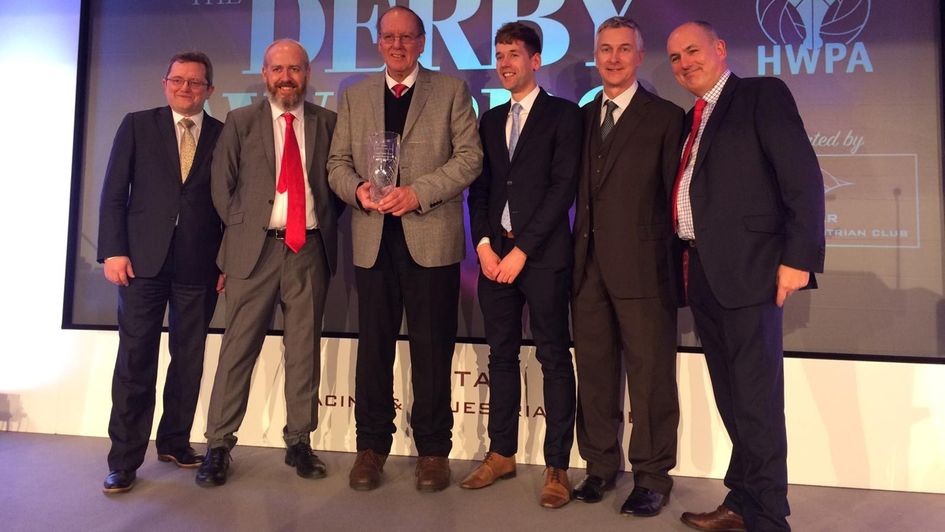
It took considerable subterfuge to get Geoff to travel all the way to London for the Horserace Writers & Photographers Association Derby Awards Lunch in 2016. Some gentle arm-twisting from Jane and some misdirection from various others eventually got him on the train.
The Derby Awards are an annual celebration of racing journalism in all its forms, and the reason for getting Geoff there was that he was to be awarded the George Ennor Trophy for Lifetime Achievement. It was an award so thoroughly well deserved.
Geoff, Jane and Nigel. Great to see HWPA success of RP stars and to be there to honour lifetime in racing journalism for Geoff Greetham pic.twitter.com/G4HoJjEtaC
— Richard Austen (@richardausten65) December 5, 2016
Geoff had a loyalty to those he worked with. This extended beyond the staff at Timeform to the photographers who supplied the photos and portraits for the Annuals, the printers who printed the books. When Timeform was discussing modernising production methods in the 'eighties, Geoff was a voice against, on the grounds that it would result in job losses in the production department.
It's fair to say Geoff never fully embraced modern technology, though in later years he mastered email. Right until the last annual, he was still writing his essays in long-hand, to be input by Wendy Muncaster, who had been at Timeform since the early-'eighties herself. The red pen still crossed things out on page proofs.
Like many a racing journalist, Geoff never fully retired. After the Annuals ended, in 2020, victim of the passage of time, he found outlets for his views on racing in the letters column of the Racing Post and in the Kingsley Klarion; not to mention by the newfangled email. Geoff also sent emails back to Timeform of physical descriptions taken of the runners on his trips with Jane to Catterick or Pontefract. After a brief period embracing racehorse ownership, Geoff decided that booking a table in the members' restaurant recreated the owners' experience without the actual expense of owning the horses.
Geoff was for a long time Deputy Managing Director for Timeform, with Reg Griffin as Managing Director. Also on the Board was the Sales Director Wally Richardson, who by grim coincidence also died on Friday. Geoff never became Managing Director, but perhaps he never would have wanted to be, given it would have taken him away from writing about horses.
There are worse ways to spend a life.