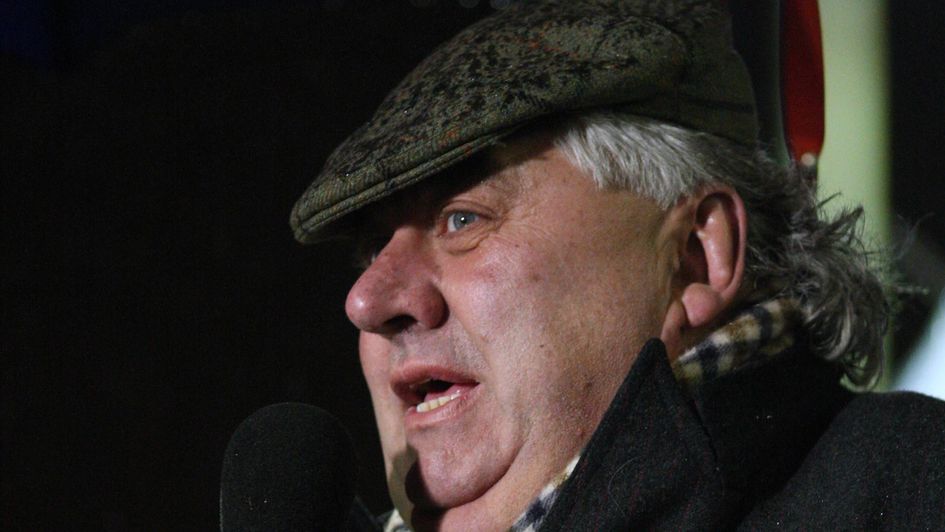
Gary Wiltshire talks to David Ord about his new book and the one afternoon at Ascot that changed everything.
You probably remember Gary Wiltshire as the man who risked it all by taking on Fujiyama Crest, the last leg of the Dettori Magnificent Seven at Ascot.
You might remember him as the larger-than-life BBC betting pundit who was a cornerstone of their coverage alongside John Parrot before the switch to Channel 4.
You’ll have seen him interviewed on TV, telling the stories as only he can. And the role of storyteller has served him well.
In 2011 he published Winning It All Back, a book that did exactly what it said on the tin. It covered his remarkable career as a punter, racecourse bookmaker, TV pundit, right to the point where he’d managed to pay back, you see, the £800,000 he lost when Fujiyama Crest won on that memorable afternoon.
Now he’s back, alongside Paul Jones, with Fifty Years In The Betting Jungle. The title is self-explanatory, but why update the story now?
“My life had changed so much after the first one,” he said. "I got divorced, had medical problems. Everyone thought I was flying after winning it back, then all of a sudden, I was reminded that you can buy wealth but you can’t buy health.
“I went through a right period, you talk about mental health, I didn’t want to come out of the front door for over a year.
“One Saturday, my busiest day, I had 75 racecourse pitches and I was wailing around Loughborough market just not interested in anything. It was amazing how your life can change and everyone sees you. They think you’re the same person you were, but luckily enough I got back onto my feet, got my head back again and here we are."

It was a chance meeting that set Wiltshire on that road.
“It was one day when I went to try and buy Sharon a car and the man said ‘no, you have a problem’, he said go and see my pal.
“I went to see an old chap who was living in sheltered accommodation and I went upstairs. I'll never forget he had a bike downstairs, and I could hardly get past it to walk up.
“I just sat on a chair for an hour with him and kept on talking. At the end he said ‘you said you were unlucky 27 times in the hour. You're not unlucky, there are people out there who are a lot worse off than you. Go out there tomorrow, you're a bookmaker, you've done nothing wrong, just go out there again'.
“The following day I was back at work out at Worcester and I’ve been back ever since. A lot of things changed in between my books. Around Winning It Back, it looked like I was flying and had everything, then all of a sudden this happened."
Fifty years in bookmaking is some achievement but Wiltshire admits it’s an industry he barely recognises from the early days.
“I’ve been in racing all my life but how the game has changed, it’s computers now, betting exchanges, they’re taking over,” he said.
“It's a different world. Our business used to be with all the London firms shortening prices up on course. Because they had to. Now they can do it on their own on the computers.
“If a young person is looking to get into the game now, I think they need a rich mum or dad or a rich grandad or nanny. Nowadays you need good pitches to survive and you’re looking at some of the big places like Haydock Park, if you want a pitch on the rails there, you’re looking at a minimum of a hundred grand to buy a pitch.
“You need a massive, massive boat behind you. You need big money behind you."
The work on the BBC was a different phase to Wiltshire's career. A hugely enjoyable period but one brought to a premature end by physical issues.
“I loved it. Don’t forget, when I first sold my pitches it was to the Tote, the government owned it at that stage. I was then asked to work for six months with them, and I was there for five years," he continued.
“I enjoyed it but then all of a sudden the BBC offered me to go and be the betting pundit with John Parrott and you couldn’t do both in those days.
“The BBC wouldn’t allow any betting influence so you couldn’t work with a bookmaker. But I loved it. It was a bad move financially but everyone loves a bit of limelight in their life and I loved it.
“But don’t forget at that time I was 37 stone. I was just too big, it killed me. I’ve done Royal Ascot one time and when we I got in there I took the dress suit off round the back where the vans are and the water just came out like a shower.
“Really and truthfully the weight destroyed me. Winning and losing money in my life you accept it, you have bad days and good days, but the weight absolutely destroyed me.
“And I made an excuse up. Mr Thompson was the leader of the BBC at the time and I said ‘I’ve got to leave’ and he said no-one leaves, I’ll offer you more money but I said I’d been offered a job by Sky to do the greyhounds.
“That was a lie, the greyhound racing was at night and there would never be clashes, it was my weight that did it. It was the weight which is why I left.
“I never told the truth. And that’s one thing I regret, even now."
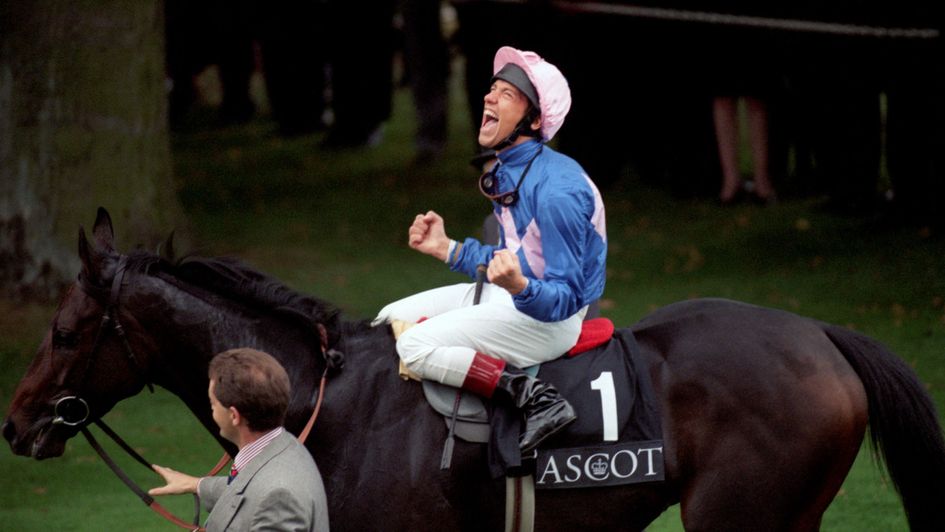
Of all his achievements, how does paying out all the losses from the Magnificent Seven rank?
“I’m so proud, it was the day that made me in truth. I’ve done my absolutes, but after it and everything I suppose looking back on it now if I hadn’t paid, in those days they could only have banned you for a year, and I'd have come back.
"Maybe I’d have got more respect for not paying than paying, but I did. Coral were fantastic, it took me four years to pay them. People said I had someone behind me, Michael Tabor or someone, but I never had anyone. It was my own stupid mentality but again I think it was only through weight that I did it. When I stood on the box that day I took the world on.
“A few weeks later I did a radio show on BBC with Stephen Nolan and I went up to Media City in Manchester. He sat me down and I was talking, and he said to me ‘when you were on that box that day you thought you were big didn’t you? You thought you were like a comedian on the end of the pier.’
“And he was right. In every fat person there's a thin person and that day when I stood on the box at the end of the rails at Ascot, you had all the top people there, real big names, and I was a nothing, right at the end on the rails.
“I got in that day on the waiting list because two people didn’t turn up. And he said to me ‘why you did it, why you laid a £40,000 at 9/2, thousands more at 7/2 and 3/1, was because you thought you were bigger than you were'.
“I really think that was the only interview I’ve done that hurt, not hurt, but went through my head afterwards. That was the truth. I never went to Ascot that day to be the big bookie, I was just a tu'penny ha'penny bookie, but that was me at a grand maximum.
"It was the day that made me as a person, everyone knew you afterwards, but it killed me financially. Look, we’re still here to tell the tale though.”
And no-one does it quite like Gary.
“People like you, they love a loser in life, even now at the racing people come up and the Dettori thing will be raised at some stage. Who would have thought I’d have lasted longer than Frankie, really and truthfully here’s a 100/1 shot that has come up. It’s another Foinavon!"
There’s more, much, much more, to Gary Wiltshire the man and the bookmaker than that Ascot afternoon. The latest book helps to fill in at least some of the gaps.
- 50 Years In The Betting Jungle is published by Weatherbys and available in the Weatherbys Shop.
More from Sporting Life
- Racecards
- Fast results
- Free bets
- Full results and free video replays
- Horse racing news
- Horse racing tips
- Horse racing features
- Download our free iOS and Android app
- Football and other sports tips
- Podcasts and video content
Safer gambling
We are committed in our support of safer gambling. Recommended bets are advised to over-18s and we strongly encourage readers to wager only what they can afford to lose.
If you are concerned about your gambling, please call the National Gambling Helpline / GamCare on 0808 8020 133.
Further support and information can be found at begambleaware.org and gamblingtherapy.org