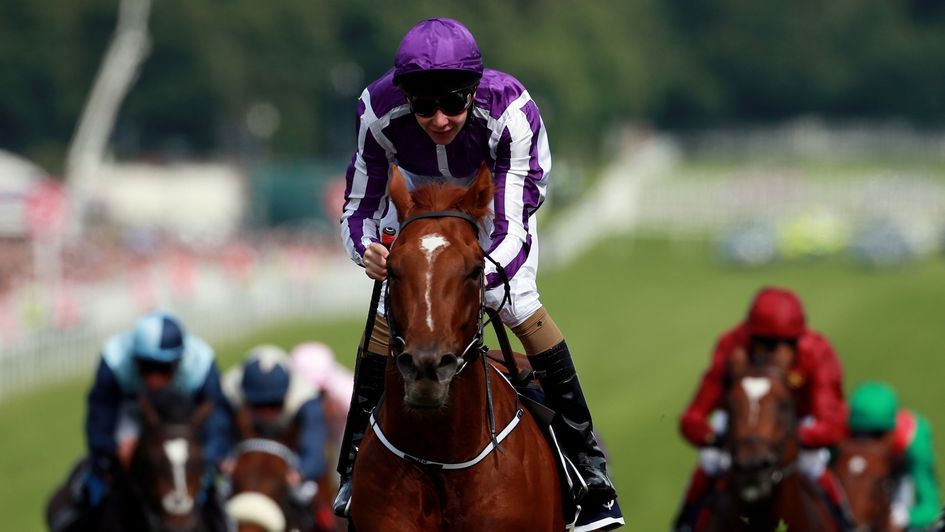
Timeform's John Ingles looks at the stud career of Australia, sire of Derby winner Lambourn 11 years after winning at Epsom himself.
‘The heir apparent to Galileo.’
That was the bold claim that accompanied the 2014 Derby winner Australia to stud when taking up stallion duties at Coolmore the following spring. While an element of hype in marketing new stallions is only to be expected, there were genuinely good reasons for expecting big things from Australia at stud.
He was an above-average Derby winner on the day at Epsom when sent off the 11/8 favourite and was value for more than his winning margin of a length and a quarter in beating Kingston Hill, with Romsdal in third, the two colts who would go on to finish first and second in the St Leger. A very straightforward task in the Irish Derby didn’t demand any more from Australia, but it was a different story in the Juddmonte International where he produced a top-class effort, having the speed to cope with the shorter trip and impressively beating the Prix du Jockey Club winner The Grey Gatsby.
The tables were turned in the Irish Champion Stakes where The Grey Gatsby came out on top by a neck, but Australia had excuses, racing wide for most of the way, and could be considered an unlucky loser on what proved his final career start. Never out of the first three in his eight races, Australia already had a huge reputation as a two-year-old, making himself ante-post Derby favourite with a six-length win in a Group 3 at Leopardstown on his final start that season, while his close third in the 2000 Guineas behind the specialist milers Night of Thunder and Kingman looked an excellent prep run for the Derby.
So it proved, with confidence in Australia’s chances bolstered by a pedigree that was tailor-made for Epsom. Not only was he by Galileo, but his dam was Oaks winner Ouija Board. Australia earned a Timeform rating of 132 as a three-year-old, which was second only to Kingman among that year’s classic generation, and it was only a couple of pounds behind the rating achieved by Galileo. Among Aidan O’Brien’s now eleven Derby winners, Australia ranks fourth judged on their performances on the day at Epsom (rather than the season as a whole), behind only Galileo himself, High Chaparral and Camelot.

Standing for €50,000 in his first season at Coolmore (twice the fee of Camelot who had gone to stud the year before after an anti-climactic four-year-old campaign), Australia was Galileo’s third winner of the Derby after New Approach and Ruler of The World, while two more – Anthony Van Dyck and Serpentine – would come along later.
2013 Derby winner Ruler of The World started at Coolmore at a fee of just €15,000 but after five seasons left for Europe in a stud career that has taken him to France, Italy and, most recently, Spain. There was to be no stallion career at all for Ballydoyle’s last two sons of Galileo to win the Derby; Anthony Van Dyck sadly suffered a fatal injury in the Melbourne Cup as a four-year-old, while Serpentine was packed off to Australia for good where, apparently on veterinary advice, he was gelded before making his debut.
It could be argued, therefore, that Australia has indeed proved Galileo’s heir, at least within the confines of Coolmore’s stallion roster, especially now that he has sired a Derby winner of his own. But in the wider scheme of things, Australia hasn’t come close to matching his sire’s exploits at stud. His fee had fallen to €25,000 in 2021 – the year Lambourn was conceived – and he was standing for just €10,000 at Coolmore this spring. Breeders who have used Australia’s services this year are entitled to feel they’ve availed themselves of a bargain, therefore, and it will be interesting to see how his fee is pitched in 2026.
While it’s true there are two sides to every pedigree, Australia has to take much of the credit for Lambourn’s Derby victory as he was doing all the heavy lifting stamina-wise. Lambourn’s dam Gossamer Wings is by Scat Daddy and she gained her only win in a five-furlong maiden at Navan at two. She proved useful at that age, being placed in the Queen Mary (beaten a short head) and Flying Childers, and finished a good fifth when blinkered in the Cheveley Park but failed to make much impact at three. Her jockey in the Cheveley Park, incidentally, was Wayne Lordan who made the most of her son’s stamina in the Derby when sending Lambourn into an early lead which he never surrendered.
Being a son of Galileo was all very well for marketing Australia’s fledgling stallion career, but the downside was that he also had to stand alongside his old man at stud. Galileo was still very much at the height of his powers when Australia began his stallion career and would continue to prove so for several more years. As if that competition wasn’t enough, Australia was one of five Derby winners on Coolmore’s roster in 2015; in addition to Galileo and Ruler of The World (also new that season), the others were Montjeu’s sons Camelot and Pour Moi.
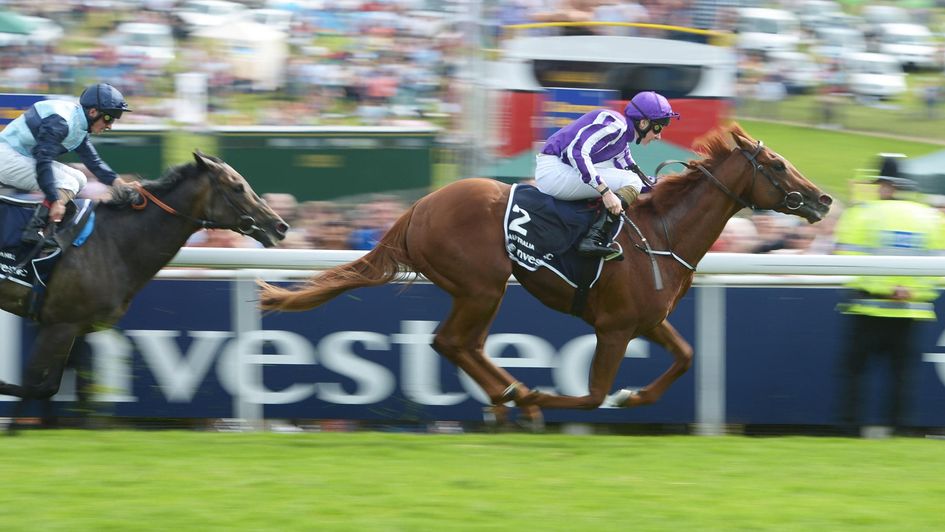
Camelot was himself in just his second season at stud in 2015, when standing for €25,000, and while he has yet to sire a Derby winner of his own, he has proven an unqualified success and was standing for three times that amount this spring after being represented by the likes of Irish Derby winner Los Angeles and Arc winner Bluestocking in 2024.
With a rating of 122 for his Epsom victory, Lambourn isn’t quite the highest-rated of Australia’s progeny as things stand, but he wouldn’t have to improve very much at all to earn that distinction. It’s striking, though, that among Australia’s best progeny, Lambourn is the only one who isn’t from his sire’s first couple of crops when Australia was standing at a much higher fee.
Lambourn isn’t Australia’s first British classic winner, that honour going to the 2020 St Leger winner Galileo Chrome, trained by Joseph O’Brien who partnered Australia in each of his races. Galileo Chrome had the same rating as Lambourn but with the ‘p’ symbol attached anticipating further improvement, though the St Leger, a potential target for Lambourn later in the season, proved his final race.
In all, Australia has now sired six individual Group/Grade 1 winners, with the others including Breeders’ Cup Mile winner Order of Australia (who was bred by Aidan and Anne-Marie O’Brien), Prix Ganay winner Mare Australis and Ocean Road, winner of the Gamely Stakes at Santa Anita.
Australia’s highest-rated Group 1 winner for now is Broome (rated 123) who raced for Ballydoyle for six seasons, with his biggest win coming in the Grand Prix de Saint-Cloud. Broome’s full brother Point Lonsdale, a Royal Ascot-winning two-year-old in the Chesham Stakes, was almost as good (rated 119), he too proving himself over longer distances later in his career. Like Lambourn, Broome and Point Lonsdale are further examples of a successful mating between Australia and a speedy mare as their dam Sweepstake (by Acclamation) won the National Stakes at Sandown as a two-year-old.
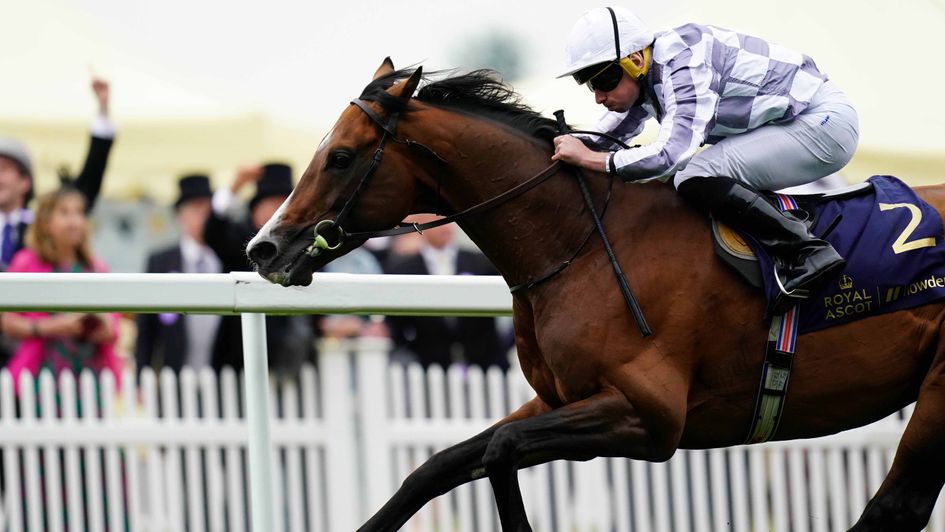
Australia’s other joint-best horse, rated 123, was Sir Ron Priestley, who had a similar profile to Broome for all that a Group 1 win eluded him. Runner-up in the St Leger, he won the Jockey Club Stakes and Princess of Wales’s Stakes at Newmarket the following season.
Australia might not have turned out to be the heir to the great Galileo he was billed as at the outset of his stallion career, but as the link between Aidan O’Brien’s first and latest Derby winners, he clearly has a special place among his trainer’s Epsom heroes.
O’Brien, though, considers him ‘probably the most underrated stallion ever. He gets you quality, gets you horses with great minds and gets horses that stay and are very sound. That’s what he’s always done and that’s exactly what he was himself.’
More from Sporting Life
- Free bets
- Racecards
- Fast results
- Full results and free video replays
- Horse racing news
- Horse racing tips
- Horse racing features
- Download our free iOS and Android app
- Football and other sports tips
- Podcasts and video content
Safer gambling
We are committed in our support of safer gambling. Recommended bets are advised to over-18s and we strongly encourage readers to wager only what they can afford to lose.
If you are concerned about your gambling, please call the National Gambling Helpline / GamCare on 0808 8020 133.
Further support and information can be found at begambleaware.org and gamblingtherapy.org.