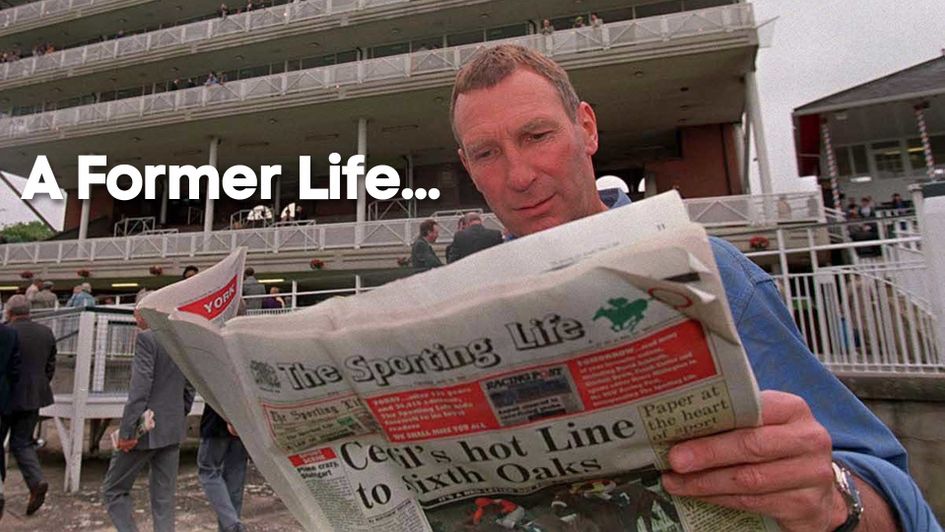
Mike Cattermole talks to former chief sub-editor at The Sporting Life newspaper, Bryan Pugh, about his time with the company.
Bryan Pugh was The Sporting Life’s last chief sub-editor. Known to all as either “chief” or “Bryn”, Pugh was hugely respected at the paper.
Utterly professional, he was routinely calm, a safe and reliable pair of hands and a master at managing the various egos around him. We all trusted the “chief”.
When The Life closed, Pugh went on to fill various high profile roles at the Racing Post for 20 years.
1. When did you first become aware of The Sporting Life?
When I peered through the smoke-filled confines of the William Hill shop in my home town of Dudley as a teenager and saw it adorning the walls with punters scrutinising the pages desperate to unearth the winner of the next race. The cards were an uncrackable code to me initially but it all added to the aura surrounding these mysterious High Street dens of iniquity.
It was like a secret society behind the blacked-out windows and the tension was tangible listening to race commentaries on the blower, with intermittent breakdowns only adding to the drama.
2. When did you join The Life and what was your first job?
I joined the sub-editors’ desk at the beginning of March 1981. There were two vacancies and I was fortunate to have impressed esteemed editor Ossie Fletcher sufficiently, so I proudly turned up punctually on the agreed date ready to work.
The other successful applicant had declined to take up his post at the same time, preferring to wait until the Cheltenham Festival was over. He can’t be that dedicated, I thought, he won’t last long. It was the legendary Alastair Down.
Ironically, the idea of working for the Life was sparked by a future northern stalwart of the Racing Post, Ray Gilpin. One of my duties on the Birmingham Evening Mail sports desk was to produce the racing pages for the lunchtime edition - not the most sought-after role as it required getting into the office an hour earlier - and Ray was the paper’s racing editor at the time.
Ray, who died in 2015 and has the press room at Haydock named in his memory, showed me the job advertisement on page three of The Life, which I would most likely have missed, and suggested I should apply. It certainly changed my life.
3. Did you have ambitions to stay there and climb the ladder?
My ambition had always been to work in Fleet Street and, as I loved horseracing, The Life seemed to be an ideal way in. As the paper was owned by the Daily Mirror, it seemed a perfect stepping stone to one day working on the tabloid. But I was having such a good time on the Life that I stayed until the Racing Post took us over in 1998.
After just over a year at The Life I was promoted to deputy chief sub when the supportive John O’Carroll moved on and in 1991 I took over as chief sub when the acerbic Noel Blunt - the prototype when God designed the Yorkshireman - took early retirement.
4. Any early memories that stand out about experiences, personalities and/or stories of the time?
My first year was one of the most memorable on the track with Aldaniti’s fairytale Grand National triumph and Shergar’s record-breaking Derby romp. The Aga Khan’s superstar appeared on the news pages for years to come with his subsequent kidnap in 1983 and the fruitless and sometimes comedic search to find him.
In the office it was an experience working with the ebullient and colourful John McCririck, who, although not particularly popular among his colleagues, was a brilliant newshound and the scourge of officialdom. Changing his copy was an ordeal because if he didn’t like what you’d done he’d just march over to the print room and switch it back.
5. Any funny moments you can recall?
The battle with the hot metal printers was constant and there was often consternation when revised page proofs that the subs returned to the typesetters for correction came back with more errors than the original effort.
However, there was also a lot of banter between the warring factions and on one occasion the printers, frustrated by deputy editor Jeremy Chapman’s professional and meticulous approach to accuracy, designed a Wild West-style poster complete with mug shot proclaiming ‘Wanted: For Typographical Intransigence’. A badge of honour for Jeremy.
John McCririck once organised a search party to track down his beloved tricycle that had been stolen from the Mirror building - no-one turned up.
The rota compiler for the racecourse reporting teams was obviously full of the festive spirit one year when he sent [John] Santer and [Tony] Elves to cover Huntington’s Boxing Day meeting. The Man on the Spot tipping team were given a loose rein when writing their race-by-race previews but no-one could match the insight of the incorrigible Steve Delve’s observation: “I slept with the owner’s wife last night and she told me the horse would win.” Thankfully, Steve was that owner.
6. Any stories or tips that you are particularly proud of? Or not!
I was not required to provide horseracing tips, which was good news for me and the readers. However, I was proud to provide the first American Football tipping service when Channel 4 brought the sport to Britain in the mid-1980s, sharing my role with colleague and fellow Wolves fan Bob Toseland.
Nowadays gridiron punters have every fact, statistic and angle covered on their devices, but back then it was a case of watching the embryonic TV coverage and listening in to the crackling Armed Forces Network radio coverage throughout Sunday night.
7. What was the best thing about working for The Life?
Right from day one it was the friendliness and commitment of the staff. Moving to the capital and knowing no-one was an unnerving experience but senior executives such as Colin Simpson, Ernie Dymock and deputy editor Graham Taylor were so helpful and the whole editorial team could not have been more welcoming.
Everyone was proud of the paper’s standing as Racing’s Greatest Daily and staff turnover was remarkably low. Twenty-two years on from The Life’s closure we still hold an annual reunion in central London. Obviously our numbers have dwindled but every year someone unexpected turns up to join the regulars and share their memories of a special time.
8. Anything else you wish to add, kick on!
The only person at the newspaper who dwarfed McCririck in the larger-than-life stakes was the disgraced millionaire publisher Robert Maxwell, who bought the Mirror Group in 1984 and made everyone’s life a misery.
He called a staff meeting when he arrived and tried to convince us he was fully committed to the paper. Referring to it as The Country Life did not instil confidence, and when he proclaimed he was going to buy a racehorse and that “it would not be any old horse but a Derby-winning horse” we knew it was idle bluster.
When the corpulent Maxwell fell overboard from his yacht off the Canary Islands in 1991 the management warned staff not to make any light-hearted comments about his tragic death, which meant that quips like “the search planes would have found the body six hours earlier but they mistook it for Lanzarote” were put on hold - until it was revealed that the Bouncing Czech had stolen our group pension fund.