Two of this year's major championships have been decided by a single shot.
It is almost impossible to articulate just how fine a margin that represents in a sport of natural elements and moving parts. Sam Burns hit his ball 277 times at Shinnecock last month. Unfortunately for him, Wyndham Clark hit his ball 276 times. One player makes history, the other is confined to it.
While it would be reductive to use this as a means to justify poor performance under pressure – Padraig Harrington, the 2008 Birkdale champion, is one helpful example of a golfer who in relative terms does better the more it matters – I do believe there are things to be learned from looking beyond how many times someone has won, and instead to how many times they had a chance to win.
Perhaps the best comparison is with Expected Goals (xG), widely considered a useful tool in both retrospective and predictive football analysis. The idea of xG is to quantify the quality of a team or player's chances, taking us a layer beneath shots and goals. Applying a similar logic to golf, the question here is simple: which players are best at creating chances to win majors?
To that end, here are some of the favourites heading into the Open Championship and their 54-hole positions separated into buckets. Note, this covers a 20-major period from the 2021 Open to last month's US Open. It's a small sample but given the lengthy time span, going any further back would create more noise. Really, we're measuring from when Scottie Scheffler became the sport's dominant player.
In crude terms, the first two buckets must be considered genuine chances to win; the other two not. There are caveats – four behind in second place is certainly a chance, four behind in 15th less so – but what we can be sure of is that if a golfer is within three entering Sunday, they'll feel like a prime contender.
Scottie Scheffler
- Leading or co-leading: 4
- 1-3 strokes behind: 3
- 4-6 strokes behind: 6
- 7+ strokes behind: 7
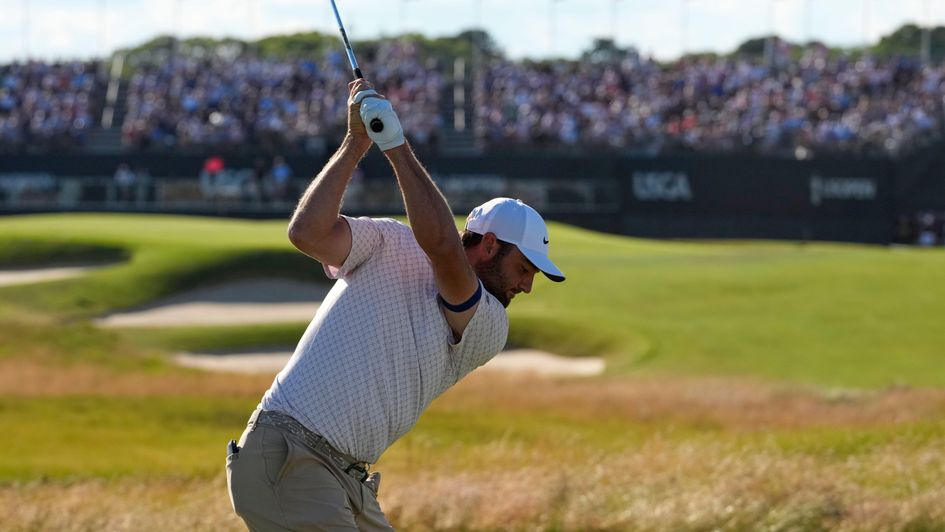
Scheffler often draws comparisons with Tiger Woods and so far, that's apt in majors. It's four leads, four wins, for the world number one. Woods didn't win one from behind until 2019, more than two decades after he turned professional. Scheffler for now is seeking to overcome that same challenge. His latest, when seeking the career grand slam at the US Open, never really materialised despite starting round four in second place.
Rory McIlroy
- Leading or co-leading: 3
- 1-3 strokes behind: 4
- 4-6 strokes behind: 2
- 7+ strokes behind: 11
McIlroy has famously won the Masters twice in as many years and both times from the lead. He had failed to convert from the front in the 2022 Open Championship at St Andrews and then let slip a big chance to run down the leader in both the 2023 and 2024 US Opens. As with Scheffler, key for McIlroy has been to get his nose in front. Once there he's been hard to topple.
Matt Fitzpatrick
- Leading or co-leading: 1
- 1-3 strokes behind: 1
- 4-6 strokes behind: 2
- 7+ strokes behind: 16
Fitzpatrick's two real chances to win came in quick succession. In May 2022, he began the final round of the PGA Championship in the final group and was unable to make the play-off. One month later he put that experience to use when again in the final group, this time hitting a brilliant approach to the 18th green to help secure the par he needed to beat Scheffler and Will Zalatoris. Zalatoris had been in the play-off at Southern Hills the previous month. It's reasonably common to see players contended for successive majors as both he and Fitzpatrick did.
Xander Schauffele
- Leading or co-leading: 1
- 1-3 strokes behind: 1
- 4-6 strokes behind: 2
- 7+ strokes behind: 16
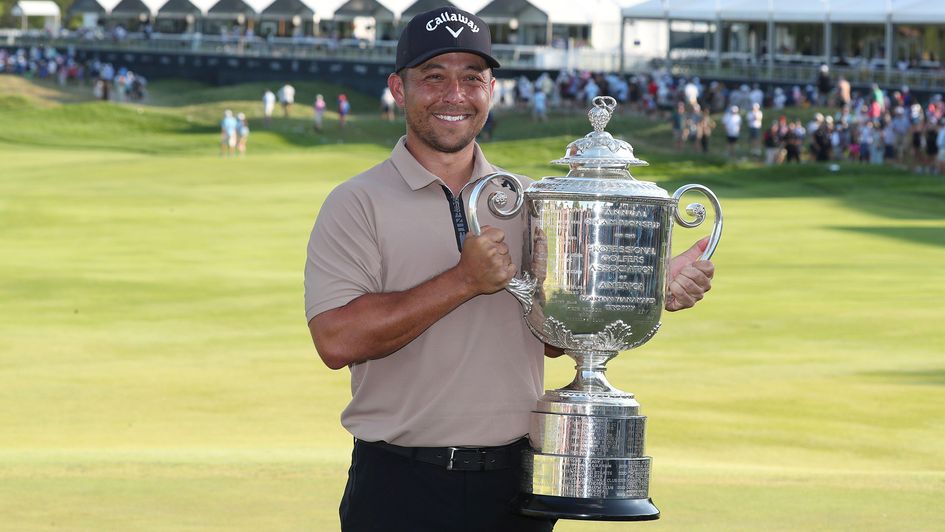
Again, this sense that to win you need to be in position through 54 holes is hard to escape. Schauffele, so often a nearly-man in majors, was in front entering the final round of the 2024 PGA Championship and won his first major. Two months later, he was in second place heading into the final round of the Open and won that too. His fabled US Open record is less impressive than it seems, because he's never had a real chance.
Jon Rahm
- Leading or co-leading: 0
- 1-3 strokes behind: 3
- 4-6 strokes behind: 4
- 7+ strokes behind: 13
Rahm has won one major in the designated period, the 2023 Masters, where he entered Sunday two behind the leader. There was little threat from behind in what appeared to be a head-to-head and Rahm, at his imperious best, took down Brooks Koepka to win comfortably in the end. Since then he's had an outside chance at best in the 2023 Open but went into the final round of the PGA Championship in May as one of the favourites, only to be overtaken and left behind by Aaron Rai.
Tommy Fleetwood
- Leading or co-leading: 0
- 1-3 strokes behind: 0
- 4-6 strokes behind: 1
- 7+ strokes behind: 19
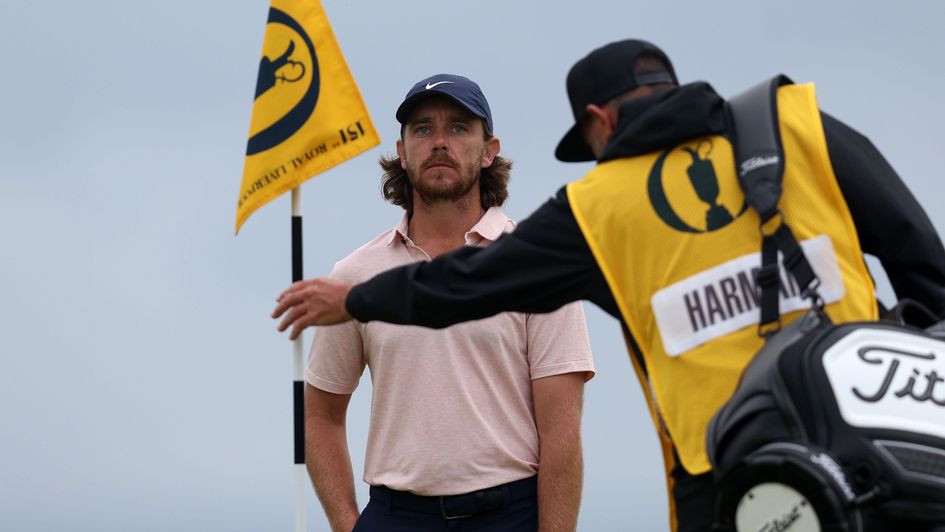
There's much more on Fleetwood below, and how seldom he's actually had a chance to win at the highest level. One aspect not discussed in detail is perhaps the most damning: on 19 occasions he's been seven or more strokes off the lead and therefore with no chance at all to win. The exception came in the 2024 Masters, but he was six shots behind Scottie Scheffler and lost by seven. In fact the one time he's looked like a viable winner during this five-year period was heading into round three of the 2023 Open, where he was in the final group and backed by home support. He ended the day seven behind Brian Harman.
Ludvig Aberg
- Leading or co-leading: 0
- 1-3 strokes behind: 2
- 4-6 strokes behind: 2
- 7+ strokes behind: 7
Aberg has so far played in 11 majors which puts a positive slant on the fact he's started the final round of two of them within striking distance. His record of being within six more than a third of the time stacks up quite well with similar second-tier players and supporters would argue that's from a standing start. For the record, Scheffler won his first major at the 10th attempt, McIlroy at the 11th. Aberg is about to make his 12th start.
Justin Rose
- Leading or co-leading: 0
- 1-3 strokes behind: 3
- 4-6 strokes behind: 2
- 7+ strokes behind: 14
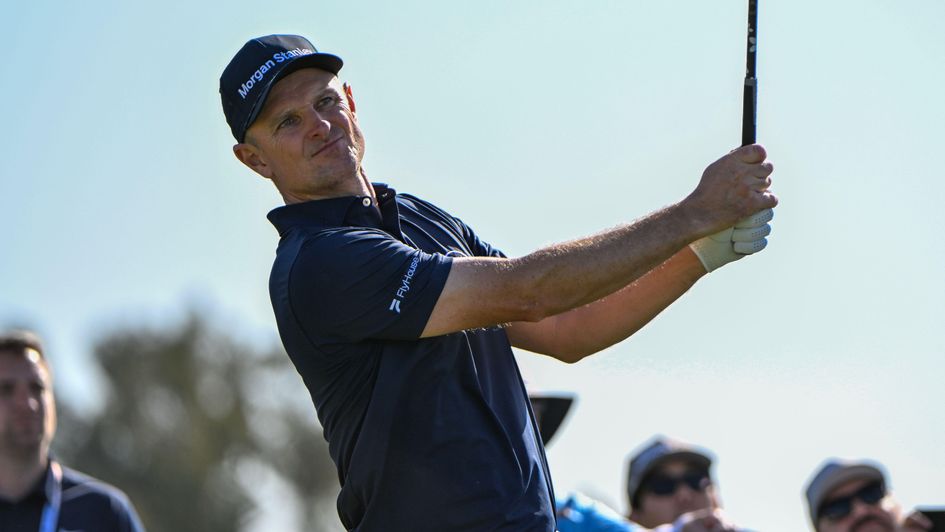
Rose continues to strive to become a two-time major champion, well over a decade on from his US Open victory at Merion. One of the hallmarks of his current profile is that while not as consistent as some of his rivals towards the top of the sport, he has retained an ability to peak when he wants to. Three genuine chances include the Open at Troon and that Masters play-off defeat to McIlroy the following spring. He arrives for another go at the Open having skipped the Scottish Open. It was at Birkdale that he first rose to stardom as an amateur in 1998.
Collin Morikawa
- Leading or co-leading: 1
- 1-3 strokes behind: 2
- 4-6 strokes behind: 3
- 7+ strokes behind: 14
Morikawa's second major came in the 2021 Open, the beginning of this time period, and saw him begin the final round two off the lead. Since then his best chance came at the PGA Championship won by Schauffele, where he entered the final round tied for the lead but was beaten by six.
Wyndham Clark
- Leading or co-leading: 2
- 1-3 strokes behind: 0
- 4-6 strokes behind: 0
- 7+ strokes behind: 14
Clark is two-from-two in converting 54-hole major leads, both having come in the US Open. Though he finished strongly for fourth place in the Open at Portrush last summer, he began the final round nine behind Scheffler. Clark had started the tournament with a round of 76 and thereafter never had a chance to win.
Cameron Young
- Leading or co-leading: 1
- 1-3 strokes behind: 0
- 4-6 strokes behind: 5
- 7+ strokes behind: 13
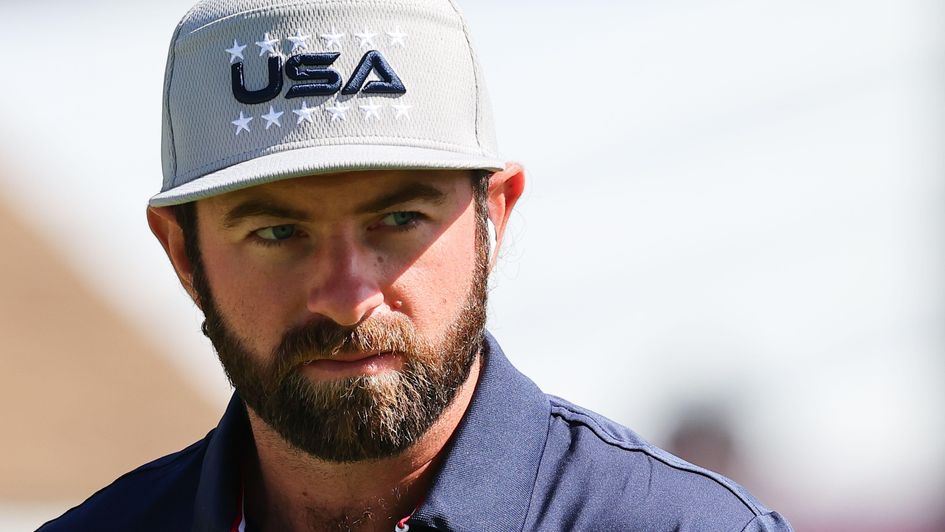
Given his healthy strike-rate of seven top-10s in 21 majors, some would be surprised to learn that Young only qualifies for one chance based on the method of calculation used. That came in the Masters this year, when he was in front midway through the opening nine but faded to third place after a round of 73. His near-misses at the Open and the PGA in 2022 both came from four shots behind.
Tyrrell Hatton
- Leading or co-leading: 0
- 1-3 strokes behind: 0
- 4-6 strokes behind: 3
- 7+ strokes behind: 17
Hatton's record looks worse than it is, because he certainly had a chance to win the US Open at Oakmont last summer. Beginning the final round four off the pace, he was beaten by four but only after a bogey-bogey finish to JJ Spaun's birdie-birdie. In other words, through 70 of the 72 holes they were on the same score. Hatton has since added two more off-the-pace top-10s, both this year.
Bryson DeChambeau
- Leading or co-leading: 1
- 1-3 strokes behind: 3
- 4-6 strokes behind: 2
- 7+ strokes behind: 13
Dechambeau famously won the US Open at Pinehurst from the front, his closing par coming courtesy of one of the great bunker shots in the history of that championship. Thereafter he headed into the final round of the 2025 Masters in pursuit of McIlroy but lost that battle, as he had the 2023 and 2024 editions of the PGA Championship. He's been within six on six occasions, which puts him behind only Scheffler, Rahm and McIlroy of those listed.
What might this tell us?
The first conclusion is a simple one: the best two players in the game, who we know are clear of the remainder, are the best at creating chances. Scottie Scheffler has taken more (four) of his seven than Rory McIlroy (two) has his, the latter famously missing out in close finishes in 2022, 2023 and 2024, before winning the Masters in both 2025 and 2026.
The second is an uncomfortable one: of the players listed, Tommy Fleetwood and Tyrrell Hatton are the only two who haven't held a realistic chance entering the final round. Hatton went on to create one, looking the likely winner of last year's US Open for a time despite starting five off the lead. It's difficult to argue that Fleetwood has been a realistic champion since the 2019 Open, and even there he was four back in second.
Fleetwood, who would arguably be the most popular winner and who at the time of writing has moved to third in the betting, has played in 44 majors so far. Only twice, in 2017 and 2020, has he entered the final round within three strokes of the lead. And this theme extends beyond majors, too. There is a strong case to argue that his problem is less to do with taking opportunities, and more to do with creating them.
By way of example, he has held the lead or a share of it eight times in over 400 career starts and he's won four of these. Matt Fitzpatrick has played around 100 fewer events but led 16 times, winning eight. That's an identical strike-rate which rather undermines the notion that he's a superior closer, and suggests he's just been better at getting himself into a commanding position. Of course, as we saw when he won the 2022 US Open, Fitzpatrick has gone on to execute under pressure.
Fleetwood has only had a realistic chance to win during the closing holes of one major, and that was the 2018 US Open where his closing 63 was almost enough, but not quite. Had his birdie chance on the final hole gone in, who can say whether Brooks Koepka would've matched or bettered a more fearsome target. What we do know is that, up until that putt missed, Fleetwood had executed, knowing full well he was right in the mix.
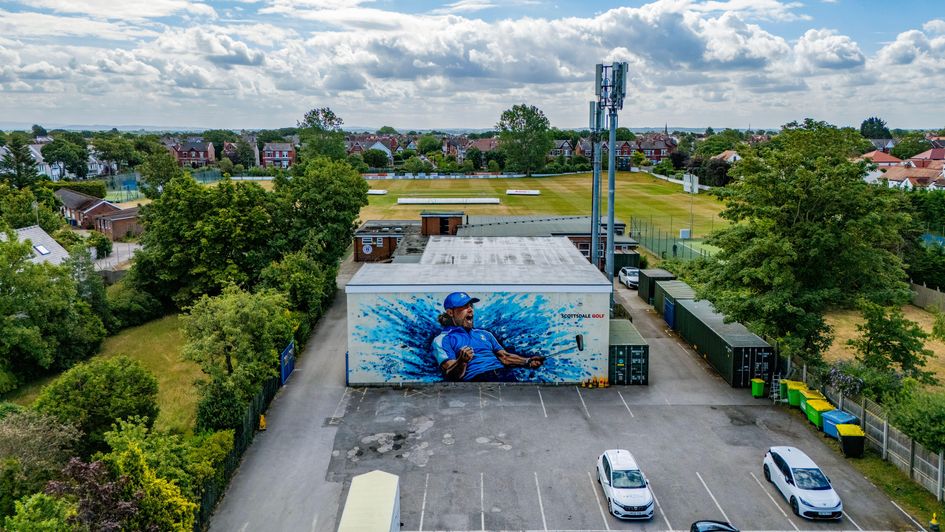
And that to me is one of the most fascinating potential storylines as we approach the Open, just down the road from his childhood home. I've written already that how Fleetwood handles the pressure of being the home hero is a key talking point before the tournament begins. If he overcomes that challenge and finds himself in the mix come the back nine, that will be a scenario he simply hasn't faced often.
Finally, among those not listed, Viktor Hovland has been within three of the lead on five occasions during the designated period, a figure which puts him clear third best among all male golfers. The player in fourth is also not listed above. That's Sam Burns, who has had four chances including last month in the US Open. Like Hovland, another of them came in the Open, and both arrive at this one in good form.
Hovland in particular has the profile of a breakthrough major champion, having won recently and contended for majors in each of the last four seasons. The question he has to answer is whether or not his short-game is good enough, particularly at Birkdale, where scrambling has been an essential requirement. Unlike St Andrews, scene of his sole Open chance so far, it's not often possible to putt from off the green.
Fleetwood has nothing to prove in that department and it's fair to say his game appears to be a dream fit. Everything about him looks perfect for a tournament at a golf course he'll have been itching to return to. Everything except the fact that he's seldom entered the final round of a major championship as a genuine contender. It's that he needs to change.