
The bad news for England is that nobody has ever truly solved Lionel Messi. The good news is that plenty of teams have found ways to limit him.
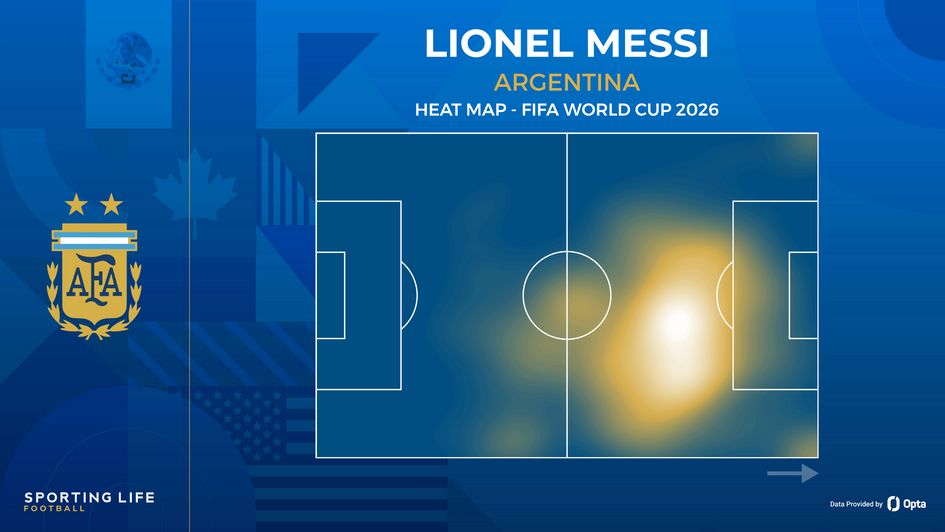
At 39, Messi no longer devours entire matches in quite the way he once did. He walks more, conserves more energy and picks his moments more carefully.
Yet those moments remain decisive.
Argentina have reached another World Cup semi-final because, when games tighten, Messi still has an unmatched ability to identify the one pass, the one dribble or the one finish that changes everything.

If Thomas Tuchel is searching for a blueprint before Wednesday's showdown in Atlanta, he is unlikely to find one perfect solution. He may, however, find several useful clues.
The first lesson is perhaps the simplest. Do not become obsessed with Messi at the expense of everybody else.
One of the biggest mistakes opponents have made over the years has been allowing Messi to dictate their defensive structure simply by existing. The temptation is to send two or three players towards him whenever he receives possession. That often creates the space he wanted in the first place, opening passing lanes for runners arriving from midfield or overlapping full-backs.
The teams that have frustrated Messi most effectively have generally defended zones rather than individuals. They accepted he would receive the ball, but ensured there was immediately another defender waiting in the next space.
Instead of trying to stop the first touch, they concentrated on preventing the second and third.
Throughout his managerial career, Tuchel's best teams have defended aggressively without sacrificing their structure. His players are expected to press in coordinated waves rather than chase opponents individually, ensuring one player steps out while another fills the space behind.
It is exactly the kind of collective discipline required against Messi.
The second lesson is to stop the supply before worrying about the receiver.
Messi has always appeared impossible to contain when allowed to receive possession facing goal. The clubs that have enjoyed the most success against him often attacked the problem much earlier in the sequence, disrupting Barcelona's or Argentina's build-up before the ball reached him.
Inter's famous Champions League semi-final victory in 2010 remains one of the clearest examples. Jose Mourinho accepted Messi would see plenty of the ball, but ensured he received it under pressure, with passing lanes constantly shrinking around him.
Chelsea adopted similar principles in several European meetings with Barcelona, while Bayern Munich's extraordinary 8-2 victory in Lisbon was built on overwhelming Barcelona collectively and denying Messi the support around him rather than attempting to mark him out of the game.
England have the personnel to attempt something similar. Declan Rice, Elliot Anderson and Jude Bellingham possess the athleticism to disrupt Argentina's midfield rhythm, while England's front line has shown throughout the tournament that it can press with far greater intensity than previous generations.
If Rodrigo De Paul, Enzo Fernandez and Alexis Mac Allister are denied time to dictate possession, Messi's influence naturally becomes more sporadic.
That does not mean England should simply defend deep.
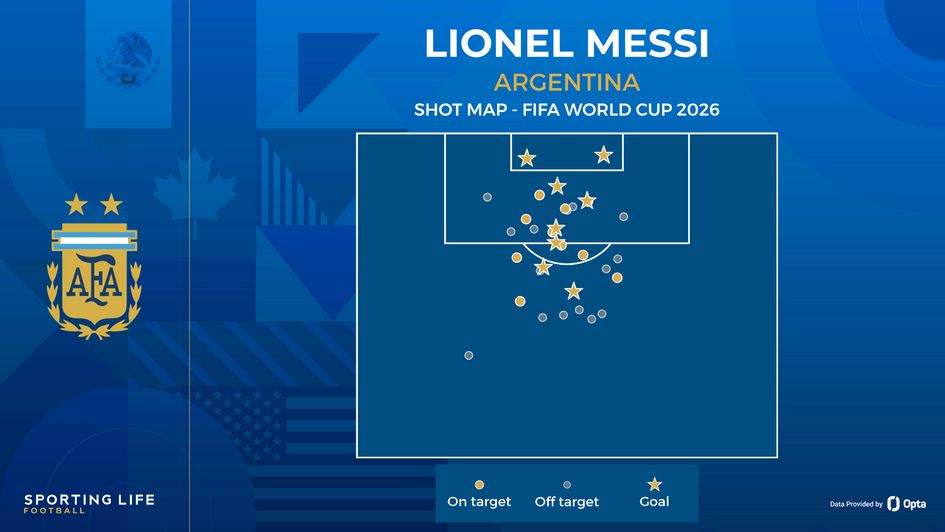
One criticism occasionally levelled at Tuchel's sides is that they can become too cautious in the biggest games. Yet the evidence suggests inviting Messi closer to goal rarely ends well. Even at this stage of his career, he remains devastating around the edge of the penalty area, particularly from free-kicks and quick combinations.
England's best approach may instead be controlled aggression. Press high when the opportunity presents itself, but only collectively. Force Argentina backwards rather than allowing them to establish long spells of possession around England's defensive third.
Every extra 20 yards Messi has to travel with the ball is another opportunity to crowd him out.
The other obvious consideration is where Messi chooses to drift.
Although he now spends much of his time operating centrally, he still instinctively moves into the right half-space, looking to isolate defenders before cutting inside onto his left foot.
Whoever starts on England's left will need constant support. The temptation to dive into tackles must be resisted. Messi has spent two decades exploiting defenders who commit too early.
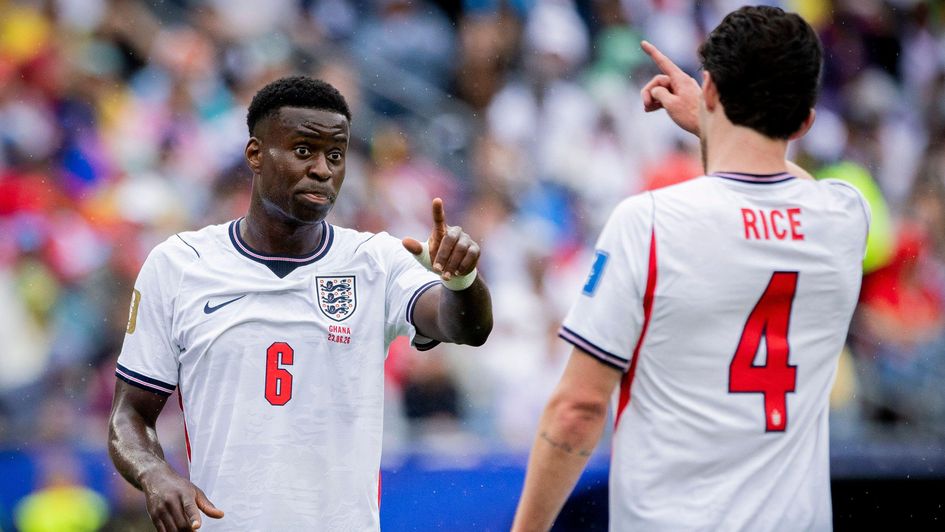
Marc Guehi could prove particularly important if he starts. One of his greatest strengths is his patience in one-on-one situations. Rather than diving into challenges, he is comfortable delaying attackers and waiting for support to arrive, an attribute that becomes invaluable against a player who still punishes defenders for overcommitting.
Tuchel's teams have generally preferred to funnel dangerous attackers into crowded areas rather than leave them isolated against a single defender. England may adopt exactly that strategy, encouraging Messi inside only after ensuring Rice, Anderson or another midfielder has already recovered into position.
Discipline will matter just as much as tactics.
Messi remains among the world's finest dead-ball specialists, making unnecessary fouls around the box especially dangerous. Argentina also thrive when matches descend into chaos. They are masters at slowing the tempo, managing emotions and capitalising on opponents who lose concentration.
England's biggest challenge may not simply be stopping Messi with the ball but refusing to let him dictate the emotional rhythm of the occasion.
Perhaps the final lesson comes from accepting that perfection is impossible.
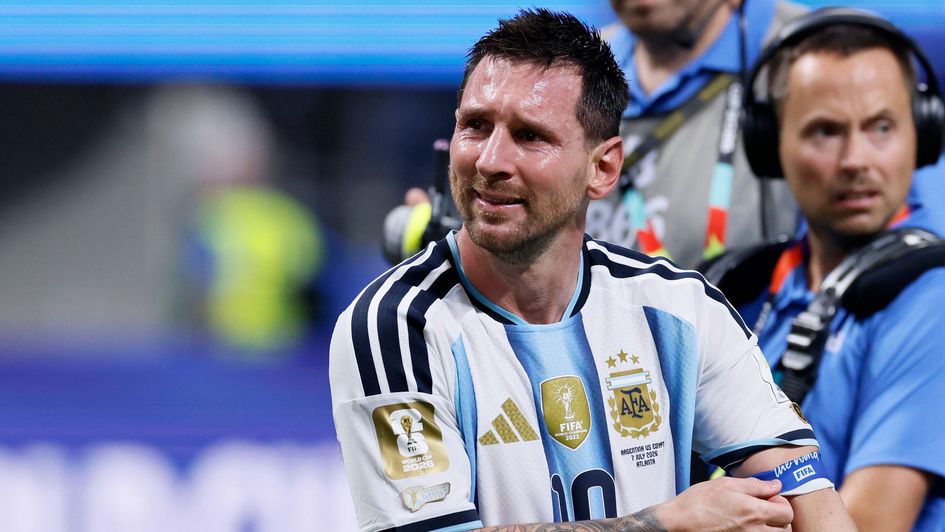
Even the greatest defensive performances against Messi have usually contained moments when he escaped.
Chelsea frustrated him repeatedly before he eventually broke through. Against Paris Saint-Germain in 2021, Manchester City largely controlled Messi only to watch him curl an unstoppable finish into the top corner. Inter restricted his influence over two legs in 2010, yet he still struck the woodwork repeatedly.
England should not measure success by whether Messi touches the ball 30 times or 80. They should measure it by where those touches happen and how little damage they ultimately cause.
That has always been the paradox of defending Messi. No coach has ever discovered a way to erase him entirely. The most successful ones simply found ways to make his moments of genius a little rarer, a little further from goal and just a little less decisive.
If Tuchel can manage that for 90 minutes, England will give themselves every chance of reaching the World Cup final.
More World Cup content from Sporting Life
Outright previews
Safer gambling
We are committed in our support of safer gambling. Recommended bets are advised to over-18s and we strongly encourage readers to wager only what they can afford to lose.
If you are concerned about your gambling, please call the National Gambling Helpline / GamCare on 0808 8020 133.
Further support and information can be found at begambleaware.org and gamblingtherapy.org.