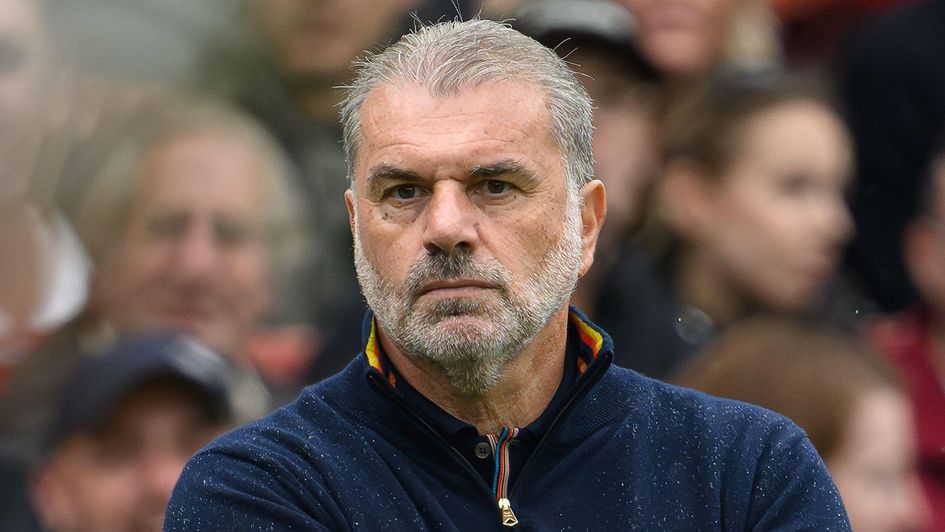
Ange Postecoglou in charge of one of Europe’s most romantic old clubs for one glorious shot at the Europa League was such an irresistible temptation Evangelos Marinakis couldn’t even wait for a legitimate reason to sack Nuno Espirito Santo to begin the fairytale.
- Published before Swansea beat Forest 3-2 in Carabao Cup
Postecoglou has won a major trophy at every club he has managed and nobody can begrudge a man who has taken such a long and difficult route to the top, but the way things unravelled in a near-catastrophic manner at Tottenham would have made a more rational and less emotional chairman look elsewhere.
He kept his promise of always winning something in his second year but it came at a high price to Postecoglou personally and almost to the club too. Spurs’ 17th-place finish in the Premier League ranks among the most colossal under-performances in the competition’s history and should not be ignored simply because Tottenham lifted the Europa League, especially given they did so playing a cautious brand of counter-attacking football that represented the complete abandonment of Ange-ball.
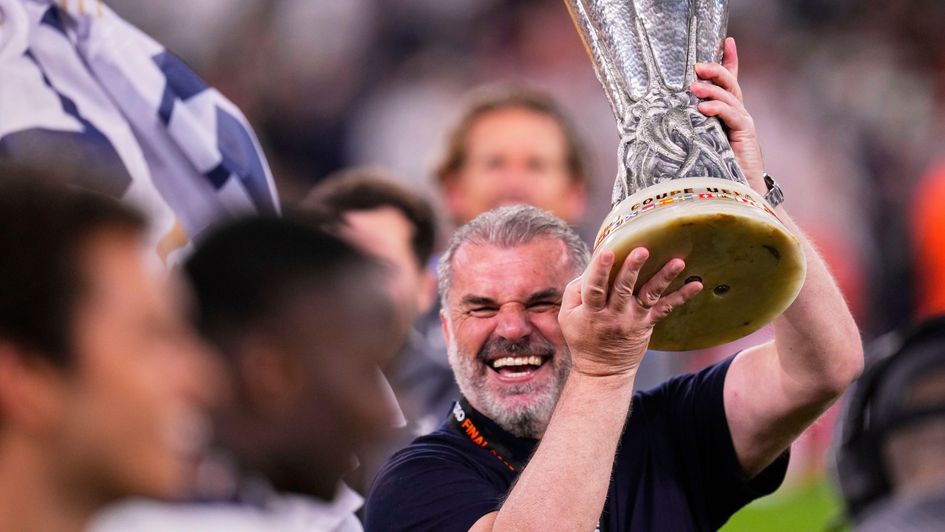
A kind reading is that Postecoglou finally learnt how to adapt and will therefore prove to be a more flexible manager at the City Ground. A less kind one says that when his unshakeable ideology failed him Postecoglou let go of it, leading to extraordinarily vacuous performances and a record-low Premier League finish – offset only by stumbling through a tournament in which Spurs were considerably richer than all of their opponents up until the final, when they faced a team even more shambolic than themselves.
Success in Australia, Japan, and Scotland rightly earned Postecoglou a reputation as an excellent manager and tactician, but the sad truth is that the ever-growing financial chasm between English football and the rest of the world makes comparison between smaller divisions and the Premier League redundant.
The wildly expansive attacking football, the kamikaze high line, the double inverted full-backs; Spurs won eight of their first ten league games under Postecoglou but as soon as opponents had worked out the antidote his ideas were exposed as too single-minded and too decompressed to work at this level.
You can dominate possession and territory as a big-club manager in Australian, Japanese, and Scottish football, and one very good idea can keep you going for a long time, but the Premier League is a much harsher place, where elite scouting require constant adaptation.
Spurs won 78 points from Postecoglou’s final 66 league matches. That is the record owners should be looking at, not the surprise 1-0 win at Eintracht Frankfurt in the Europa League quarter-final, the only impressive result of a knockout run that included a 1-0 defeat at AZ Alkmaar, a 1-1 draw against Frankfurt in the first leg in north London, and a semi-final breeze past Bodo/Glimt.
The counter-argument would be that it took a lot more than tactical ideology to end South Melbourne’s six-year wait for the title, to win three consecutive titles with Brisbane Roar (who had never previously won it), and to bring Yokohama F Marinos their first championship for 15 years.
In which case he ought to be able to reshuffle the tactical side, temper the excesses, and emerge as a capable manager at Premier League level. Certainly that is his only route to success at Forest – because Ange-ball definitely won’t work.
Over the last two years Forest have been the antithesis of Postecoglou’s Spurs, sitting deep where Spurs pressed high and going long where Spurs took risks playing out from the back.
Much has been made of Forest’s gradual adaptation towards more progressive football this season under Nuno and it’s true that their squad is now more suited to a proactive style of football, but if a club with Tottenham’s resources couldn’t cope with the crazy high line then Forest stand no chance.
Nikola Milenkovic and Murillo just aren’t suited to sprinting backwards from a high starting position, as evidenced neatly by Milenkovic’s red card for Serbia against England when he took down Harry Kane after the Bayern Munich striker went through on goal. And that’s Kane, hardly one of the fastest forwards around.
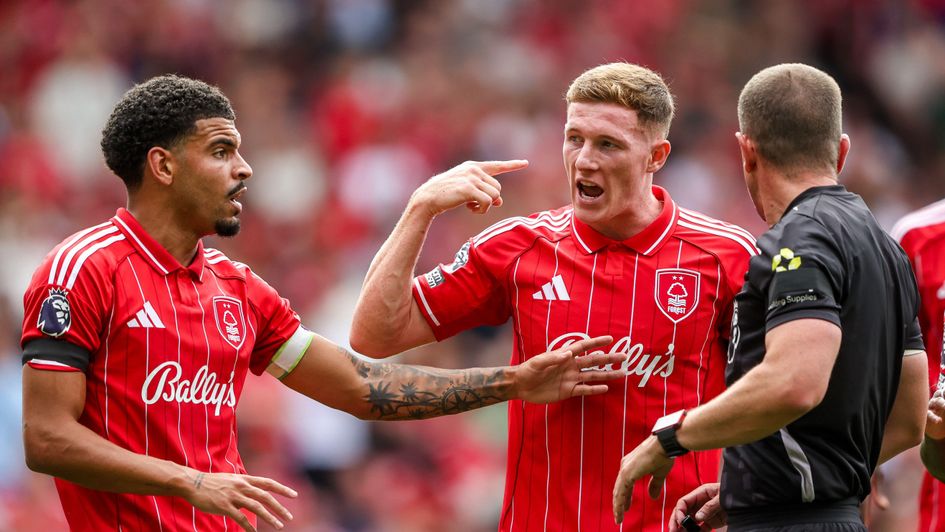
Postecoglou does have a strong squad that will enjoy a more expressive system. Elliot Anderson, Douglas Luiz, Morgan Gibbs-White, and James McAtee could all flourish. Oleksandr Zinchenko and Ola Aina have all the qualities of Postecoglou full-backs inverting to become number eights.
But it’s hard to imagine that will be enough. The Premier League in 2025 is defined by the new wave of direct, high-pressing managers in the Basque mould, not possession-domination like old-school Pep Guardiola.
Postecoglou will know all this. It surely means he will try to find a halfway point. The problem is, tactical adaptation isn’t as simple as twiddling a dial and finding the right balance, especially not when your instincts have always been to see football as an all-or-nothing game.
More from Sporting Life
- Fixtures, results and live scores
- Home of This Week's Acca
- Football and other sports tips
- Download the Sporting Life app
- Podcasts and video content
Safer gambling
We are committed in our support of safer gambling. Recommended bets are advised to over-18s and we strongly encourage readers to wager only what they can afford to lose.
If you are concerned about your gambling, please call the National Gambling Helpline / GamCare on 0808 8020 133.
Further support and information can be found at begambleaware.org and gamblingtherapy.org.