Graeme North looks at what the clock tells us about the recent big-race action including an intriguing QIPCO 2000 Guineas.
Newmarket might be the headquarters of Flat racing in Britain, but I wouldn’t say its primary racecourse, Rowley’s Mile (to give it its original name) ranks highly among my favourite Flat venues.
I’ve been to the Craven Meeting a few times, yet never found either the racecourse or its patrons to be particularly welcoming and the last time I went to the Guineas meeting was 1988 when Doyoun scrambled home from Charmer in a race I thought he was sure to win easily after landing the Craven Stakes by four lengths from the previous season’s champion two-year-old Warning.
Back in those days the stalls were placed on either one rail or the other (they were on the far rail that day and the field all stayed there) but in attempt to minimise trouble in running, the track has over time settled on siting the stalls in the middle of the track which, though well-intentioned, on the back of watering policy hasn’t always led to a a satisfactory outcome with often runners splitting into two or three groups in search of a strip of faster ground (the ‘golden highway’ as it’s known rather scathingly on social media).
It struck me once again when watching the three days of the latest Guineas meeting that there was once again a subtle track benefit at play.
There had been much discussion at the time the draw for the 2000 became public knowledge about which of Godolphin’s two big guns, Native Trail or Coroebus, would be the least disadvantaged by their flank draw (Coroebus had stall 1 and Native Trail 15) but the more the meeting progressed it seemed more likely that Coroebus had drawn the ace.

Unlimited Replays
of all UK and Irish races with our Race Replays
Discover Sporting Life Plus Benefits

Indeed, I’d hold off on concluding just yet that Coroebus is definitively the better horse, for all we might have already arrived at that conclusion had he run in one of the trials and not (unsatisfactorily) the racecourse gallop offered him instead at the Craven Meeting.
The latest 2000 Guineas looked a decent one beforehand with the Vertem Futurity winner Luxembourg also in attendance along with multiple pattern winners at shorter trips in Perfect Power and Lusail, but an-eighth fastest time since 2000 on a near windless day and a relatively ordinary 115 winning timefigure upgraded to 117 on a day the three-year-handicap newcomer Ingra Tor in the last ran easily the fastest relative time, combine to make me think there is scope for a reorder of the result another day.
Luxembourg (raced far side) was the visual eyecatcher after a stumble at the start, but his final three-furlong sectional was slower than that posted by Coroebus as measured by Timeform and Course Track while the latter have Native Trail (closest to stand side) running the fastest final furlong (Timeform use just one sectional point) after losing a bit of momentum not unexpectedly in the Dip.
Lusail was another whose track position might have compromised his finishing position, while Perfect Power was ridden more prominently than I might have expected for one whose end product has always been late on after a hold-up ride. Hopefully, Coroebus and Native Trail (who still boasts the higher timefigure) will meet again to set the record straight once and for all.
It’s hard to argue that the 1000 Guineas was anything other than an ordinary edition on the clock with Cachet’s winning time of 1.36.55 translating into a 104 timefigure, upgraded to 109 after sectionals are taking into account, putting her in somewhere towards the lower tier of Guineas winners this century.
Timeform’s sectional time readings have Zellie running marginally the fastest last three furlongs while those supplied by Course Track have runner-up Prosperous Voyage just edging it, but in truth there was next to nothing between the last three-furlong times of the first six.
Not to take anything away from Cachet, who according to her trainer in a post-race interview is a much stronger filly now than when trying a mile last autumn, but again I was left wondering whether the winner was on the best position on the track.
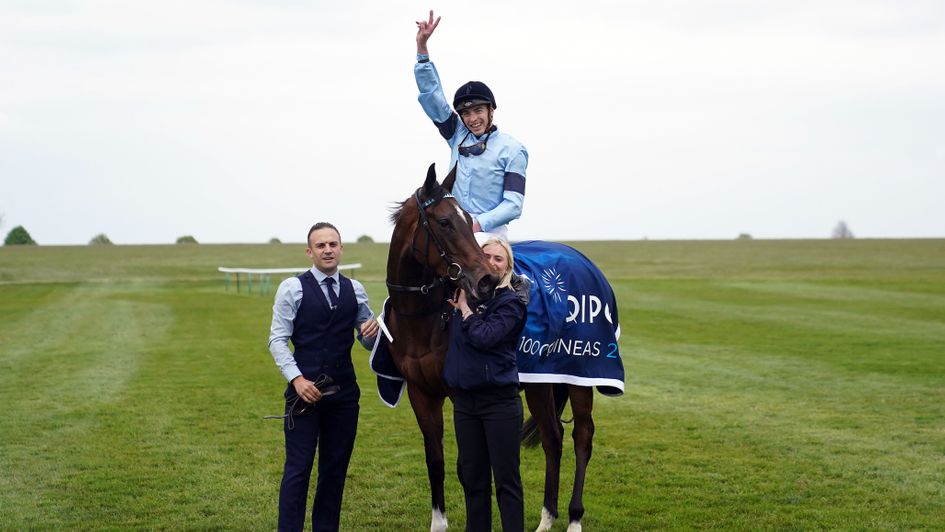
I’m open-minded as to whether Sandrine is a sprinter or miler but she had by far the worst of the track position of the principals (as she had also in the Cheveley Park here last autumn) while Zellie was another one who looked compromised by her position well away from Cachet as well as the combination of track and ground. She’ll be much more effective over an extended mile and a quarter in the Prix Diane.
If I had a pound for every time I heard the words ‘Marygate at York’ on racing television last week, I’d almost have enough money to afford the typical entrance fee to a nondescript midweek meeting at an Arena racecourse.
A gradual reduction in average field sizes over a good number of months, notably over jumps, has finally led to calls from some within the industry for a reduction in the number (possibly targeted) of races, but the problem to me seems no less pertinent on the Flat.
The Marygate, a Listed event for two-year-old fillies over five furlongs at York in May (it was run in July in the Covid-affected 2020) is one race that has always sat uncomfortably with me as having been an unnecessary addition to the Racing Calendar in that it seems as much a reward for precocity as ability and has more often than not been an end in itself rather than a springboard to better second-season achievements, for all Signora Caballo and Good Vibes can be counted among its winners.
I’d bet that Dramatised is easily good enough to be its best winner yet should her trainer Karl Burke elect to send her there, but he hasn’t been much disposed towards the race before having run only one filly (fifth in 2019).

A four-length winning margin in a 99 timefigure (which was the bare minimum I could have returned) sets her well apart on the clock from the best of her female contemporaries (though either Ocean Cloud or Star Of Lady M might cause me to re-evaluate that opinion if running away with the Lily Agnes at Chester this Wednesday) and a sub 11 furlong penultimate furlong ahead of a final furlong 11.7 seconds as returned by Course Track is indicative of the speed she showed.
With Richard Hannon rather dismissive of the race when discussing possible future plans for his Miami Beach, who beat the colts by five lengths on 1000 Guineas Day in a visually-impressive but more modest 63 timefigure (80 after upgrades are taking into account), then looking at the list of possibles the Marygate could well end up being once again more about quantity than quality - as well as precocity, of course.
Dramatise’s timefigure, as a matter of interest, is better than any recorded so far by a two-year-old colt. Richard Hannon’s impressive Brocklesby winner Persian Force still holds that accolade on 97, 8lb clear of his nearest rival.
Karl Burke has a potential substitute for Dramatised in the shape of Yahsat, who atoned for her narrow defeat at Newmarket on her debut where she had run a blistering 10.87 penultimate furlong before getting mugged on the line, by winning by five lengths at Pontefract.
After her win, Burke let it be known that he had spoken to the contacts of the other three runners, who were all held in decent regard apparently, which makes the Course Track finishing sectionals for the race particularly interesting.
Yahsat won readily and could have probably run a bit faster had she not edged across to the stand rail, but, according to Course Track, very unusually, she ran the slowest final furlong while the runner-up Gulmarg ran the second-slowest final furlong and the last horse home Ramazan came home the fastest of all.
Ramazan made a horlicks of the start, forfeiting his inside stall by diving right, but he then then ran the third furlong fastest of all before running green on straightening up only to find the penny dropping late. Easily the most expensive of the quartet and a half-brother to the Group 3 6f Prix du Meautry winner Spinning Memories, he could easily improve significantly.
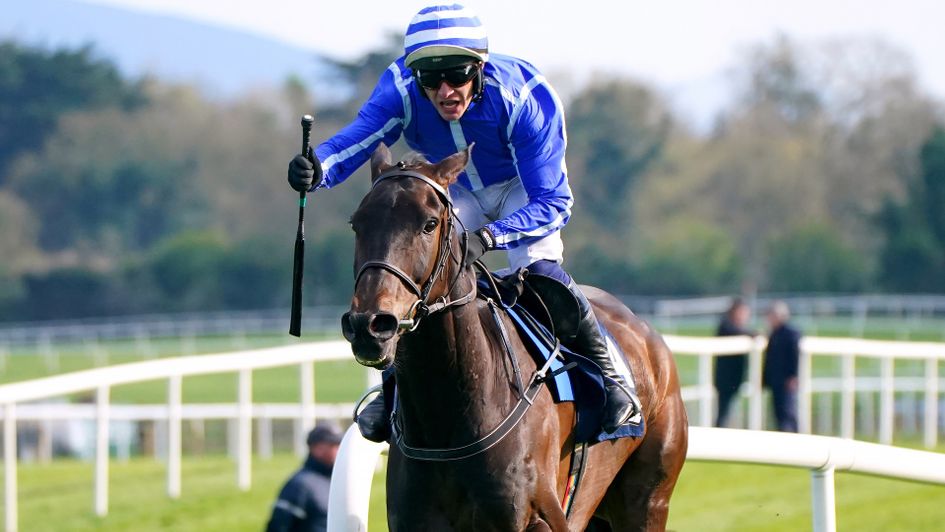
The Punchestown Festival brought the jumps season in Ireland to a close, and while it would take a brave one to conclude that Willie Mullins' domination is on the wane, he trained just the 14 winners across the Festival compared to 19 the year before (British challengers managed a respectable three winners from 21 challengers, although that number was well below half the 48 sent across in 2019 that returned seven winners).
The ‘story’ of the week was the extension of Honeysuckle’s unbeaten record under Rules to 16 in a race in which Robbie Power had his last ride, but she again didn’t need to run to her best to see off a substandard field in a 142 timefigure.
The best performance on the clock across the week (175) was posted by Energumene in the William Hill Champion Chase as he inflicted only the second defeat on Chacun Pour Soi in Ireland (A Plus Tard is the only other horse to have beaten him at home).
A Plus Tard sat the meeting out but Ryanair winner Allaho looked imperious again in beating Clan Des Obeaux by 14 lengths in the Punchestown Gold Cup though a 157 timefigure, well below the 179 he is capable of, suggesting the front-running ride he received made the most of his speed trying three miles for the first time since the Savills Chase in 2020.
Connections afterwards seemed to favour the Ryanair again next year for Allaho rather than a tilt at the Gold Cup but hopefully they’ll change their minds before then.