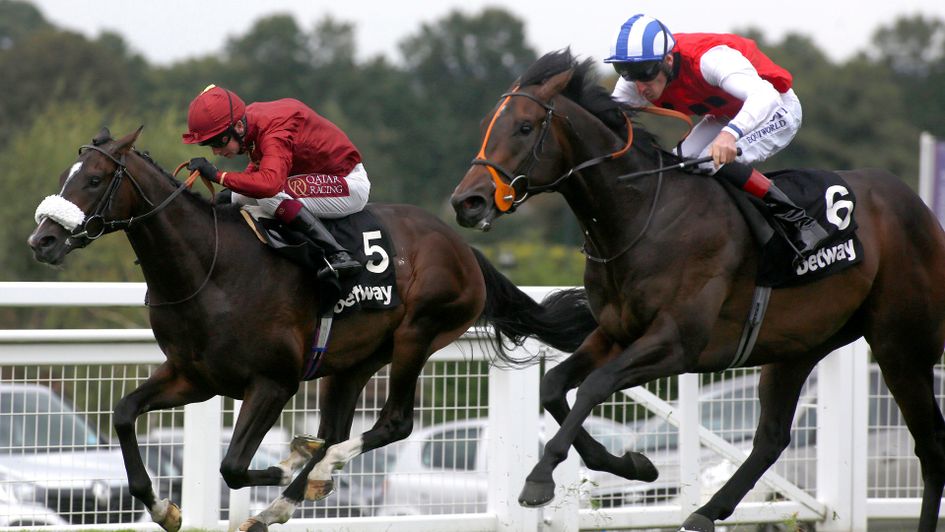
Ben Linfoot looks at the all-weather stats of the progeny of sires who have participants involved in the Group One Vertem Futurity at Newcastle on Friday.
The first ever British Group One race to be run on an artificial surface takes place at Newcastle on Friday evening, with Doncaster’s loss, due to waterlogging, Gosforth Park’s gain.
Perhaps in 20 years such an event will be commonplace, but even if things don’t work out like that Friday’s Vertem Futurity Trophy is a landmark moment in British racing.
A final field of 12, double the number it would’ve been at Doncaster, is a positive and seven trainers are set to be represented with plenty of new hats thrown into the ring since the switch.
It’s no longer an Aidan O’Brien-fest with Andrew Balding trying to spoil the Ballydoyle party. John Gosden, Jim Bolger, Ralph Beckett, William Haggas and Emmet Mullins have runners now, too, and it’s made up into a fascinating renewal.
The key variable for punters is the surface. That much is obvious, but none of the 12 contenders have ever run competitively on any sort of all-weather track before, so plenty of guesswork is required.
Looking at the market, though, the change of surface doesn’t seem to have affected the betting at all.
Kinross, an eight-length winner at Newmarket on debut, has. He’s been inserted as the 9/4 second-favourite, with Mogul, odds-on for the Doncaster version, pushed out to 13/8, while his stablemate Innisfree and Balding’s Kameko are now a couple of points bigger at around 13/2 and 8/1 respectively.
O’Brien’s Galileo’s, however, could be at a bigger disadvantage than the market adjustments suggest.
One way we can help with the aforementioned guesswork is to look at some data regarding the progeny of the sires who are represented in Friday’s contest and they make for some interesting reading.
In the below tables you can see Galileo progeny have a strike-rate of around 10 per cent on both the Newcastle Tapeta surface and at Wolverhampton since their own Tapeta track was laid in the August of 2014.
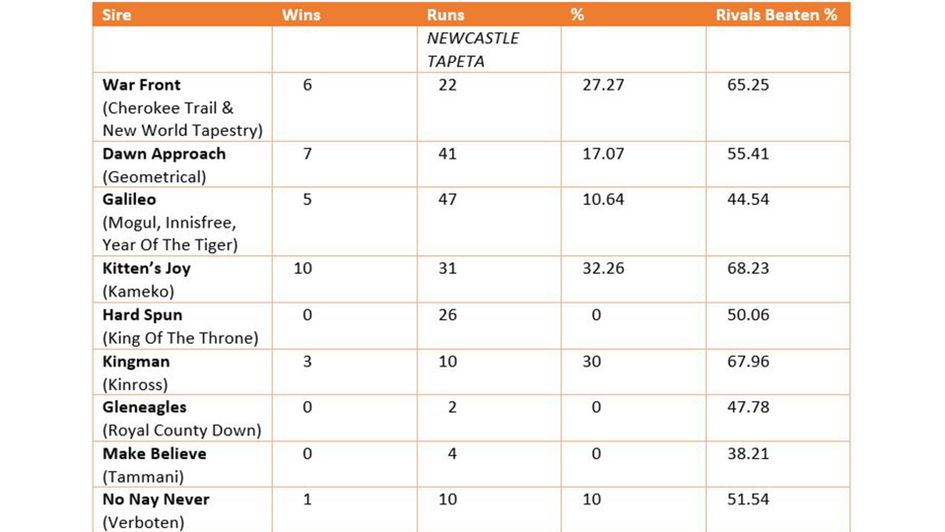
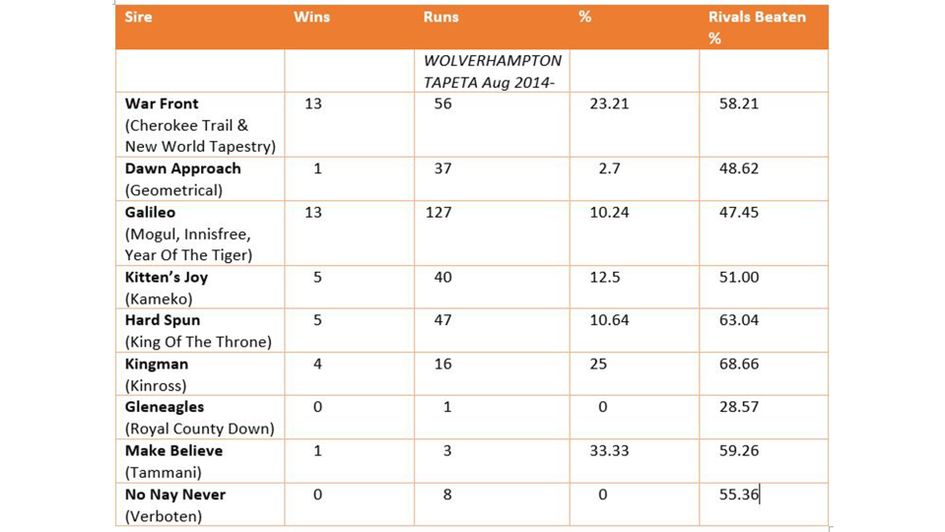
That’s a significant drop from the near 17 per cent strike-rate Galileo progeny have on turf from a much bigger sample (1319 wins from 7891 runs) and is in stark contrast to some of the sires that excel on the all-weather with their stock.
Fans of Kameko should be encouraged by the performances of Kitten’s Joy’s progeny at Newcastle, for example. Ten wins from 31 with almost 70 per cent of rivals beaten are some really healthy numbers and give reason for optimism when it comes to Kameko’s first go on the Tapeta.
We’ve not got much to go on with Kinross, either, from what he’s done on the track or what Kingman’s stock have done on the all-weather. The early signs of both are highly encouraging, but there’s little wriggle room at around 9/4 even though he’s clearly got plenty of potential.
Finally, one to consider at a price is John Gosden’s 40/1 chance Cherokee Trail. Gosden has a terrific record at Newcastle, winning 40 races from 102 goes at 39 per cent. Drilling down to his two-year-olds at Gosforth Park, he’s won 18 from 36 goes at 50 per cent, with his juveniles beating 78 per cent of their rivals.
Immediately, Cherokee Trail is of interest, then. And he’s forgiven his seventh-place finish in the Autumn Stakes in soft ground at Newmarket where conditions were against him. By War Front, he’s likely to be much more at home on the all-weather and the stats back this assertion up.
War Front progeny have won six from 22 at Newcastle on the Tapeta, at 27 per cent, and though that’s a small sample his Wolverhampton stats are just as strong, with 13 wins there coming at a strike-rate of over 23 per cent.
Cherokee Trail has plenty to find on the formbook, but the track could help him bridge the gap and at 40s he’s worth considering from an each-way perspective. Of the market leaders, Kameko, who already has the form in the book and should relish the surface, makes most appeal.