Ben Linfoot pays a tribute, of sorts, to Menorah and identifies a horse that could join him in the Repeat Winner Stakes over the coming years.
Menorah: King of Sandown
So Menorah was well loved. Who knew? A steeplechaser who ultimately lost 20 of his 29 starts over fences strode out of the game on Saturday like he was the equine version of Anthony Joshua, four Oaksey Chase belts held aloft his head.
As repeat wins go, we’ve seen more impressive feats in recent years. Kauto Star’s five King Georges, Hurricane Fly’s five Irish Champion Hurdles, Quevega’s six wins in the Mares’ at Cheltenham. All classy, but if we're talking numbers the foremost horse in the Repeat Winner Stakes is Leaping Plum, who won the Grasmick Handicap eight times between 1995 and 2003 at Fonner Park, Nebraska, right in the middle of the US of A. Eight out of nine ain't bad, as Meat Loaf didn't sing.
Repeat winners earn a special place in the racing public’s hearts, whatever the level. What they do in between their repeat wins matters not, for they can be relied upon to do the business back at their favourite place under favourable conditions. Horses for courses, but more specific. Races for aces, perhaps. Menorah, it turns out, was one such horse.
There was a time, in his youth, when Menorah was just as reliable at Cheltenham. On his first three starts at the home of jumps racing he won the Supreme Novices’ Hurdle, the Greatwood Hurdle and the International Hurdle. He beat horses of the calibre of Get Me Out Of Here, Dunguib, Cue Card and Silviniaco Conti.
With a record like that he went into the 2011 Champion Hurdle as a justifiable 3/1 shot. Only Hurricane Fly was a smidgen shorter, at 11/4. The Fly won, Menorah was fifth, and when Willie Mullins’ winning machine beat him again at Punchestown, even more convincingly, the decision was made to send Menorah over a fence.
His life as a chaser began inauspiciously. He unseated Richard Johnson, the man who rode him on 39 of his 43 starts, at the second last when seemingly cruising to a win on his fencing debut at Exeter. Then a defeat at Cheltenham preceded a couple of small-field wins at Taunton and Kempton, before his jumping let him down again when he fell at the third in the Lightning Novices’ Chase at Doncaster.
Still, there was some hope he would put it altogether in the Arkle back at Cheltenham. But if he was put in his place by Hurricane Fly over hurdles, it was Sprinter Sacre that did the same thing to him over fences. By 29 lengths. At least when he did get a good hiding, it was from one of the greats of the game.
But what happened next set the blueprint for Philip Hobbs when it came to steering Menorah through the rest of his career. The thrashing at the hooves of Sprinter Sacre offered evidence that he couldn’t cut it against the very best at the Cheltenham Festival, but a month later he bounced back against inferior opposition at Aintree and he left them trailing in his wake.
Spring ground was important to him. Tier two opposition was important to him. An intermediate trip was important to him. It would take another season of experiments yet, but the stepping stones towards Oaksey Chase domination were being laid.
A relocated Peterborough Chase at Kempton aside, victories were hard to come by for eight-year-old Menorah. He ran at the Cheltenham Festival again, but was pulled up in the Ryanair. He ran much better at Aintree again, but was beaten into second by First Lieutenant. He went back to Cheltenham for the April meeting and, despite running a cracker off a mark of 169 in the Silver Trophy Handicap Chase, he was just beaten by Champion Court.
Mind you, that was probably a career best. And it reaffirmed that he wanted spring ground, tier two opposition and an intermediate trip.
He never really did stay three miles, did he? He tried the trip - or further - on 14 occasions and he won just the once, in the 2014 Charlie Hall Chase at Wetherby over three miles and a furlong. Everyone was so astonished they remeasured the course and found it was 78 yards short, sparking a BHA investigation into the distances of tracks up and down the land (sort of).
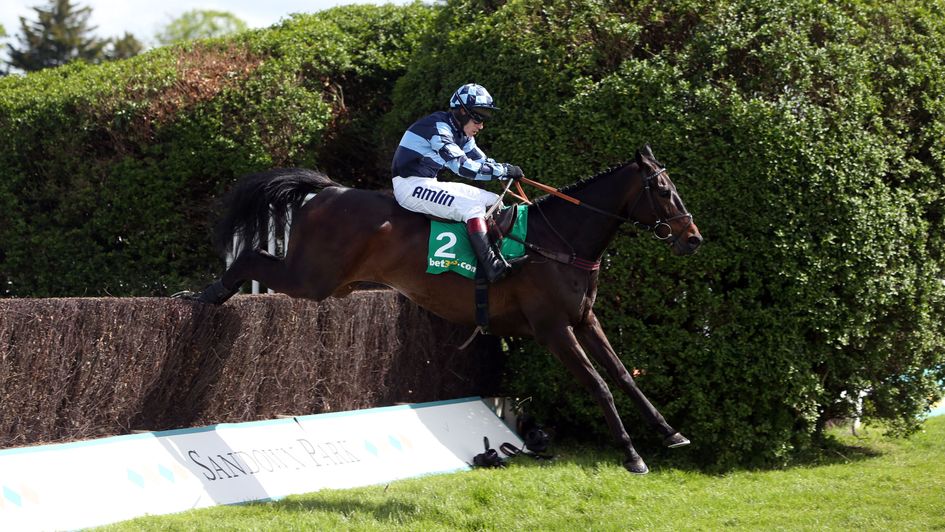
But before that, he won his first Oaksey Chase. Spring ground, tier two opposition, two miles and six furlongs, Sandown. Perfect. And for a chaser that had shown one or two issues with his jumping in the past he flew over his fences like so many Sandown specialists we’ve seen down the years. Johnson threw him at the obstacles and he responded every single time. Something clicked. He won by 17 lengths.
Hobbs felt he loved Sandown that much he ran him there on the Flat just over a month later in the Group Three Henry II Stakes. It was his debut on the level and Kieren Fallon rode him. He was by no means disgraced, either, losing by just under eight lengths to Brown Panther in ninth, but that was another experiment that was not to be repeated.
The following season he missed Cheltenham altogether, taking in Aintree, where he was fifth, before winning his second Oaksey. This time it was tougher, as old adversary Al Ferof kept him up to his work, but the result was the same. The Oaksey was his again.
His third Oaksey, in 2016, came at the expense of Mullins’ Valseur Lido, vital because it had a say in that season’s trainers’ championship. Again he jumped well, again he saw it out best up the hill. A third Oaksey was his.
This season, he ran well in between Oakseys. Second at Perth, fifth at Uttoxeter, second in the Charlie Hall. He even ran well back over timber when third in the Long Distance Hurdle at Newbury behind Unowhatimeanharry. More consistent than ever.
But no victories. Not until he rocked up at Sandown again on Saturday for what turned out to be the final time. He jumped like a demon again, put the race to bed between three out and two out and was only kept up to his work to see off the staying-on Traffic Fluide up the hill.
It was the perfect way to bow out, even if owner Diana Whateley didn’t entirely convince she thought as much when her thoughts briefly turned to the possibility of returning for the 2017 Charlie Hall. It was too late, though. Her husband Graham had already emotionally retired him live on ITV and few would argue it was the wrong call.
Menorah was a good ‘un. I get why he was loved. He wasn’t perfect, but he found his level. Not a heavyweight champion by any means, but the best in his weight division. His fighting weight was 11st 10lb in the Oaksey Chase at Sandown in April and, under those conditions, he retired unbeaten - with 23 losing opponents left flat out on the canvas.
L’Ami Serge – the new Menorah?
If you’re looking for a new Menorah to cheer on you might not have to look too far.
On the same card a few hours after the Oaksey Chase another King’s Theatre gelding bounded up the Sandown hill like the course was made for him. In the bet365 Select Hurdle, L’Ami Serge was the unlikely hero.
Aside from having the same sire, there are plenty of similarities between L’Ami Serge and Menorah. Bags of early promise. Struggled at the highest level. Tough to win with. But slightly easier opposition seems to be helping him out and the signs are that spring ground and an intermediate trip are too.
He might struggle at your Cheltenhams and your Aintrees, but Sandown? Sandown looks right up his street. He’s unbeaten at the Esher track after winning the Grade One Tolworth Hurdle there by 14 lengths, as well as Saturday’s Select.
After pulling hard throughout and still managing to win pretty easily it’s fair to say Nicky Henderson might’ve stumbled across L’Ami Serge’s ideal conditions.
He’ll have loftier targets, I’m sure, over both hurdles and fences in the years to come. But if all else fails he could attempt to become a repeat winner of the Select, ensuring his place in racing folklore along with the likes of Menorah and Nebraska’s hero Leaping Plum.