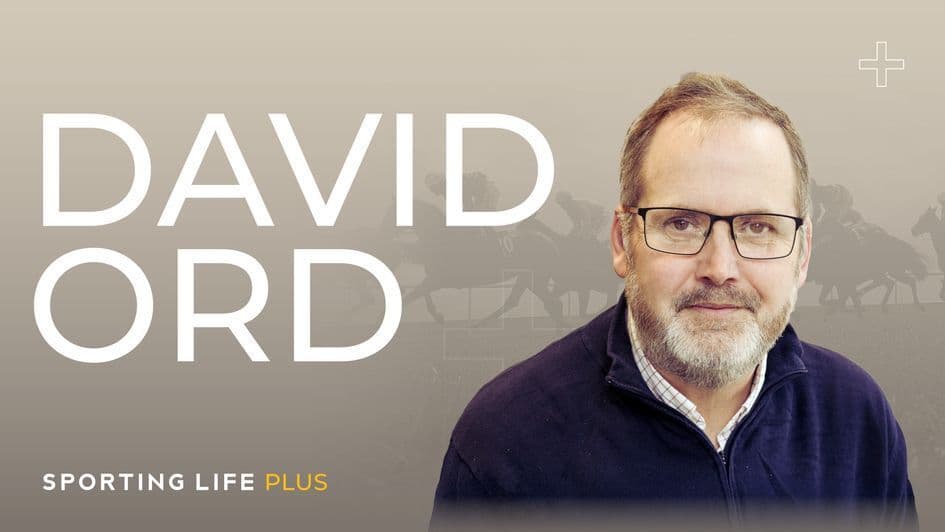
Our columnist talks to James Given about the 'A Life Well Lived' project and the challenges the sport will face over horse welfare moving forward.
The headwinds facing horse racing right now are considerable.
Pressure on the funding model is evident, recent successive and substantial tax rises on the gambling industry have not only threatened the levy returns to the sport but are already significantly reducing bookmakers’ discretionary spend too.
At the time of writing all five British Classics need new sponsors following Betfred’s decision to withdraw their backing. But in terms of the general public, those not already fans of or actively working in the sport, horse welfare is the biggest concern and number one issue.
Project Beacon, the most in-depth piece of customer research ever undertaken in racing, showed it was ‘the greatest barrier to engagement' among those surveyed.
Two weeks ago, the second iteration of the Independent Horse Welfare Board's strategy, 'A Life Well Lived' was launched at the House Of Commons and later at a media event at Cheltenham Racecourse. It runs from 2027 to 2031 and sets out 20 priorities to “further enhance welfare standards across the sport and across the lifetime of animals bred for the sport”.
The strategy is structured around four outcomes – Quality of Life, Safety, Lifetime Responsibility and Trust, spanning areas including veterinary research, injury prevention, the training environment, aftercare, data and transparency.
The British Horseracing Authority’s director of equine regulation safety and welfare, James Given, is confident this focus is the right one.
“They’re all important,” he said. “The four main pillars. Safety. That’s going to be a never-ending journey. You never close the book on that. Lifetime Responsibility and Trust. Public trust is critical for the continuation of horse racing around the subject of horses being used in sport. We’ve got to demonstrate we’re doing everything we can to reduce the avoidable injuries, accidents and fatalities. And not only be seen to do it, but actually do it as well.
“So, we must maintain the public trust. Public opinion, or attention, to anything is a Bell Curve. I'm not saying we’re extremists or anything, but we're at one end of it, Animal Rising and Animal Aid at the other. But a huge number of people fall into the don’t know or don’t care category – until they do so or are called upon to care.
“We’d like to think the engagement of GBR, the whole of the BHA on behalf of the sport, the Jockey Club communications team and others, are helping drive the message that we are a responsible sport and responsible organisations. We take the welfare of the animals very, very seriously and do everything we can to reduce injuries and fatalities.
“Because without believing it, that section of the public will tell their politicians they don’t agree with racing, and the politicians will tell governments. On the bad days we’ve had in racing, that group in the middle have woken to press reports on the TV, online and in the newspapers, and thought ‘hang on – this isn't great is it?’.
“And we’d have liked some of them to have thought ‘oh I saw something on TV, read something, seen an advert, and racing is responsible, has welfare at its heart and does everything it can do'.
"So, the messaging is so important as is traceability, visibility of where horses are and where they go after their racing careers are over.
“The new element to the plan is around Quality of Life and the data that we need and can gain access to. I think it will be the most challenging. It’s the overall welfare, wellbeing of the horse. I look back over my 30 years in the sport including my time as a trainer, and I wish I knew then what I know now. I’d have done things so differently and probably trained more winners too.
“It isn’t just about being successful. When I trained, I thought my horses were happy and tolerated everything we asked them to do so well. But could I have made them happier? Yes, I could given what I know now. I could have done a better job.
“Only 18 months ago I realised that when a horse lies down in most stables it can’t see another horse. And I thought ‘bloody hell, that’s not good is it?’ They’re social animals. There are moments where we can develop our knowledge, share that, and share an expectation as well to everyone of what to do better. It’s all of our responsibility and it comes back to trust.
“There’s no finishing point to this. We don’t know what we don’t know yet. There are data sources we haven’t even thought of that will emerge. The next iteration the jumps race risk modelling is getting weather data. Now people might think ‘wow, did you not have that before?’ but it’s getting it in a format that can then be plugged in and translated in the way that it needs to be.
“Simon Cowley, an ex-jockey and ex-steward, now runs our fatality review process. At the moment that’s not a mandatory process and we don’t get 100% pick-up but that’s another source of data and an approach that will allow the sport to gain confidence in the area. They’re not there to apportion blame, and while it sits with the BHA, it's not a regulatory thing. It’s what can we learn when something goes wrong? Sometimes there’s nothing more than it was an accident but the more we can find out, the better.
“And there’s learning from the training yards too. The jumps racing risk model shows us that 50% of the risk to a horse in a race arrives with it. What’s it’s training experience, what’s happened to it, the training surfaces... So, what can be best practice? Pip Kirkby leads on helping trainers to understand how to maintain their gallops, to be optimised to reduce the chance of developing small risks at home that can surface on the racecourse.
“We need all this data more and more. There’s so much that we don’t know and this is a never-ending journey."
The initial A Life Well Lived project ran from February 2020. How pleased is Given with the trajectory we’re now on?
“I’m quite impatient so I could answer the question by saying I wish I’d done more – but I’m also a realist. Where we’ve come from in terms of our progression of acceptance, is great, but there are still people in the sport who don’t accept that horse welfare is a big necessity. When we’re here in five or six years' times for version 3.0 I hope we’re not even debating whether this is a thing that we should be doing and it’s become an accepted and critical part of the sport moving forward,” he said.
“Elements of racing might think we should just put a stockade around our village as ‘we know what we’re doing – and should just pull up the drawbridge and be left alone'.
“Of course, that is a historical view but it can’t exist now in the modern world. We must be transparent and transparency is definitely improving. But we want more. We’re awaiting the data on padded hurdles for example but we know they reduce the risk of fallers and risk of injury by 7 or 8%. We know improving the ground makes a difference too.
“My team at the BHA are doing more pre-race inspections. They have been far from welcomed by everybody but there’s a strong cohort within the sport who do welcome them and say what a great job we’re doing. It’s just a final filter on whether that particular horse should be on a racecourse on that particular day. It can be a contentious issue.
“But there are so many organisations and people who are contributing massively. I like to think of the Welfare Board as almost being critical friends of horse racing. They hold me and my job to account – but we’re all part of a huge welfare team. I was asked recently on an all-staff call at the BHA about what everyone’s role in this area at the organisation is?
“I said when President Kennedy challenged NASA to put a man on the moon by the end of that decade, someone interviewed the janitor and asked what his role with them was. He answered: ‘I’m helping to put a man on the moon'.
“Everybody is helping with, and must help with, the question of horse welfare. The 'A Life Well Lived' strategy helps put it to the centre of our focus and helps us to improve too."
How confident is Given that his project, his team, the whole welfare question, is getting the industry-wide support it needs?
"Do I feel I’m still dealing with detractors? Yes, but they’re becoming a smaller voice and back to my point earlier, in three or four years’ time, I hope you’re not even asking me that question," he says.
I hope so too. This is such a huge area for horse racing, right now and in the future. Let's hope the recent progress is not only continued but accelerated through the second crucial phase of a vital project.