John Ingles highlights five horses legendary punter and trainer Barney Curley was associated with during his career.
Yellow Sam (Timeform rating c86x)
‘He was unexceptional-looking and never very good. In all honesty, he was one of the worst horses I’ve ever owned’ said Barney Curley of a horse who, nonetheless, was to land him a gamble which in today’s money would have netted well over a million pounds. Racing in big fields each time, Yellow Sam had never finished closer than eighth from eight previous starts over hurdles when he was sent off a 20/1 chance for the Mount Hanover Handicap Hurdle for amateur riders over two and a half miles at Bellewstown on 25 June 1975.
The coup was duly successful following a military-style operation which involved Curley deploying a trusted team of people to place bets spread around 150 betting shops. It was also dependent on another associate of Curley’s occupying the track’s phone box to prevent any liabilities being transferred to the on-course market – his cover story was that he was on the phone to a dying relative. Needing to keep a low profile himself, Curley watched the race from behind a gorse bush in the middle of the track.
Yellow Sam won by two and a half lengths resulting in an estimated pay-out of around £300,000. He followed up under a penalty over three miles at Wexford 12 days later but that was to be his only other win. Yellow Sam was later sold to Scottish trainer Ken Oliver for whom he had an ill-fated campaign in novice chases.
Silver Buck (c175)
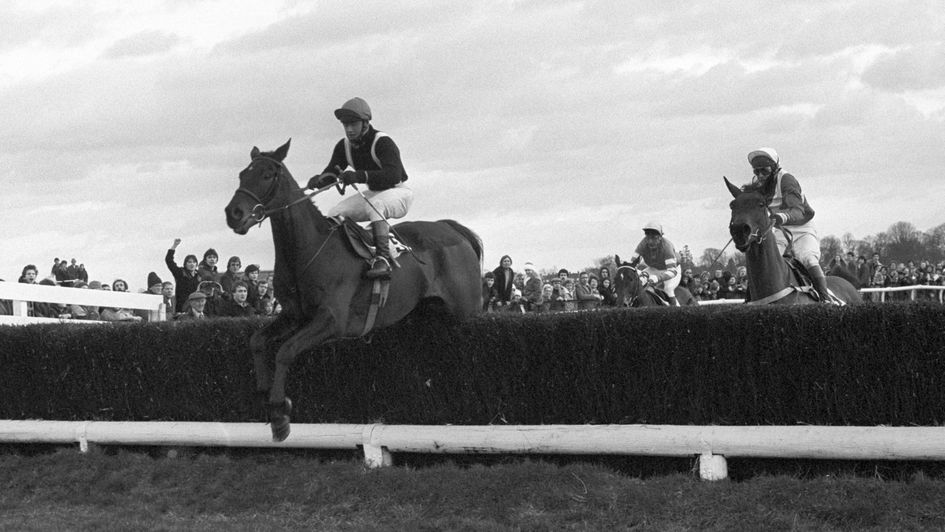
Silver Buck was Timeform’s ‘Champion Jumper’ of 1981/82 when he added the Cheltenham Gold Cup to the King George VI Chase which he had won in the two previous seasons. His two wins at Kempton had given the impression that three miles on a sound surface was about the limit of his stamina, a view seemingly backed up by his defeat in the 1981 Gold Cup, but his victory on heavy ground at Cheltenham a year later, when beating stablemate Bregawn by two lengths, conclusively proved otherwise. Silver Buck proved to be the best of a series of horses Curley supplied from his Irish base for the Dickinson family. ‘
We soon established a simple understanding’ Curley said in his autobiography Giving A Little Back. ‘As long as I was informed when the horses were fancied, I didn’t care about making a profit on their sale.’ Curley had bought Silver Buck, a winning pointer, for 8,000 guineas and had then sold him on to the Dickinsons after winning a bumper at Clonmel with him. Curley describes having a ‘major pay-day’ after Silver Buck won his first race for Michael Dickinson at Catterick but was still dismayed at the horse’s SP being considerably shorter than the expected 33/1.
Curley concluded that his local telephone operator had been eavesdropping on his conversations with the stable and spreading the word. As a result, Curley took to driving across the border to use a public telephone in Northern Ireland where it was possible to make a direct call to England without going through an operator!
Forgive ‘n Forget (c169)
Forgive ‘n Forget became a top-class chaser for Yorkshire trainer Jimmy FitzGerald and was best known for his victory in the 1985 Cheltenham Gold Cup which he won by a length and a half from Righthand Man. He ran at six successive Cheltenham Festivals, with his first win there coming when landing a substantial gamble (notably for Curley – the horse’s original owner) in the 1983 Coral Golden Hurdle Final.
He finished second in the Sun Alliance Chase the following season after being set a tremendous amount to do and contested three more Gold Cups after winning it, with the best of his subsequent attempts being his third place behind Dawn Run and Wayward Lad in 1986, but his final Gold Cup start ended in tragedy when he broke a hind leg on the flat after jumping just three fences. Elsewhere, Forgive ‘n Forget won the first running of the Vincent O’Brien Gold Cup at Leopardstown and he had a good record at Haydock where he twice won the Timeform Chase.
Curley had bought Forgive ‘n Forget as an unraced four-year-old in Ireland and named him after mending his relationship, after the pair had fallen out, with trainer Liam Brennan. Racing in the name of Brennan’s wife, though actually owned by Curley, Forgive ‘n Forget ultimately landed a gamble in a bumper at Leopardstown though it came at the cost of Brennan being warned off for four months.
Assultan (h117$)
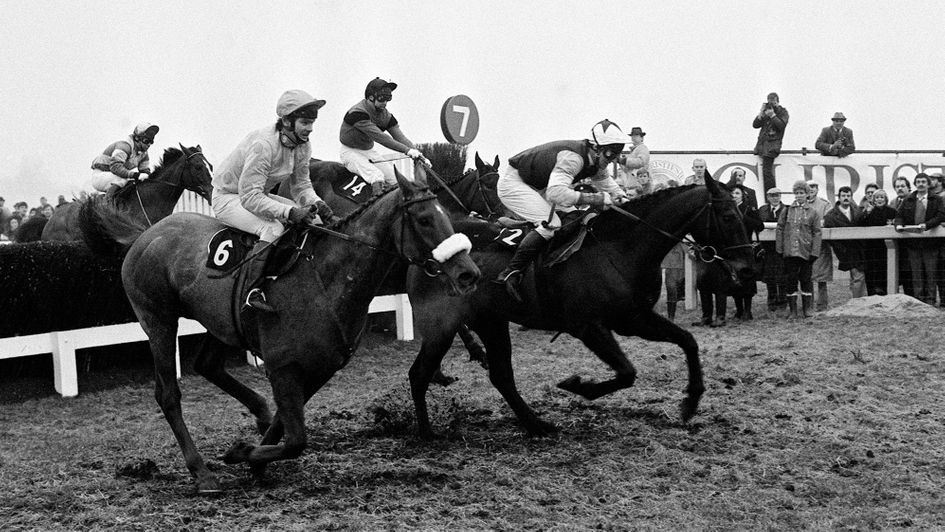
‘Racehorses didn’t come much more infuriating than Assultan’ said Curley in his autobiography. The former Hamdan Al Maktoum-owned Assultan was sold cheaply off the Flat after refusing to race on his last two starts but Curley managed to coax three wins from him over hurdles in the 1987/88 season, in sellers at Doncaster and Nottingham and a juvenile handicap at Sandown. Curley said the sellers ‘not only served to delude the handicapper into regarding the horse, and thus rating him, as a humble ‘plater’; beating horses also helped him gain confidence’.
Assultan’s Doncaster win played a part in Curley’s successful bet with bookmakers that he would train ten winners in the last three months of 1987 (having only trained nine winners in the previous two years) despite his string consisting of what he described as ‘mostly broken down bits and pieces of horses’.
At Sandown, Assultan landed what Curley referred to as a ‘massive gamble’, when he was backed down to 2/1 favourite. The following season, Assultan again came good for his trainer who by then was ‘in desperate straits’ after one of his charity ventures had become a financial disaster. After a win at Windsor, Curley had £50,000 at 4/1 on him to follow up at Ascot – which he did, but only after he ‘bolted before the start and ended up in the bushes down by Swinley Bottom.’ He had done his job by then, but Assultan ended that season with form figures of ‘RPRP’ and ultimately received ‘a double squiggle’ from Timeform who described him as ‘thoroughly temperamental.’

Magic Combination (h136)
Magic Combination was a rare, if not unique, Barney Curley-trained horse in that he was the subject of an essay in Chasers & Hurdlers 1999/2000. That was as a result of the horse winning the Imperial Cup that season, providing Curley with his biggest success a trainer.
Despite that, Curley refused to take the winner’s trophy afterwards and forbade his jockey David Casey from speaking to the media afterwards in protest at what he felt was the poor contribution by bookmakers to prize money in Britain. Magic Combination had been sent off at 11/1 at Sandown but it had been a different story on his only previous start over hurdles that season when he was pulled up as the heavily-backed 7/4 favourite (including a recorded bet of £100,000) for a handicap at Cheltenham, ridden by Jamie Spencer.
Spencer had won two conditional jockeys’ events over hurdles on the horse the previous season before Magic Combination successfully landed a gamble on the Flat at the 1999 Galway Festival. Magic Combination had shown a near-useful level of form on the Flat for Kevin Prendergast early in his career but his mark had plummeted to just 45 by the time he coasted home under Spencer again at Galway, reputedly netting his trainer a six-figure sum.
Magic Combination’s last win for Curley came back on the Flat at Sandown in the summer of 2000 and he went on to win another eight races under both codes for Scottish trainer Len Lungo, showing useful form over hurdles.