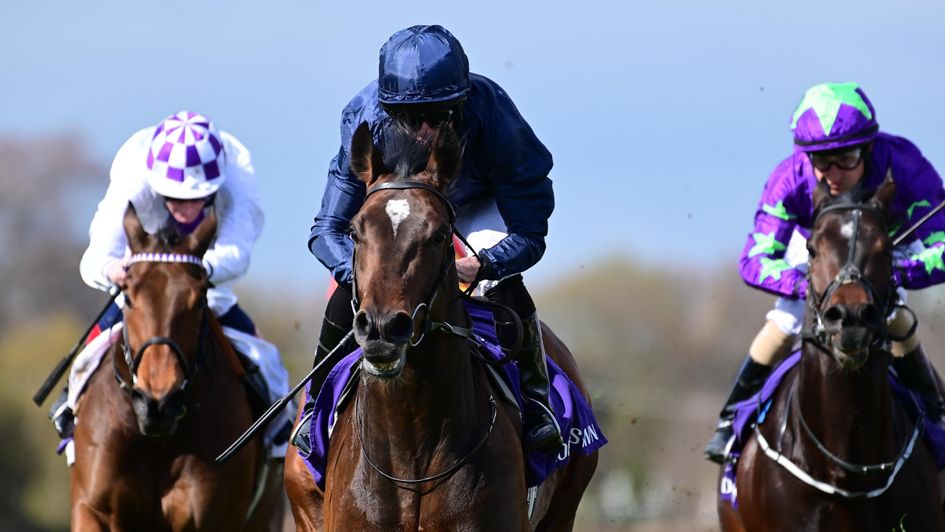
France and Ireland might in the grip of a tighter lockdown than we are experiencing over here, but on the racing front at least their Classic preparations are further advanced than ours and while we await the action at Newmarket and Newbury this week, there were some interesting trials run at Leopardstown and Longchamp on Sunday.
For all it was won by Harzand in 2016, the Ballysax Stakes has been something of a hit-or-miss Derby Trial since the heady days of Galileo and High Chaparral, and whether Aidan O’Brien’s latest winner, Bolshoi Ballet, turns out to be top class remains to be seen.
He might have looked smart beating a couple of useful sorts in Flying Visit and Taipan, but it’s good to have visual impressions backed up by the clock and neither his winning timefigure (88) nor 3lb sectional upgrade (the amount the timefigure could have been increased had he run his race more efficiently) is much to get excited about.
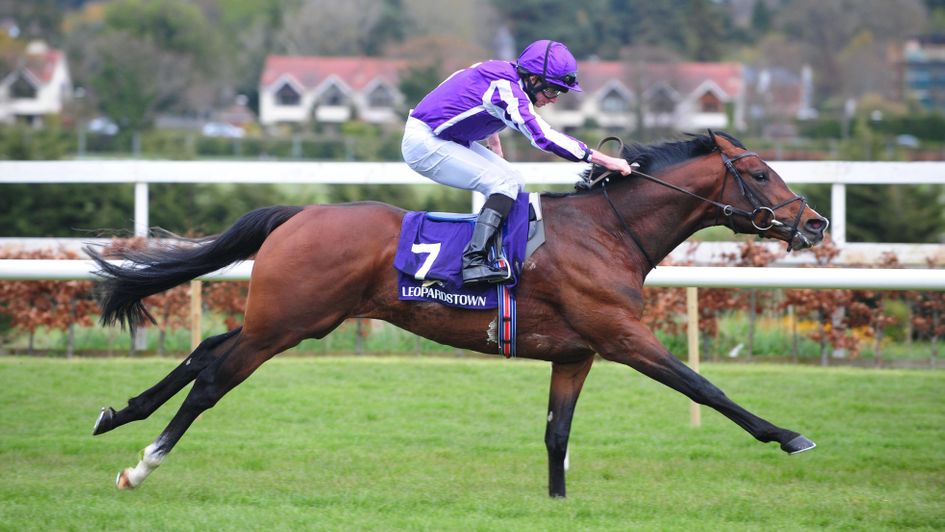
Indeed, his stable-companion Sir Lamorak, ran a faster overall time as well as a marginally faster last three furlongs off an official mark of just 85 in the following handicap, and for all Bolshoi Ballet is another in a long line of Galileo’s making his way through the ranks, and Sir Lamorak might have been the proverbial Group horse in a handicap, Derby quotes of 12/1 look a bit of an overreaction to say the least.
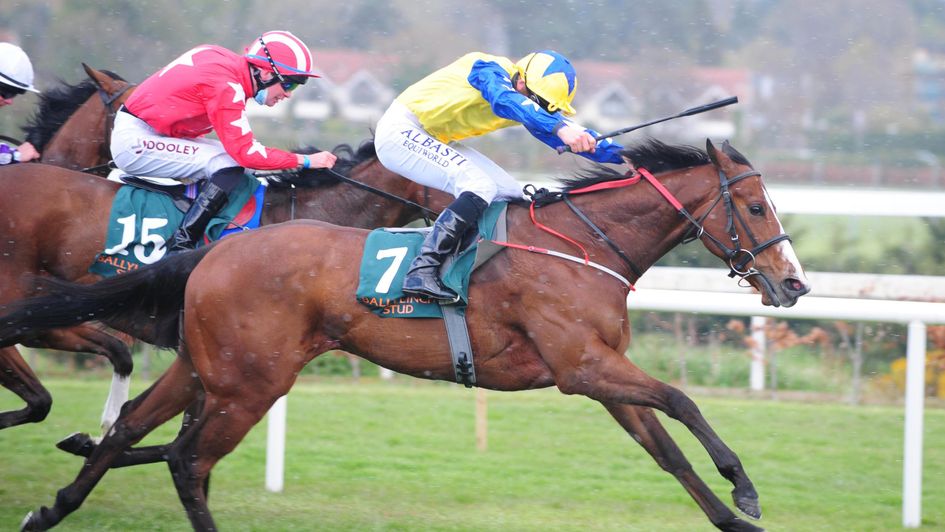
The Ballylinch Stud sponsored trials for the 2000 Guineas and 1000 Guineas were won by Poetic Flare and Keeper In Time respectively in solid timefigures of 112 and 104.
Whether Poetic Flare will travel over to Newmarket remains to be seen given his only defeat so far in four races came there in the Dewhurst last October, but that was his first run for seven months and he’s clearly far better than that display implied. 111 isn’t going to win him a Classic but it puts him in the picture and given a couple of his relations have already won over further than a mile and he has yet to run beyond seven furlongs, it’s very likely we’ve yet to see the best of him.
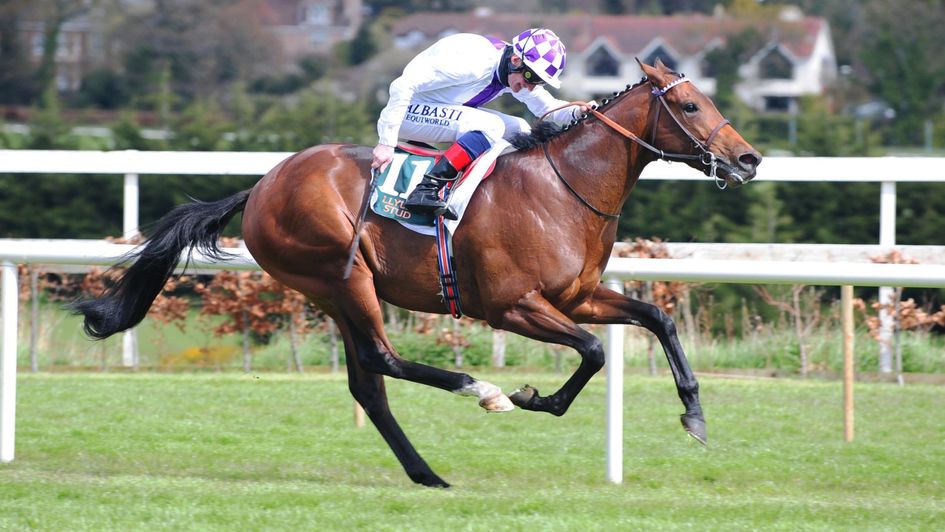
When an 80/1 shot wins a Classic trial, the default initial reaction is usually to treat the form with a degree of caution, but Keeper Of Time is clearly useful to have run a 104. Whether she’ll confirm this form with a couple of those behind must be open to doubt, however. In particular, the runner-up Mehnah looks a filly we will be hearing much more about.
She beat two next-time-out winners when impressive in a Dundalk maiden last September and would have won this had she been kept in closer contention instead of being held up in last place. By Frankel, she’ll be suited by a step up to 1m and promises to make significant improvement next time. Last year’s Moyglare winner Shale from the slow-to-get-going Donnacha O’Brien stable, is another likely to get the better of Keeper Of Time when they meet next.
Over in France, ParisLongchamp hosted four Group races. The opening Prix La Force is traditionally a trial for the Prix de Jockey-Club and though the same owner’s Shaman went on to finish second in the Poule d’Essai des Poulains (French 2000) in 2019, this year’s winner Adhamo already looks like he wants a step back up to a mile and a quarter.
That said, a winning timefigure of 99 is unexceptional, and even an 8lb or so upgrade only puts him on the fringes of the Classic picture. Much the same can be said about Rumi, the winner of the fillies’ equivalent, the Prix Vanteaux. Her 82 timefigure comes with a 21lb upgrade but if there is a Classic prospect in the race it was more likely not the disappointing Marcel Boussac winner Tiger Tanaka, but the runner-up, Petricor, who not only lacked a recent race, unlike Rumi, but made her effort from a long way back.
Taking sectional upgrades into account, she is entitled to be considered comfortably the best horse in the race and, being by Frankel out of a mare that stayed the St Leger trip, she looks an early candidate for the Prix de Diane.
Two top horses with big futures going head-to-head in 🇫🇷
— Champions Series (@ChampionsSeries) April 11, 2021
Despite being second past the post, CHESHIRE ACADEMY was awarded the victory in the Group 3 Prix Noailles over PRETTY TIGER to remain unbeaten!
🎥 @AtTheRaces pic.twitter.com/qirWHm1OYZ
The final Classic Trial, the Prix Noailles over an extended mile and a quarter, went to Cheshire Academy after original winner Pretty Tiger was demoted. Cheshire Academy’s timefigure of 96 is not much to get excited about but he came from well behind in a race run at a fair pace and a 13lb upgrade puts a better gloss on his performance. In the same colours as his stable’s former Arc winner Sottsass, Cheshire Academy is stoutly bred (his sire and dam both won at a mile and a half) and he looks like he’ll relish the Arc trip himself.
The afternoon’s highlight, the Group Two Prix d’Harcourt, went to the admirable veteran Skalleti. On conventional analysis, he seemingly didn’t need to run up to his best to beat a marginally substandard field, but in coming from well off the pace to run down rivals who had first run, his 110 timefigure can be upgraded by around 15lb, effectively bang on his best.
It’s early days but one topic that always crops up on a weekly basis in the build-up to Royal Ascot is which is the leading two-year-old seen out so far?
With the caveat that the order could well change significantly this week, the youngster that has posted the best timefigure so far is Cadamosto. By No Nay Never, whose juveniles have a good record at Royal Ascot, and trained by Aidan O’Brien, he showed plenty of pace in winning at Dundalk last weekend, posting a 92 that edges up to 93 after sectional upgrades are included.
Cadamosto wins the Irish Stallion Farms EBF Maiden for Aidan O'Brien@IrishEBF_ pic.twitter.com/LmjZtuYSy0
— Dundalk Stadium (@DundalkStadium) April 10, 2021
He looks tailor made for the Norfolk Stakes, though he might come across Gubbass there whose Leicester win was less notable for its timefigure (82) than the 16lb upgrade that accompanied it, putting him on 98. Several juveniles by his sire Mehmas bagged pattern events at sprint trips last year and Gubbass looks like he’ll be taking aim at similar races before too long.
Given that Irish-trained runners historically don’t target Aintree in the same numbers that they do Cheltenham, seven winners last week from some of their lesser names once again highlighted the gulf in competition between the two jurisdictions, illustrated nowhere more starkly than in the National itself where the mostly young Irish brigade wiped the floor with the mostly elderly home guard.
The best timefigures of the meeting over hurdles and fences were, unsurprisingly, both recorded by Irish-trained runners, with Abacadabras and Fakir d’Oudairies taking the honours with 155 (a career best) and 161 (a third successive 160+ figures) respectively.
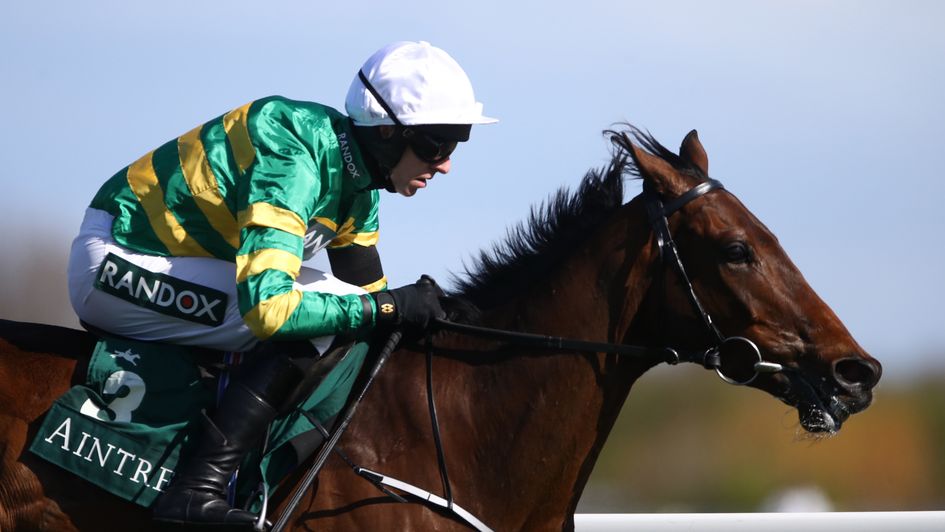
It wasn’t all misery for the home contingent with promising novices Ahoy Senor and My Drogo (151 and 149 respectively) suggesting the Irish will face some credible opposition in the novice chasing division next season, but the 151 posted by the mare Echoes In Rain at the Fairyhouse Irish Grand National meeting the week before was a blunt reminder that the Irish have strength in depth in spades well over and above those horses that travelled to Cheltenham or Aintree.