Equality will never truly exist in women's tennis until Wimbledon acknowledges its responsibility, writes Tim Clement.
By Tim Clement
“The price of greatness is responsibility,” proclaimed Winston Churchill as he implored the United States to utilise its standing for greater global good during World War II.
Wimbledon, entrenched in all of its history and tradition, would do well to remind itself of those words after revenues were prioritised over equality again on ‘Manic Monday’.
On arguably the best day of tennis in the calendar, at certainly the biggest event, the All England Club organisers had the chance to showcase tennis’ greatest strength, the qualities of both the men’s and women’s game.
Instead, they decided to place just two women’s matches on the two main show courts, both starting first, giving preference to the four biggest earners in the history of men’s sport.
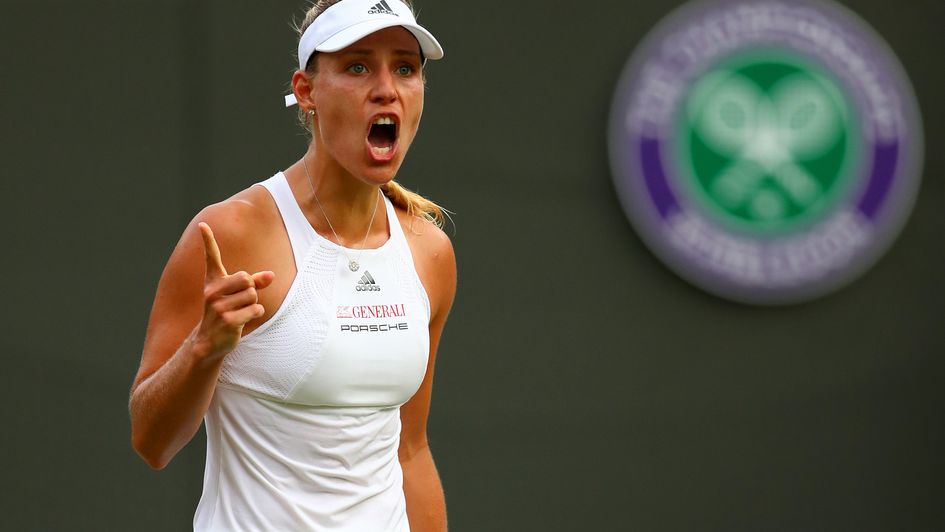
Karma came around as the Centre Court crowd witnessed three straight-set whitewashes, while Court 2 were treated to a battle between former finalist and 2016 French Open winner Garbine Muguruza and world No 1 Angelique Kerber.
Kerber admitted: “I was really surprised that I was playing on Court 2. I was actually really looking forward to playing on one of the two big courts."
That was the second successive match in which Kerber had been relegated to SW19's third biggest court, insult to injury as she also loses her world No 1 status as a result of the three-set defeat.
Ignoring the dinosaurs who believe people simply are not interested in women's tennis, the legitimate counter-argument is that you allow for flexibility, so when we do have four much-loved men’s legends in action we give them the spotlight and vice-versa when the women’s line-up is stronger.
However, that has simply not been the case, with two men’s match to a single women’s each day on Centre Court with the exception to day two, when Caroline Wozniacki and Timea Babos were moved across due to two retirements.
The issue is essentially created by Wimbledon’s decision to only place three matches on show courts, feebly defended by its pride on having full seats to showcase its popularity on our TVs.
Wimbledon chief Richard Lewis offered an equally weak justification, saying: "It's not about male or female, in the end it's about which matches you feel the public and broadcasters want to see."
Simple as that, really? Forget that you are denying women’s tennis the chance to reach the level of popularity by not putting it on show courts with a self-fulfilling prophecy of the clearest kind, in hand suffocating the women’s game from developing to the supposed level of men’s.
At least you can pride yourself on more full seats.
That also deflects the point towards the BBC, supposedly the leaders in inspiring equality in British sport.
Surely the lead broadcaster should be demanding women are given equal exposure? It might if it were not hypocritical.
Last year the BBC trust was forced to look into data suggesting that in 76 per cent of its coverage of the first week of the 2015 tournament was focused on the men’s game, while less than half of Serena Williams’ matches were televised in those six days despite her pursuit of the non-calendar Grand Slam.
Like Winston Churchill, both great institutions are something we cherish as Brits, but until the responsibility of offering equal exposure as well as equal pay is acknowledged we will never truly have equality.