
Graeme North looks at what the clock tells us about the feature action from ParisLongchamp on Prix de l'Arc de Triomphe weekend.
Back in the day, not long after I had started at Aylesbury Grammar School, my family got invited to take part in a student Exchange scheme the school was involved in that saw those boys participating (it was a boys only school) spend part of their summer holiday abroad with a foreign family before returning the favour.
Some of my schoolmates were allocated some underwhelming locations as I remember, but fortunately I was paired with a boy whose family ran a business in the well-heeled 9th arrondissiment in Paris. So, for the next few summers - and numerous other times too – I headed to Paris while my French pal Antoine came to stay with me in Buckinghamshire.
I spent time hanging out in Paris, obviously, but with my interest in racing escalating rapidly and the freedom to do as I wished, I spent far more hours on the local racecourses. Auteuil still remains my favourite, just ahead of the recently-closed Maisons-Laffitte - the only track I know of that had a straight, right-handed and left-handed mile and a quarter - but simple old Longchamp as it was called then before its recent overhaul always fascinated me in the respect that somewhere so vast and that could house so many spectators was always nearly totally empty.
Until Arc weekend that is, when the place came alive, and though the numbers in 2020 were limited because of Covid restrictions the latest attendance at the Qatar-sponsored jamboree was much more like the days I remember.
Over the years I’ve fine-tuned how I analyse horse racing, but there’s always something new to take on board in this game and if I learnt anything from the Arc it is to delve deeper into top-level Flat racing in Germany from a sectional and timefigure perspective.

After all, Torquator Tasso wasn’t exactly unexposed as a top-level middle-distance performer in his homeland, having won two internationally credible Group 1s in the last year, but that knowledge might have unlocked how much better he might have been than those performances on the face of things suggested he was.
Rated 123 by Timeform going into the race, he is now on 130, a figure that makes plenty of sense assuming Tarnawa, Hurricane Lane and Sealiway all ran to form. Unsurprisingly, with no obvious front runner or pacemaker in the line-up, the Arc wasn’t run at an end-to-end gallop (Timeform’s provisional internal timefigure for Torquator Tasso’s was an ordinary 111) with Adayar, as things turned out, ridden to try and pinch the race from the front.
Given how the race developed in the closing stages, however, I’d be inclined to side with the view that Tarnawa was the moral winner, if only very marginally, as using a universal finishing speed model she comes out ever so slightly the best horse at the weights. It’s possible those calculations still underestimate her (and to a slightly lesser extent Hurricane Lane) a little. Most of the races at Longchamp over the weekend took place on the Grande Piste and by the time the Arc was run there might well have been an advantage making a challenge wide as Torquator Tasso did. Being bang on the rail – where Tarnawa was – might have been a disadvantage.
The Arc was the first of four Group 1 contests on the afternoon and was followed by the Prix de l’Opera which Tarnawa had won the year before and would most likely have won this year too had she run in it instead of the Arc.
Last year’s Opera form was represented by the 2020 third Audarya who looked sure to win when her rider took a pull on the rail with around 300m to run, but, in a well-run race (provisional timefigure 115) she fell away in the closing stages as the three-year-old Rougir stayed on down the outside to win her first race of the year.

British-trained runners have dominated the Prix de l’Abbaye in recent years but managed no better than third this time around as the finish was fought out by the Irish-trained A Case Of You and the French-trained Air De Valse in a lowly 112 provional timefigure.
Sectionals show the runner-up probably did too much too soon but, again, it wouldn’t be wise to take those calculations at face value as she (an exposed five-year-old mare who had never looked this good previously) had the huge advantage of the rail in a race in which the high-drawn horses (who included the favourite Suesa) never figured.
The final Group 1 race of the weekend, the Prix de la Foret, went the way of Space Blues following three years in which the race had been won by One Master. Delivered on the outside after a patient ride, Space Blues ran the fastest last 200m by over two lengths, according to the official tracking data, on his way to returning a provisional timefigure of 118 and perhaps the biggest surprise about his win was that, with everything in his favour, he was allowed to go off at 7/2.
Earlier in the afternoon, Zellie showed the best ‘turn of foot’ - if that is the correct term in the conditions – to come from well behind and win her fourth race of the season in the opening Prix Marcel Boussac, looking to have run to a timefigure of 109.
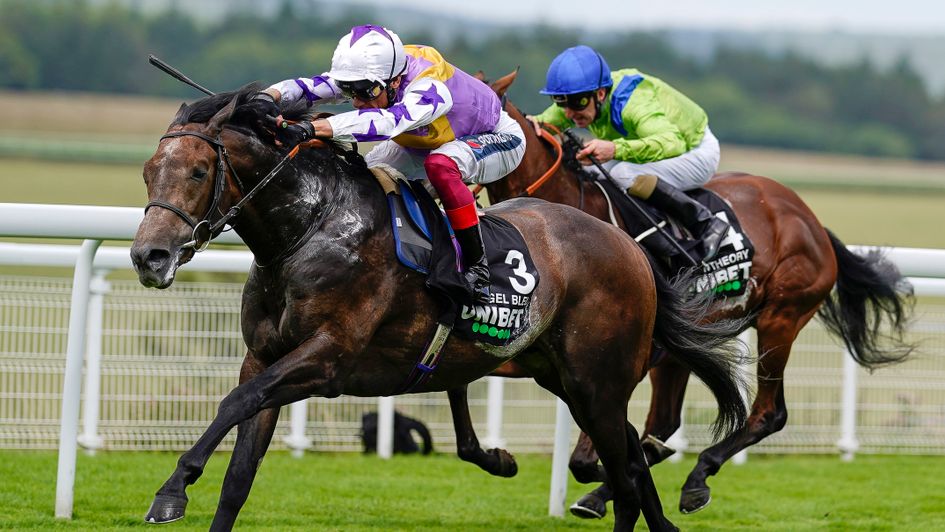
The following Prix Jean-Luc Lagardere (which was run on the Nouvelle Piste, which was riding much faster than the Grande Piste) went to Ralph Beckett’s Angel Bleu who got the better of fellow British challenger Noble Truth by three-quarters of a length in a provisional timefigure of 105.
He looked a shade fortunate to do so, however, as the sectionals show that the runner-up was probably asked to do too much in front and should probably have won by a length or so. However you interpret the results, neither the Boussac nor the Lagardere are the high-quality races they were earlier this millennium – a statement that goes for most two-year-old pattern races in France these days, sadly - and it’s unlikely either race will be of much significance when next year’s Classics come around.
The previous day at Longchamp had seen five Group races of which the Prix du Cadran and the Prix de Royallieu were Group 1s.
The Cadran finally saw Trueshan and Stradivarius line up against each other for the first time this year and not unexpectedly Trueshan was able to confirm last year’s Long Distance Cup form but this form (timefigure 102) has a very muddling look to it with a very ordinary domestic nine-year-old handicapper not beaten far in seventh.
Ribblesdale winner Loving Dream showed she is at least as effective on soft ground as she is on firm when edging out Believe In Love by a nose in the steadily-run Royallieu, but Roger Varian’s four-year-old might have won under a more efficient ride, making up her ground a bit too quickly to take up the running only to find those efforts catching her out as the runner-up rallied.
The Revenant nearly made it three wins in a row in the Prix Daniel Wildenstein, going down by a whisker to Real World in a 98 timefigure, but sectionals show that he was set a fair amount to do relative to the well-ridden winner, besides which it was his first run for five months, and I reckon Real World will have to improve another couple of lengths to confirm the placings should they meet again.
Manobo and Dubai Honour were the rightful winners of the Prix Chaudenay and the Prix Dollar respectively. Both races turned into sprints (timefigures of 78 and 76 respectively with big upgrades) with the length and a half by which Dubai Honour won the Dollar underestimating his superiority significantly.
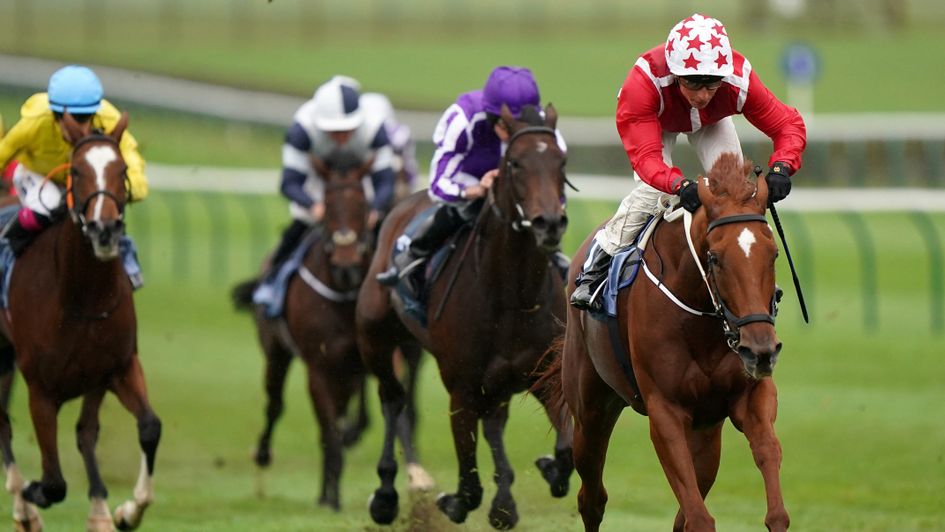
Back home, the highlight of the domestic Flat weekend was the Group 1 Kingdom of Bahrain Sun Chariot Stakes which went to Jane Chapple-Hyam’s Saffron Beach.
In what looked a good renewal, with the winners of the 1000 Guineas, Falmouth Stakes and Matron Stakes in opposition, Saffron Beach got her revenge on Mother Earth who was a length ahead of her in the Guineas in no uncertain fashion, dictating from the front and pulling three lengths clear in a relatively sow 97 timefigure.
Indeed, neither of the other two domestic pattern races last weekend, the Cumberland Lodge won by Hukum and the John Guest Racing Bengough Stakes won by Vadream were won in fast times, but it was good to see the latter finally and deservedly get her head in front after a series of luckless runs in which sectionals had shown she was repeatedly better than her form suggested.