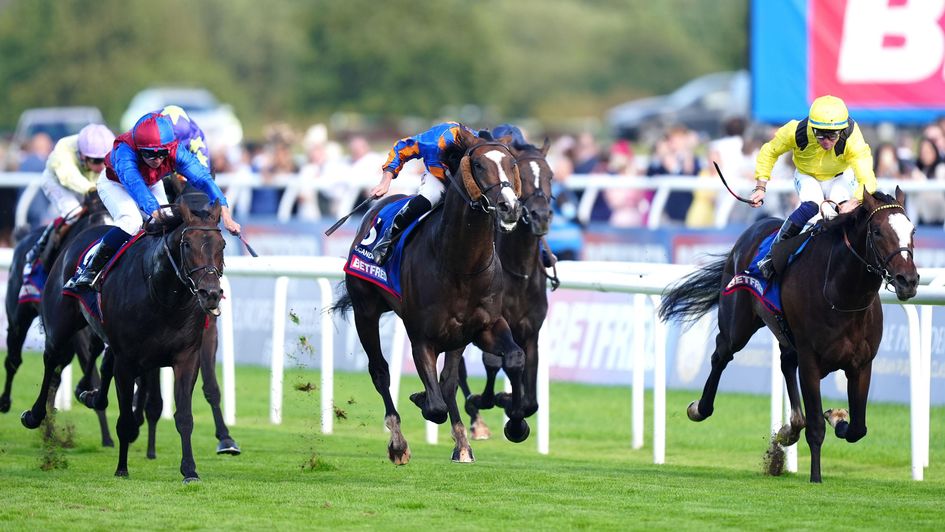
Labour MP Sally Jameson has joined the growing list of people warning the government of the potential introduction of affordability checks in their current guise.
The Gambling Commission is poised to decide whether or not to press ahead with the current scheme after a pilot of their financial risk assessments.
And Jameson, who’s constituency Doncaster Central covers the racecourse on Town Moor, has warned of the impact they could have on the sport and questioned whether they are fit for purpose.
2026 should be a year of celebration for the city with the 250th running of the Betfred St Leger due to be staged in September but the MP is concerned over the potentially huge hit to the sport’s finances before then.
Writing on Politics Home she said: “Of course, betting must be properly regulated. People must be protected, and there must be more support for those who experience harm. Licensed operators have clear responsibilities and already operate under strict rules, including age checks, anti-money laundering requirements and safer gambling measures.
“I have seen this first-hand, both through taking part in the Betting and Gaming Council’s Grand National Charity Bet and during a visit to my local betting shop in Doncaster. Staff take their responsibilities seriously, and there are safeguards in place to support customers.
“Regulation must also be proportionate and based on evidence. It should protect people without pushing them away from the regulated market altogether.
“That is why there is growing concern about proposed Financial Risk Assessments from within the horseracing industry.
“These checks were presented as frictionless. Customers were not meant to be asked to hand over payslips, bank statements or other personal financial documents as a routine condition of enjoying a legal leisure activity. But the evidence from the pilot has raised serious questions about whether that promise can be met in practice. Operators have reported inconsistencies in the data returned by credit reference agencies, meaning more customers may face account restrictions or requests for further information. Before this is implemented across the board, we must iron out the issues so that we have a system that works as it was intended to.
“Someone having a bet on the St Leger should not feel they are being treated as a financial risk for taking part in a legal activity that more than 22.5 million adults enjoy safely every month.
“Racing fans may be particularly affected because of the seasonal nature of the sport. People might not bet regularly all year round but may choose to place a few more bets during major events like Cheltenham, Aintree, Royal Ascot or the St Leger itself. That kind of pattern should not automatically trigger intrusive checks.
“There is also a wider risk. If people are faced with checks that feel intrusive or unreliable, some will turn to the illegal online black market. Those operators offer none of the protections we expect, no safeguards, no support, no tax contribution and no funding for racing.
“The regulated betting and gaming industry supports over 109,000 jobs, contributes £6.8bn to the UK economy and raises £4bn in tax each year. Betting shops alone support 42,000 jobs across Britain, contribute £140m a year to horseracing, pay around £1bn in direct tax to the Treasury and provide a further £60m in business rates to local councils.
“Racing is more dependent than many other sports on the funding it receives through betting. If flawed checks reduce activity in the regulated market, racing will feel the consequences quickly, not just by the sport but by communities like ours.
“No one is arguing against protecting vulnerable people. That must always be part of the system and continually supported and improved. But those protections need to be targeted, proportionate and based on solid evidence.
“Before any further steps are taken, the Government must ensure the Gambling Commission properly evaluates the pilot. If the data is inconsistent and customers may still face disruption or intrusive checks, then the case for moving forward simply has not been made and there is more work to be done.”
Newbury MP expresses his concerns
Lee Dillon, the Liberal Democrat MP for Newbury, has also expressed his concerns about the financial risk assessments its potential risks to horse racing.
Writing on his personal website, www.leedillon.co.uk, he said: In recent weeks, many people across Newbury and West Berkshire have contacted me about proposed changes to betting checks.
"These concerns relate to new “financial risk assessments” being introduced by the Gambling Commission, and the potential impact on people who enjoy betting on horse racing.
"Horse racing is a significant part of our local and national life. We are proud to be home to Lambourn, the “Valley of the Racehorse”, and close to Newbury Racecourse. The sport supports jobs, attracts visitors, and plays an important role in our local economy.
"At the same time, gambling-related harm is real, and vulnerable people must be protected. I support effective safeguards as part of the Government’s broader gambling reforms. The key challenge is getting the balance right.
"Many constituents are concerned that the proposed checks could require people to share sensitive financial information, such as bank statements or payslips, even for low‑level or occasional betting. For many, this feels intrusive and disproportionate.
"Questions have also been raised about how reliable and consistent these checks would be in practice, particularly where they rely on credit reference data. There is evidence that public confidence in such checks is low.
"There is also concnern about unintended consequences. If regulated betting becomes too intrusive, some people may be pushed towards unregulated and unsafe alternatives.
"Ministers and regulators must ensure that any new system is proportionate, respects personal privacy, protects those most at risk, and works in practice for both consumers and operators.
"I will be raising these concerns with ministers, including Lisa Nandy MP, to ensure local voices are heard as decisions are finalised. This is not about opposing safeguards, but about ensuring they are fair, workable, and do not harm communities and industries like racing that matter so much to our area.
"If you have contacted me about this issue, thank you."