Pedigree Researcher Sally Wright looks back at the history of horseracing in Leeds, West Yorkshire.
Throughout its long and illustrious sporting history, the city of Leeds in West Yorkshire, England, has been associated with cricket and rugby league at Headingley and football at Elland Road. Readers may be less aware that it was also home of a once quite prestigious racecourse, one of countless northern English tracks to evolve from old gentlemanly wagers, handshakes, and Thoroughbred ‘match race’ culture.
Known as ‘flappers,’ these unlicensed British flat meetings flew in the face of officialdom, flourishing in the early 1700s and continuing for two-hundred years. Burgeoning railway networks facilitated huge movements of different people and live animals into once solely working-class areas. Yearly ‘race day’ events became common in Yorkshire, with local publicans and traders quick to cater to middle-class entertainment seekers bringing provincial ‘new money,’ alongside local interest.
Outside Leeds, regional racecourses included New Belle Vue at Norton Tower near Halifax (the original home of Timeform), an 1880s venture that is now the West End Golf Club, and New Barns at Salford, which eventually transformed into the docks of the Manchester Ship Canal.
The most organised ‘permanent’ racecourse in Leeds was Haigh Park. It was predated by Chapeltown Moor, north of the city at Chapel Allerton. An uncultivated common of about three-hundred acres, the high moor offered panoramic ten-mile views of West Yorkshire and hosted racing from the 1680s onwards, including events of two miles marked out by small flags and wooden stakes. Rich merchants and poorer folk would watch from parked carriages or on foot, with trading booths taking advantage of the moor’s other activities of cricket, bird fights, and local hangings. One event which occurred there in the 1700s was a human-versus-horse race (known as ‘pedestrianism’), in which the man bested an equine rival with his intimate knowledge of moorland undulations!
Results of such small races remain in the diaries of local merchants and pubs rather than the official newspapers of the day. The Talbot Inn at Briggate in the centre of Leeds functioned as Chapeltown’s headquarters and archive, with local historian, Ralph Thoresby, often in attendance. In a written entry from the summer of 1680, he recalled one event with typical northern aplomb as being a “waste of time.”
Not nearly so wasteful was the area’s claim to fame as the birthplace of organised cricket in West Yorkshire. But Leeds was growing, and by 1809 Chapeltown horseracing had practically vanished under a ‘clean air’ resort and looming residential development. Chapeltown Road and Chapel Allerton Primary School hold court now, with the latter situated on or near the moorland raceway and gallows.
Holbeck Moor races sprung from equally untamed land to the south of Leeds city centre in the current LS11 postcode, close to both Elland Road and Flutter’s Sky Betting & Gaming building. Horseracing decamped from Chapeltown Moor in the 1800s, with an identical, non-existent infrastructure looping around its own open wilderness. Here, attendees viewed Holbeck’s informal events, including wrestling, but by the late 1800s this too was being swallowed by urbanisation. Today, the M621 road cuts through it, although the nearby Holbeck Moor Park nods to its origins.
Haigh Park racecourse was to be far more defining for Leeds.
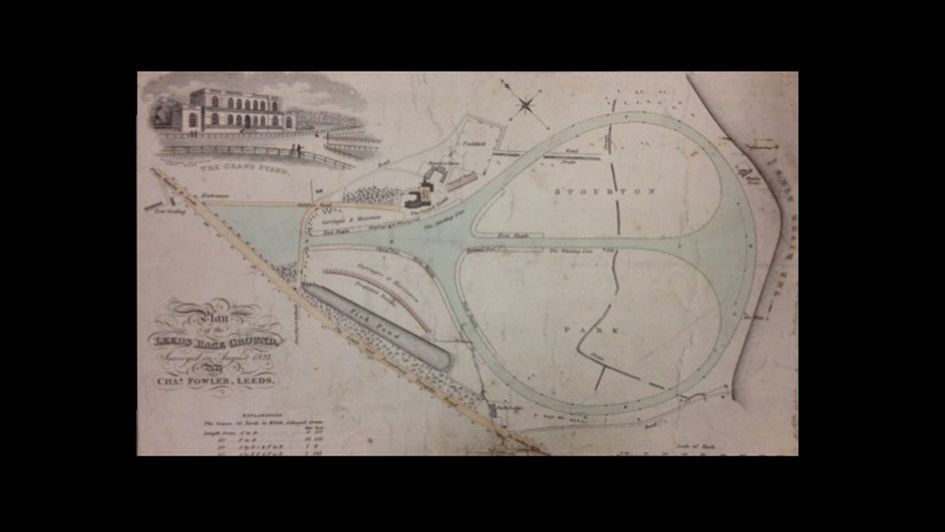
Also known as ‘Stourton Park’ this racecourse was surveyed in 1823 by civil engineer, Charles Fowler (who would later become its course clerk) with initial racing planned for the following year. The coloured map (pictured) displays the proposed ‘Stourton Park’ with its ferry crossing at the River Aire. Spanning a sizeable chunk of riverside meadow, the course was a mile-long oval with a flat straight run-in of some four-hundred yards. It contained a purpose-built, elevated grandstand which transformed the sport in the city. This was situated beyond the finish and funnelled wealthy patrons away from poorer people and the course also boasted fenced saddling and parade areas.
Observers had a generous, clear view of the finish and the whole course was bordered by water, being on the south side of the River Aire and near to the Leeds and Liverpool Canal. In the centre of the track the common masses congregated, with gambling booths, honest lower-class punters and equally honest rogues shuffling and pushing, trying to make a bob or ten.
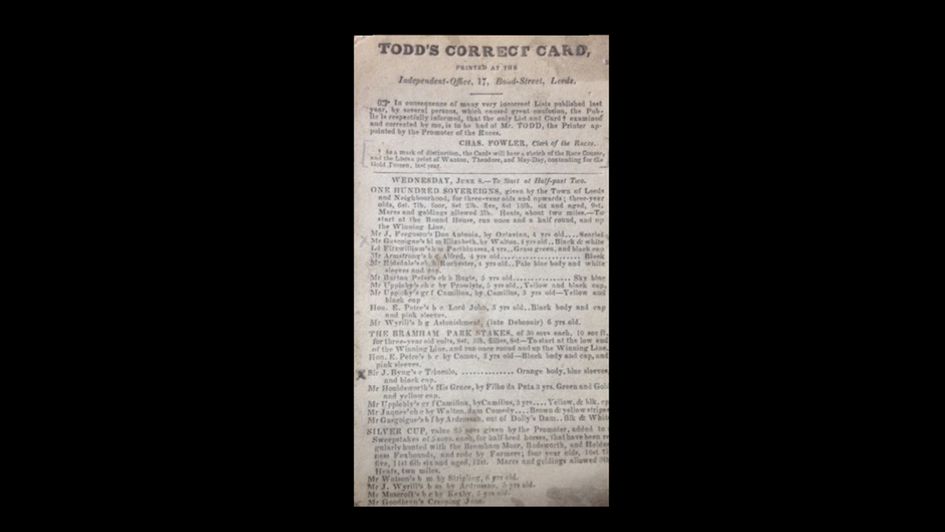
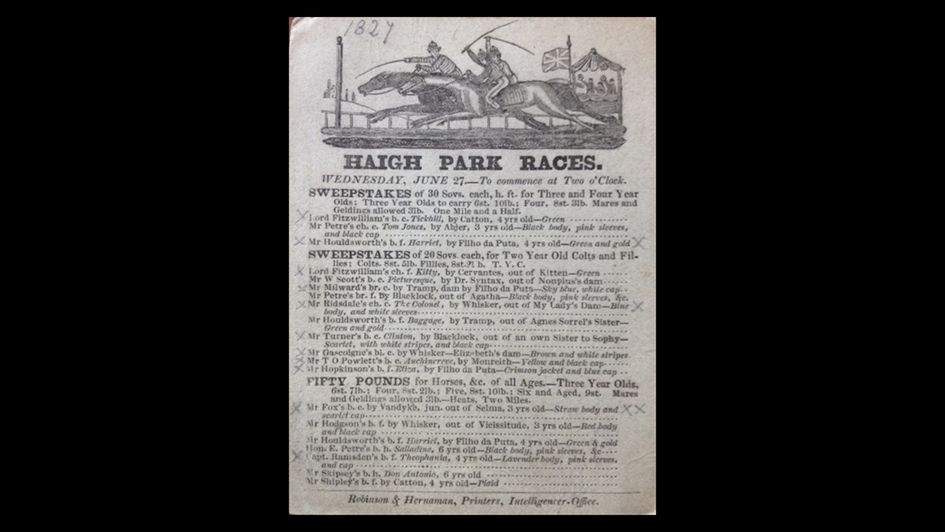
At its peak, enormous crowds flocked to the well-planned, attractive Haigh Park. But like other northern racecourses, it faced endless criticism from religious voices for its overt gambling and immoral behaviour. At the racecourse’s inception, bootleg bandits created competing lists of runners, prompting the course clerk to declare that the official Todd’s Correct Card (pictured) would be printed henceforth.
This innovation carried runners and results on its front and a printed course map on its reverse as a ‘mark of distinction,’ effectively acting as a form of early ‘watermark’ to outwit the touts. Several such prized cards are held at the Leeds Local and Family History Library dating from Haigh Park’s first year through to 1832. These cards list not only the horses and owners but also the race conditions.
Elsewhere, results can be obtained from newspaper archives, where scans of the Leeds Intelligencer (now the Yorkshire Post), the Leeds Mercury and other regional/northern papers have been preserved, though the old print is often unfathomable in its English wording and the shorthand used. In 1826, within its ‘Sports and Games’ section the Mercury stated that racing results at Haigh Park were ‘pretty good’ whilst postulating that ‘we can testify to the enormous influx of pick-pockets, gamblers, and prostitutes; who have infested our streets during the week, diffusing moral contamination wherever they approach.'
Despite this, a good deal of high-level racing was to be had. The Leeds 2-Mile Stakes was a regular event up until Haigh Park’s final year and the race for the Gold Tureen was another high-end affair. In the June of 1824, Mr Ferguson’s horse, the less-fancied Wanton created a shock by beating the 1822 St Leger winner and race favourite, Theodore. A fortnight before, Theodore had won the Gold Cup at Manchester racecourse and was handed a three-pound penalty. Expected to trounce his two Leeds opponents, the weight proved too burdensome, and it was Wanton’s connections who hoisted the huge, carved, silver-gilt tureen, itself a product of Leeds industrialist money.
The race is pivotal in Yorkshire turf history and replicated in typical stretch-running style by the 19th-century engraver, W. R. Smith, as ‘Wanton, Theodore and May-Day running for the Gold Tureen at Leeds, June 24th, 1824.’
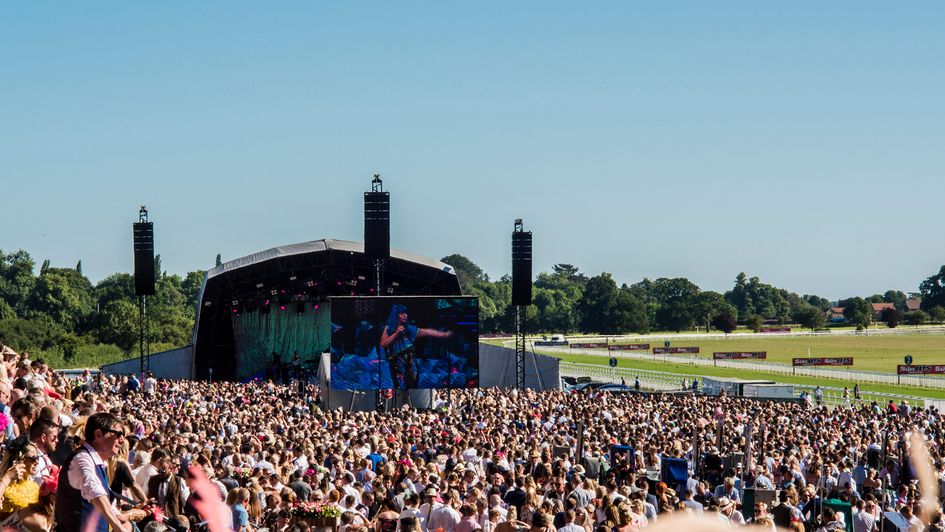
As with today’s racecourses - often hosting pop concerts and antique fairs - foot races and wrestling occurred at Haigh Park in an attempt to diversify its appeal. Private wagers took place there. In 1826 the Leeds Mercury recorded the quite unbelievable endurance (and arguably ridiculous) example of a Captain Polhill of the First Dragoon Guards from Leeds Barracks undertaking ‘for a considerable wager to ride 95 miles in five successive hours on Haigh Park Race Course in four hours and 39 minutes.’ As time passed, more pressure from the church and a critical press increased. Critics said that Haigh Park ‘cherished a spirit of gambling’ by failing to remove the beggars, thieves and prostitutes who tailgated the racing public, bringing acute dishonour to Leeds.
As the 1820’s melted away, horseracing was again on borrowed time - in 1830 the Mercury stated that Haigh Park was ‘indifferently attended’ and that it had not exceeded ‘five thousand people, not more than fifty gentlemen and not one lady.’ The final blow came in 1832 when the Aire and Calder Navigation Company rerouted the local river straight through the course. Though in a wry comedic twist, Leeds had entertained horseracing a decade or so before engineer George Sorocold constructed the city’s first piped water supply in 1694.
Central Leeds races are now no more than historic footnotes, with Yorkshire cricket, rugby and football having risen instead. Today, Haigh Park is LS10, housing an eponymous industrial estate and Stourton factories atop what was once part of a city in step with Thoroughbred racing. At least for a while.
All images reproduced with kind permission of ‘Secret Library Leeds, Leeds Libraries’ from their article at: https://secretlibraryleeds.net/2015/02/06/a-day-at-the-races/
Sources:
- https://secretlibraryleeds.net/2015/02/06/a-day-at-the-races/
- https://www.thoresby.org.uk/leeds-history/a-brief-chronology-of-leeds/
- https://www.bigbookend.co.uk/a-miscellany-of-strange-leeds-facts-by-chris-nickson/
- https://www.britishnewspaperarchive.co.uk
- https://en.wikipedia.org/wiki/Theodore_(horse)
More from Sporting Life
- Free bets
- Racecards
- Fast results
- Full results and free video replays
- Horse racing news
- Horse racing tips
- Horse racing features
- Download our free iOS and Android app
- Football and other sports tips
- Podcasts and video content
Safer gambling
We are committed in our support of safer gambling. Recommended bets are advised to over-18s and we strongly encourage readers to wager only what they can afford to lose.al
If you are concerned about your gambling, please call the National Gambling Helpline / GamCare on 0808 8020 133.
Further support and information can be found at begambleaware.org and gamblingtherapy.org.