The British Horseracing Authority insists the correct decision was made when Benvenuto Cellini was declared a non-runner in Saturday's Betfred Derby.
The colt finished tenth at Epsom but soon afterwards a stewards' enquiry was called into his start. He was found to have been compromised by having his near hind-leg on the shelf of the stalls as they opened.
He was declared a non-runner under rule (H)6, which was introduced in 2024, meaning British racing was aligned to other nations under the International Federation of Horseracing Authorities rule.
The decision sparked widespread controversy and plenty of criticism, meaning a Rule 4 of 25p in the £ was applicable to all winning bets on Christmas Day, plus the placed horses.
In a blog on Monday, the BHA argued: "The rationale behind the rule is that it is unfair to the betting public to lose their money on a horse who is prevented from starting on equal terms.
"At the moment when the start was enacted in the 2026 Derby, Benvenuto Cellini had one leg trapped in an elevated position on the running boards in the stalls shortly before the start was effected.
"As is normal process, the BHA’s raceday stewards held an enquiry into the incident immediately after the race, with the starter, veterinary officer and rider interviewed.
"Once the evidence had been gathered, the stewards considered the questions as to whether Benvenuto Cellini was denied a fair start and, if so, did it materially affect the colt’s chances in the race.
"The unanimous decision reached by a highly-experienced stewarding panel was that the horse was prevented from starting on equal terms and that, as a consequence, his chance in the race was materially affected.
"If the starter had been aware that the horse was on three legs, with his leg physically entangled in the stalls, and his chances were going to be impacted in the race, he would not have enacted the start. The horse’s leg would have been released, taken out of the stalls and checked by a veterinary officer and then reloaded him if safe to do so.
"But the incident happened in mere fractions of seconds. The starter wasn't aware, and couldn’t be expected to have been aware. Therefore, it would not be fair to all of those who backed the horse that he should count as a runner."
And they insist it doesn't set a dangerous precedent moving forward.
"We are being asked the question 'what happens if a horse rears when the stalls open? Will they now be declared a non-runner?' The answer to this question is very clear – no they will not, this is entirely different," the blog continued.
"When this rule was announced a number of examples were cited as to when it might be enacted. One of those examples was as follows:
“Where a horse’s own behaviour alone, after the starting mechanism has been operated, results in the horse being unable to start on equal terms, the horse shall not be declared a non-runner. However, if a horse, for example, kicks out and gets caught in the starting gates before the starting mechanism has been operated, and the starter is unaware leading to the horse being unable to start on equal terms as a result, the Stewards can consider declaring a non-runner.”
"This example can clearly be applied to the incident in the Derby, and this is plainly different from a horse rearing up after the starting mechanism has been operated. In such incidents the horse would be declared a runner as they have been given the opportunity to break evenly, but didn’t. In the case of Benvenuto Cellini he was denied the opportunity to break evenly, and is therefore declared a non-runner."
And the BHA is adamant this decision does not go beyond what was originally intended when the rule was first introduced.
"The fact that such a scenario was specifically cited when the rules were announced shows that it does not, and the rules were intended to capture situations such as this.
"The rules themselves are intentionally broad, stating that “The Stewards may declare a horse a non-runner where…a horse is denied a fair start, and its chances are materially affected, including but not limited to….x, y, z”. Clearly it is not possible to list every possible example in the rules of racing, and it is ultimately down to the stewards’ discretion on the day. This discretion is important, as circumstances may vary and stewards must have the ability to act accordingly."
Suggestions that the presence of ITV cameras, and the fact the Betfred Derby formed part of the World Pool on Saturday, were factors in the decision were also dismissed.
"This does not stand up to scrutiny. This rule has, in fact, been applied six times in 2026. The other incidents were at Yarmouth, Windsor, Kempton, Southwell and Exeter (the rule was extended to include Jump races in 2025). All these examples were away from ITV cameras and the World Pool races, yet the rule was applied consistently," the blog said.
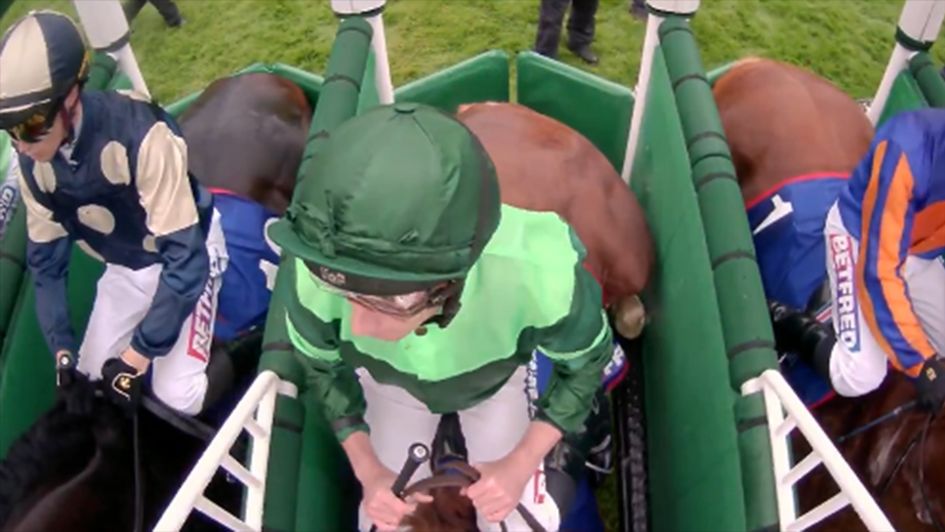
"The presence of the ITV Racing cameras has caused some debate, with the suggestion that its placement above the stall of the Derby favourite may have impacted the outcome of the enquiry – and could indeed create the situation where rules may be applied differently on different racedays.
"To be clear, the stewards at Epsom made their decision based on the available stewarding cameras and having heard the evidence of those involved in the incident. The ITV stalls camera was not available to the stewards until well after the enquiry was underway – and while we feel it vindicated the decision, it was incidental to the outcome.
"It is also worth pointing out that while disparities in technology often exist in professional sport – e.g. certain racedays have drone footage available to the stewards while others don’t, and Video Assistant Refereeing is only available in certain tiers and competitions of professional football – the stewards made their decision at Epsom in the same manner as they did at all the other courses where the rule was enacted in 2026. Indeed, in reaching their decision at Windsor, the stewards relied on the evidence from those involved, as video footage of the incident was not available.
"The incident we witnessed on Saturday is probably the most extreme test of this rule imaginable, involving the heavily-backed favourite in the Derby. We entirely understand the frustrations of those who were affected by the Rule 4 deduction, and the impact on bookmakers.
"However, this must be balanced against the impact on those who had backed the horse and were denied a fair start, which is who this rule was brought in to protect."
The blog concludes by saying: "Some industry and betting stakeholders have suggested that the rule should now be reviewed. We will of course listen to any concerns which are raised and engage with those within the sport. Our rules are constantly under review and the same will apply here.
"We also understand that many people will disagree with the contents of this blog, which is intended purely to set out the rationale behind the rules and their application on Saturday.
"However, we stand by our Stewards who made this decision on the day in line with both the Rules as they are framed, and the intention for which they were introduced."
More on Benvenuto Cellini non-runner decision
More from Sporting Life
- Free bets
- Racecards
- Fast results
- Full results and free video replays
- Horse racing news
- Horse racing tips
- Horse racing features
- Download our free iOS and Android app
- Football and other sports tips
- Podcasts and video content
Safer gambling
We are committed in our support of safer gambling. Recommended bets are advised to over-18s and we strongly encourage readers to wager only what they can afford to lose.
If you are concerned about your gambling, please call the National Gambling Helpline / GamCare on 0808 8020 133.
Further support and information can be found at begambleaware.org and gamblingtherapy.org.