In each of the last two Premier League seasons, every promoted side suffered relegation after just one campaign.
The three clubs promoted into the 2023-24 Premier League all went straight back down, and the exact same fate befell the trio who came up for 2024-25. It marked only the third time in English top-flight history that there have been back-to-back clean sweeps of one-and-done relegations.
That backdrop made Sunderland’s return to the top flight – secured through their Championship play-off final victory in May – feel fraught with peril. After years away from the top table, they had earned their shot again, but the narrative was already written in advance: promoted sides don’t survive.
But could the Black Cats possibly be the ones to buck the trend?
If nothing else, Sunderland have at least bought themselves time in the conversation. Too many promoted clubs are effectively relegated in September, the life squeezed out of them by miserable starts and brutal reality checks.
Sunderland, by contrast, looked competitive from the off. In their opening fixtures they carried the conviction of a side determined not just to make up the numbers, with a strong, structured display in a 3-0 win over West Ham United at the Stadium of Light particularly notable. Seven summer signings were thrust straight into the starting XI and the team did not look like strangers.
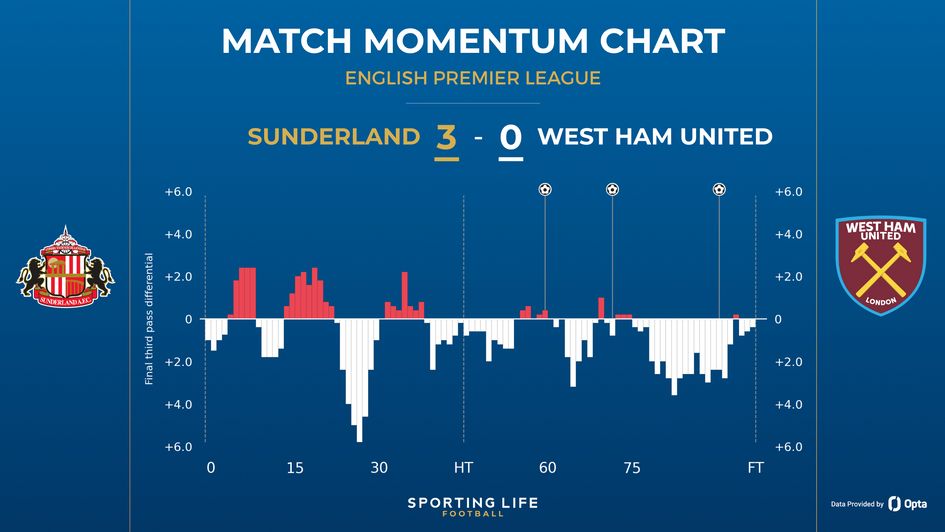
The results have not all been perfect, but the performances have had clarity and consistency. The defence looks more robust than many anticipated, the midfield has not been overrun and there is enough zip in transition to suggest Sunderland can hurt teams on the break. It’s too early to declare them safe, of course, but there’s been more than enough to hint they belong.
That they are functioning at this level at all is remarkable given the summer they endured. Jobe Bellingham, their outstanding midfield presence in the Championship, departed for Borussia Dortmund in a £25 million move that inevitably drew comparisons with older brother Jude’s career path. Tom Watson, the teenage winger who scored in the play-off final, completed his long-anticipated move to Brighton for £11 million.
Losing one would have been a major blow; losing both in the same window could have been ruinous. These were not just talents but personalities around whom the promotion push had been built. Yet Sunderland made an uncharacteristically bold choice: rather than retrench, they tore up the squad and rebuilt it at extraordinary scale.

Sunderland spent somewhere around £150 million during the summer, obliterating their transfer records. For a club long derided as careful bordering on timid in the market, this was an audacious statement of intent.
The most high-profile arrival was Granit Xhaka, prised from Bayer Leverkusen for around £17m. Xhaka, a Premier League veteran with Arsenal, arrived fresh from captaining Leverkusen to their historic 2023-24 Bundesliga title and he was swiftly handed the Sunderland armband.
Xhaka wasn’t the only eyebrow-raising signing. Simon Adingra swapped Brighton for Wearside, bringing with him not only Premier League know-how but genuine flair and end-product. Enzo Le Fee, once Le Bris’s protégé at Lorient, was secured from Roma and offers metronomic passing. Noah Sadiki (Union SG), Nordi Mukiele (Paris Saint-Germain), Chemsdine Talbi (Club Brugge) and Brian Brobbey (Ajax) rounded out a recruitment drive that mixed proven pedigree with untapped potential.
It was a strategy ripped from the Brighton/Brentford playbook – identify undervalued young talent across Europe, add them to the squad before their peak and supplement the group with leaders who know the league inside out.
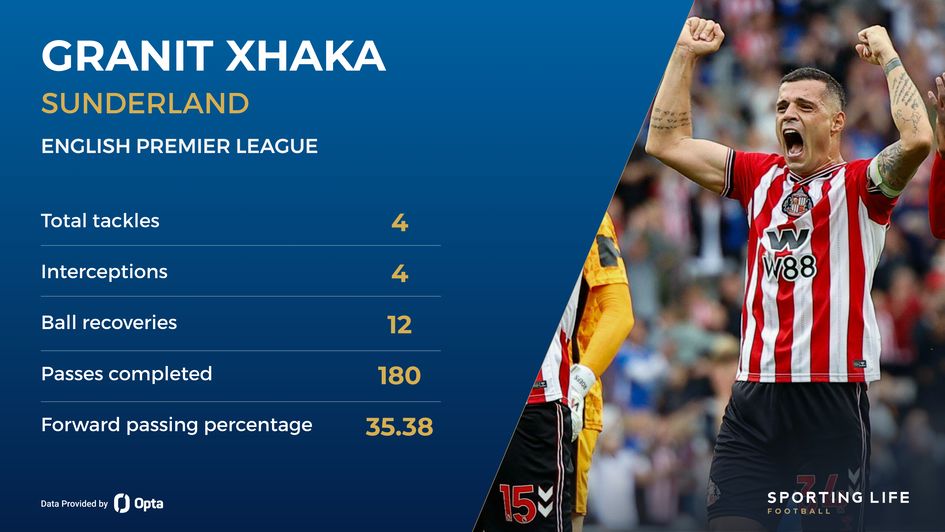
The early evidence suggests the blend is working. Xhaka provides a heartbeat and a voice of authority. Adingra has added unpredictability to the attack. Le Fée gives the side the ability to keep the ball under pressure, while Sadiki and Talbi add dynamism and defensive cover. Brobbey, meanwhile, offers a physical presence up front that Sunderland have lacked for years, able to occupy defenders and create space for those around him.
It is still very much a work in progress, but Sunderland look like a club with a plan, rather than a collection of desperate punts. That alone is refreshing.
The glue in all of this has been Le Bris. The Frenchman, hired in 2024, has had to manage wholesale turnover and a sudden leap in expectations, but his calm authority has carried over from the Championship. His coaching philosophy is well documented – he once remarked that he sees football as “all about triangles”, a geometric shorthand for passing patterns and positional play.
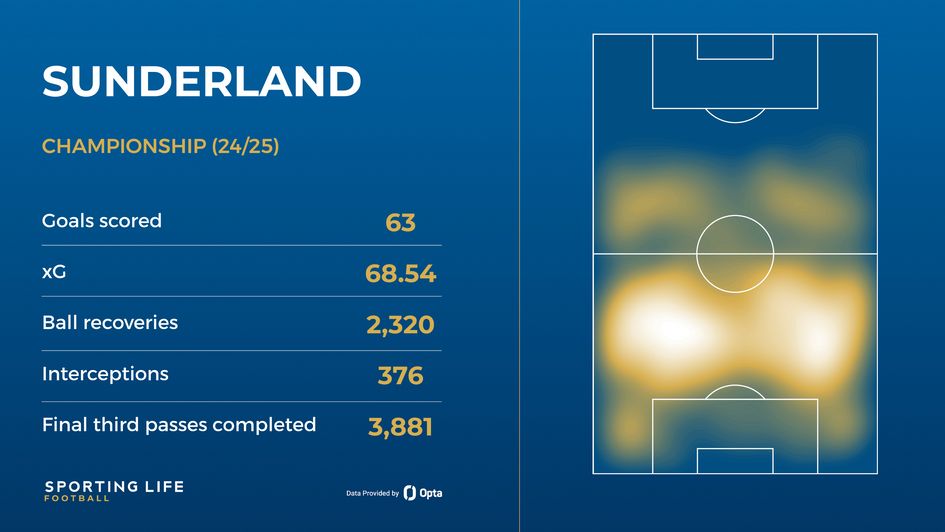
In the Championship, Sunderland were among the league leaders in ball recoveries, defensive interventions, progressive carries and progressive passes. Their game was built on transition: regain, release, run. Those same principles are visible in the Premier League. Sunderland press higher than most expected, they move the ball forward quickly and they ask questions of teams who assume newly promoted sides will sit back and absorb.
Le Bris has also shown a shrewd feel for leadership. Handing the armband to Xhaka was not just a gesture but a tactical move to anchor the dressing room. The Swiss midfielder has given Sunderland an authority they were previously missing. His presence allows the younger signings to grow without carrying the full burden immediately.
Of course, all of this comes with the asterisk of timing. September is not May. Plenty of promoted sides have started brightly before being slowly pulled under by the relentlessness of the Premier League calendar. Injuries, suspensions, fatigue and the sheer grind of facing elite squads every week will test Sunderland like never before.
But there is something undeniably different about this Sunderland project. They have spent heavily but, crucially, intelligently. They have recruited for both immediate impact – with Xhaka’s leadership and Adingra’s creativity – and long-term development with talents like Talbi and Sadiki. They have a coach with a tactical identity, rather than a firefighter’s instinct.
That might not guarantee survival, but it makes Sunderland better placed than any promoted side of the last two years to buck the cycle.
More from Sporting Life
- Fixtures, results and live scores
- Home of This Week's Acca
- Football and other sports tips
- Download the Sporting Life app
- Podcasts and video content
Safer gambling
We are committed in our support of safer gambling. Recommended bets are advised to over-18s and we strongly encourage readers to wager only what they can afford to lose.
If you are concerned about your gambling, please call the National Gambling Helpline / GamCare on 0808 8020 133.
Further support and information can be found at begambleaware.org and gamblingtherapy.org.