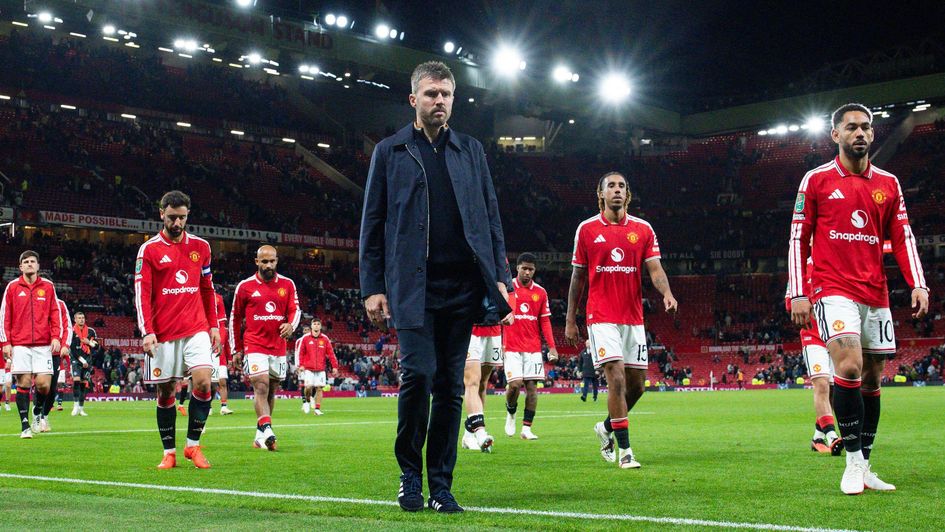
Manchester United cannot be accused of ignoring their midfield problem. They spent almost £150 million trying to solve it.
Andrey Santos arrived from Chelsea for £48 million plus £2 million in add-ons. Youri Tielemans followed from Aston Villa for £35 million, before United committed up to £70 million to sign Carlos Baleba from Brighton.
Three players with different qualities, all recruited to rebuild an area that had become too old, too slow and too dependent on Bruno Fernandes.
The logic was sound. Casemiro had reached the end of his contract, Manuel Ugarte’s first two seasons brought injuries and inconsistency, and Kobbie Mainoo could not carry the midfield alone. Michael Carrick needed technical security, athleticism and depth ahead of United’s return to the Champions League.
He received all three. Tielemans can dictate possession and progress the ball from deep. Santos offers defensive awareness and the ability to arrive in the opposition penalty area. Baleba, once fit, should provide the running power and ball-carrying United have lacked for years.

The question is not whether those players improve the squad. It is whether United needed all three more urgently than they required help elsewhere.
Four Premier League games have produced four points, seven goals scored and seven conceded. United lost 2-0 to promoted Hull, allowed Ipswich to score twice at Old Trafford and surrendered two leads in a 2-2 draw with Everton.
Sunday’s 1-0 defeat to Manchester City was different because Erling Haaland’s winner should have been disallowed, but losing at home to opponents reduced to 10 men after 23 minutes hardly supported the idea that the squad is balanced.
The derby exposed both full-back positions. Diogo Dalot struggled against Antoine Semenyo, while Patrick Dorgu was wasteful in possession and failed to prevent Josko Gvardiol’s cross reaching Haaland.
United had an extra player for more than an hour, yet neither full-back supplied the attacking quality required to stretch City’s compact 4-4-1.
Carrick wanted another left-back during the summer. United explored a move for Lewis Hall, only to be told Newcastle would not sell, while Myles Lewis-Skelly was considered too expensive at more than £50 million.
The window closed with Luke Shaw, now 31 and carrying a substantial injury history, as the only established specialist left-back.
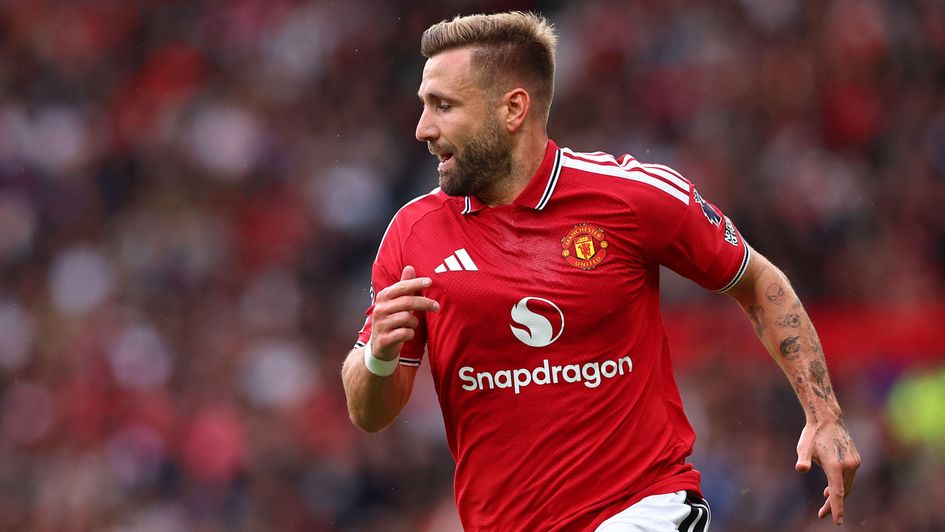
Dorgu can play there, but much of his best work has come as a wing-back with greater freedom to attack. Harry Amass remains a promising option rather than a dependable one and has not played since suffering a hamstring injury while on loan at Norwich in January. Noussair Mazraoui can fill in, although using a right-footed defender creates another compromise.
United knew this weakness existed. They simply spent the remaining money elsewhere.
The same argument applies at centre-back. Harry Maguire and Lisandro Martinez both performed reasonably well in the derby, but neither represents a convincing long-term foundation.
Maguire is 33, while Martinez’s availability has repeatedly been interrupted by injury. Leny Yoro and Ayden Heaven possess considerable potential, but young defenders rarely develop in a straight line. Matthijs de Ligt, who is dealing with a long-term back injury, has not yet featured this season.
A quick, authoritative centre-back would have allowed United to hold a higher line and defend wider spaces when the full-backs advanced. Instead, Carrick must choose between experience that lacks mobility and mobility that lacks experience.

This is where opportunity cost matters. United’s midfield expenditure is usually presented as evidence that Carrick was backed. In isolation, £148 million certainly looks generous.
Squad-building, however, is not a contest to accumulate the largest collection of receipts.
Would United be stronger with Santos and Baleba alongside a £45 million full-back? Or Tielemans and Santos plus a centre-back capable of organising the defensive line? Quite possibly. Any two of the three midfield additions would still have represented a major upgrade, particularly with Mainoo available and Fernandes capable of dropping deeper.
Buying Tielemans made immediate sense because he was proven, experienced and available through a £35 million release clause. Santos offered longer-term potential. Baleba then became the luxury version of a necessity, a player United had admired for more than a year and pursued once Brighton softened their demands.
Perhaps he will eventually become the best signing of the three. At 22, Baleba has the athletic qualities to transform United’s midfield for the next decade. Carrick needs solutions now, though, and the Cameroon international has begun the season sidelined.
The result is a peculiar imbalance.
United have Tielemans, Santos, Baleba, Mainoo and, when fit, Mason Mount and Ugarte competing for two deeper midfield positions, yet one injury to Shaw can leave them without a senior left-back. They have several players capable of progressing the ball through the centre, but insufficient quality in the positions providing width.
There are mitigating factors. Suitable defenders were not necessarily available at acceptable prices, and signing an inferior player merely to fill a vacancy creates its own problems. United have spent years collecting expensive short-term fixes. Refusing to repeat that mistake is sensible.
Yet the club did not have to choose between a £50 million defender and nobody. Other teams regularly find functional full-backs and centre-backs below the elite end of the market. United’s problem has too often been an inability to identify the useful option between an unattainable first choice and complete inaction.
Carrick can compensate through coaching. A more settled midfield should reduce the number of attacks reaching the defence, while Baleba’s eventual return will add protection in transition. Better pressing from the forwards would also make the full-backs less vulnerable.
But opponents have already identified weaknesses in wide areas and will continue targeting them. If Shaw misses time, if Maguire’s lack of pace is exposed or if Dorgu cannot adapt to a conventional back four, United will again be asking their midfielders to conceal structural faults behind them.
The season remains young and a 4-0 Champions League victory over Sabah offered a reminder of the squad’s potential. The new midfield may yet justify every penny.
If the defence continues leaking goals, however, demands for greater investment will miss the point. United did spend this summer. They may simply have spent too much solving one problem and not enough preventing the next one.
More from Sporting Life
Safer gambling
We are committed in our support of safer gambling. Recommended bets are advised to over-18s and we strongly encourage readers to wager only what they can afford to lose.
If you are concerned about your gambling, please call the National Gambling Helpline / GamCare on 0808 8020 133.
Further support and information can be found at begambleaware.org and gamblingtherapy.org.