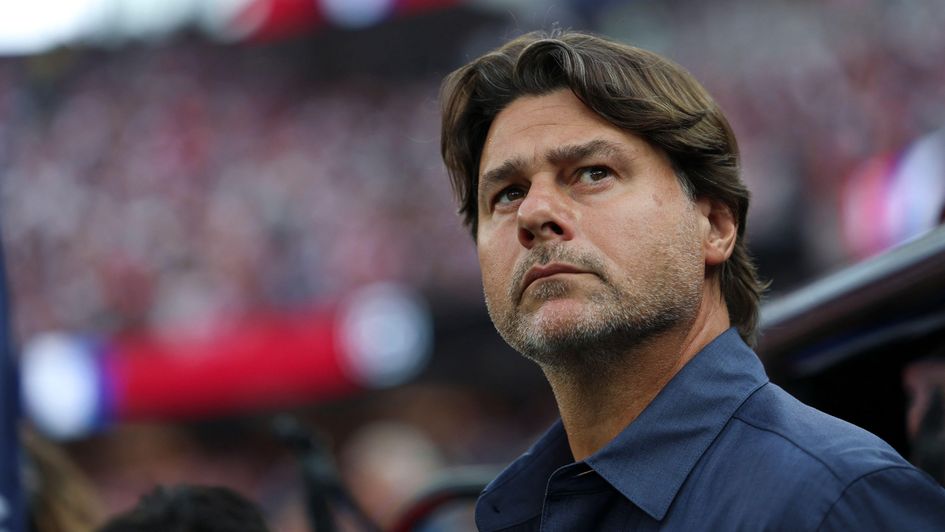
For the first time since Sir Alex Ferguson’s retirement Manchester United have got something right.
This being United that comes with caveats, obviously; caveats big enough that over the weeks ahead many will declare Mauricio Pochettino a bad appointment.
He hasn’t held down a club job for longer than 18 months since he left Tottenham Hotspur in 2019. He was sacked by Paris Saint-Germain for under-performance and because he didn’t really get on with the sporting director, and a pretty similar assessment can be made of his single year at Chelsea, after which Pochettino left by mutual consent.
So, here we have a manager with the whiff of being past it, whose relationships with higher-ups consistently break down, and who is less qualified for the Man Utd job than he was for any of his previous three interviews over the years. That’s all very modern United.
But it also misses a crucial detail: Pochettino is a new kind of hire.

Whether past their best (Jose Mourinho, Louis van Gaal), up-and-coming (Ruben Amorim, Erik ten Hag), or under-qualified club legend (Ole Gunnar Solskajer, Michael Carrick), never before have Man Utd actually gone for a world-class coach in their prime.
And despite widespread reservations, Pochettino is both of those things, as evidenced by the excellent job he did at Chelsea. Yes, really.
When Pochettino arrived in the summer of 2023 Chelsea were a mess. Having finished 12th the previous season before promptly signing 10 young players and selling four of their most important senior ones in Mason Mount, Kai Havertz, Mateo Kovacic, and Kalidou Koulibaly, Pochettino should not have been expected to perform miracles.
He didn’t, but from the outset Chelsea showed, in flashes, tactical cohesiveness; showed the flowing vertical football of high pressing, risk-taking forward passing, and rapid counter-attacking that Pochettino learnt as a disciple of fellow Argentine Marcelo Bielsa.
You could see the automatisms being built, could feel the rhythm emerging in spurts here and there, and despite some poor results Chelsea’s play between the two boxes consistently improved.
By spring the tactical foundation was down (despite a colossal injury crisis derailing most of the campaign) and Chelsea looked ready to challenge for the title the following season, as long as they signed experienced defenders to cut out the unforced errors undermining them at the back – and as long as they upgraded on Nicolas Jackson, whose wasteful finishing was costing further points.

Chelsea ended the campaign with five straight wins in the Premier League and, to those paying close attention, it looked like Pochettino had just completed a perfect transitional year.
And so it proved, in a sense, when his successor Enzo Maresca had Chelsea just two points off the top 16 games into the following year, all the while playing pure Pochettino football: fast, dynamic, man-to-man in the press, and everything Maresca was not.
Throughout that entire first half-year at Stamford Bridge Maresca continually criticised his players for winning matches despite not following his instructions, despite struggling to unlearn the methodology of his predecessor.
Pochettino’s Chelsea might just have gone all the way had he stayed on to finish the rebuild, but even without a second season there was enough evidence to tell us he arrives at Old Trafford an elite coach still at the top of his game.
That does not mean he will be a success. Man Utd’s crisis runs even deeper than Chelsea’s and the executives that hover above the dugout are probably even harder for someone like Pochettino to get along with.
At Chelsea he arrived at the end of May and enjoyed a full summer to work on his tactical ideas ahead of a campaign with no European distractions, allowing for free midweeks to work on his principles.
United, beginning with that baptism of fire at Anfield, play 12 matches in 47 days, one every 3.9 days.
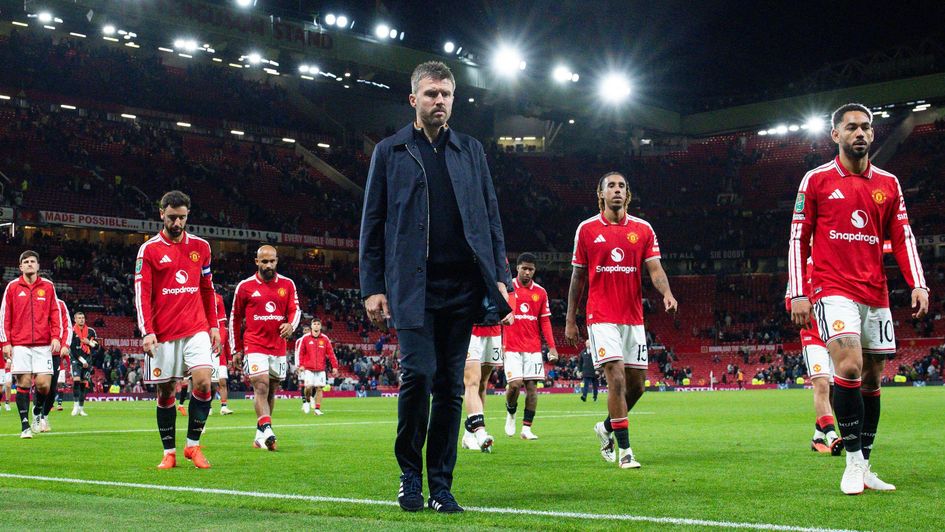
Until they come up for air in early January they will be running predominantly on vibes alone - although that hasn’t exactly been a problem for these players in the past. Bouncing up from the absurdly low ebb of the last few weeks, it is plausible Man Utd will flourish as they did under Carrick’s interim management.
Man Utd won more points (39) than anyone else across the 17 Premier League matches Carrick managed in 2025/26, ample evidence there is enough quality in the ranks to rack up points under Pochettino in the months ahead.
Pochettino won’t be too disappointed with the quality at his disposal either (even if ultimately he will need to wrest control of transfers from a committee that consistently get it wrong), not just because of the recent evidence of their underlying talent but because his tactical ideas align with at least some of the squad.
Pochettino utilises a lopsided 4-2-3-1 formation, typically with one inverted winger acting more like a number ten and one wide winger adding pace. Bold attacking football, built around an athletic midfield and flying full-backs, has the hallmarks of the fashionable Red Bull model, only it was devised by Bielsa and updated by his disciples long before an energy drink company plastered its branding all over Argentinian ideas.
This should suit Kobbie Mainoo and Carlos Baleba as the two number sixes, although both are in the press-resistant box-to-box weaver role of Moussa Dembele, with Man Utd lacking that Eric Dier-style destroyer.
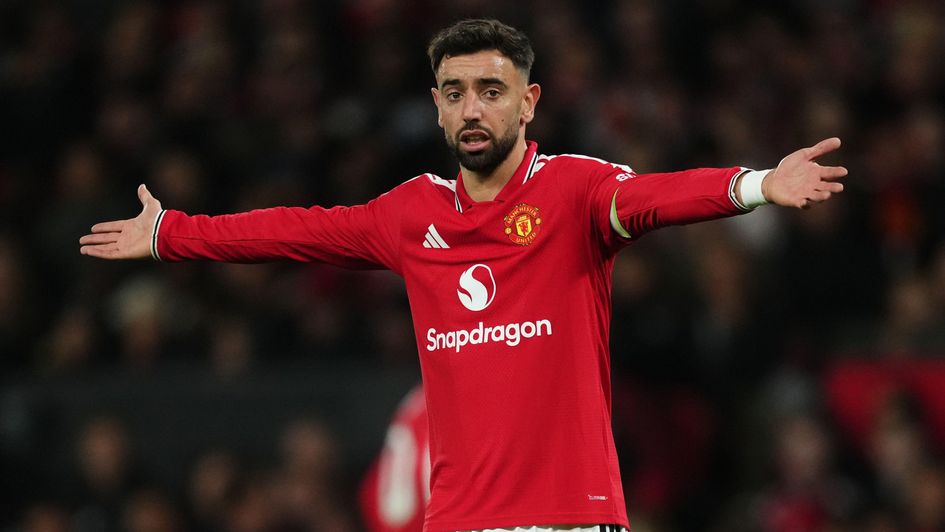
Bruno Fernandes should have no problem roaming freely in the number ten role, as Dele Alli once did, while out wide Matheus Cunha and Bryan Mbeumo broadly tick the boxes as a version of Christian Eriksen and Heung-Min Son. Marcus Rashford plays on the last line and knows how to press, so, with a bit of coaching, could work as the nine.
And coaching is significant, here.
Too often we assume a player’s quality is static rather than dependent on the individual coaching they are receiving. Under the tutelage of Pochettino and his staff, there are intelligent footballers at Old Trafford who could – should – rediscover a few things about themselves.
Mason Mount, Youri Tielemans, Benjamin Sesko, and Patrick Dorgu all fit that description – were all excellent signings, once - but it applies in particular to Leny Yoro and Matthijs de Ligt, centre-backs considered elite before they were sucked into the United vortex.
Finding Walker/Rose style full-backs is perhaps Pochettino’s biggest problem, although a partnership of Luke Shaw and Amad Diallo, retrained, might work. But whether or not Pochettino even has time to train these players is the big question.
Pochettino really could be the manager who brings the good times back to Old Trafford. He just need to muddle through winter, get on better with the executives, coach a few players, survive bad results as the tactics settle, and seize control of the transfer operation. Simple.
Navigating all of that will be the biggest challenge of Pochettino’s career. It’s hard not to conclude that Man Utd have made the right appointment - at the wrong time.
More from Sporting Life
Safer gambling
We are committed in our support of safer gambling. Recommended bets are advised to over-18s and we strongly encourage readers to wager only what they can afford to lose.
If you are concerned about your gambling, please call the National Gambling Helpline / GamCare on 0808 8020 133.
Further support and information can be found at begambleaware.org and gamblingtherapy.org.