
In a decision that has sent ripples through English football and one that reflects Chelsea’s increasingly unconventional approach to leadership, the Blues have confirmed Liam Rosenior as their new head coach, replacing Enzo Maresca, who was dismissed after 18 months in charge.
Maresca’s tenure – oscillating between trophy success and internal tensions – came to an abrupt end on New Year’s Day, leaving Stamford Bridge in search of stability and a clear footballing identity.
Chelsea’s owners BlueCo, who also own French side Strasbourg, have appointed Rosenior from that very role in Alsace, handing him a long-term contract that extends through 2032.
Unlike many of the high-profile figures Chelsea have turned to in the recent past – managers deeply experienced in the Premier League or on the Champions League stage – Rosenior arrives at just 41 years old and with no senior managerial experience in England’s top flight or in Europe’s premier club competition. It’s a bold appointment, one that raises as many questions as it does intrigue.

So who is Liam Rosenior, and what can Chelsea fans reasonably expect from the club’s newest boss?
Rosenior’s journey into the managerial spotlight is far from typical for someone taking over one of England’s biggest football clubs.
The son of a former West Ham, QPR and Fulham striker, Rosenior forged a solid, if unspectacular, career as a professional footballer.
A versatile presence on the right flank, Rosenior alternated between full-back and wide midfield roles, representing clubs such as Bristol City, Fulham, Reading, Hull and Brighton during a career that stretched from the early 2000s to 2018.
Retirement did not see Rosenior drift away from the game. Instead, he transitioned seamlessly into coaching, beginning with roles in Brighton’s youth set-up shortly after hanging up his boots. His analytical mind and communicative skills soon drew attention and by 2019 he had moved to Derby County as a first-team coach.
Under Wayne Rooney he would become assistant manager of the Rams, and in 2022, following Rooney’s departure, he took charge of the first team as interim manager, leading Derby through a short but notable stretch that helped stabilise their campaign in the Championship.

That brief stint served as a springboard to Rosenior’s first full managerial appointment with Hull in November 2022. Returning to a club where he had been a fan favourite as a player, Rosenior took charge in a challenging environment where expectation was modest and margin for error slim.
Over the 2023/24 Sky Bet Championship season, he guided Hull to a seventh-place finish, their highest in years, and in doing so earned a nomination for EFL Championship Manager of the Season.
Despite this relative success, his time at Hull ended in controversy – he was sacked in May 2024 amid reported “differences in football philosophy” with owner Acun Ilicali, who reportedly wanted a more attack-oriented approach than Rosenior’s balanced, development-focused style offered.
Undeterred, Rosenior’s managerial career took a continental turn when Strasbourg, the Ligue 1 side under the BlueCo ownership umbrella, appointed him in July 2024, succeeding Patrick Vieira.
It was a calculated risk by the Alsace club. And one that paid immediate dividends.
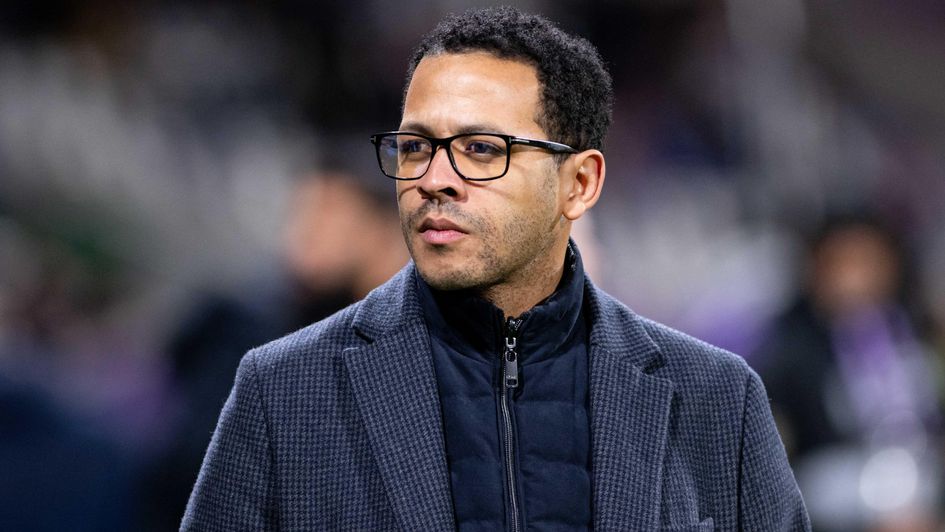
In his first full season in charge, Rosenior led Strasbourg to a seventh-place finish in Ligue 1 and UEFA Conference League qualification, feats that afforded the club European football for the first time in nearly two decades.
Midway through the current campaign, Strasbourg are again comfortably placed in mid-table and topp of their Conference League group, continuing the upward trajectory that had made Rosenior a compelling candidate for the Stamford Bridge job.
Tactically, Rosenior is a student of the modern game. His Strasbourg team typically favoured a 3-4-3 or 4-3-3 base, emphasising possession control, structured progression and efficient pressing without over-reliance on direct transitional play.
While not obsessed with dominating possession for its own sake, his sides have shown a willingness to build patiently, imposing their structure and inviting opponents into predictable patterns before exploiting space through calculated movement.
Strasbourg’s possession numbers sat consistently above Ligue 1’s median and their pressing statistics were among the league’s more effective, suggesting a coach who blends organisation with tactical flexibility.
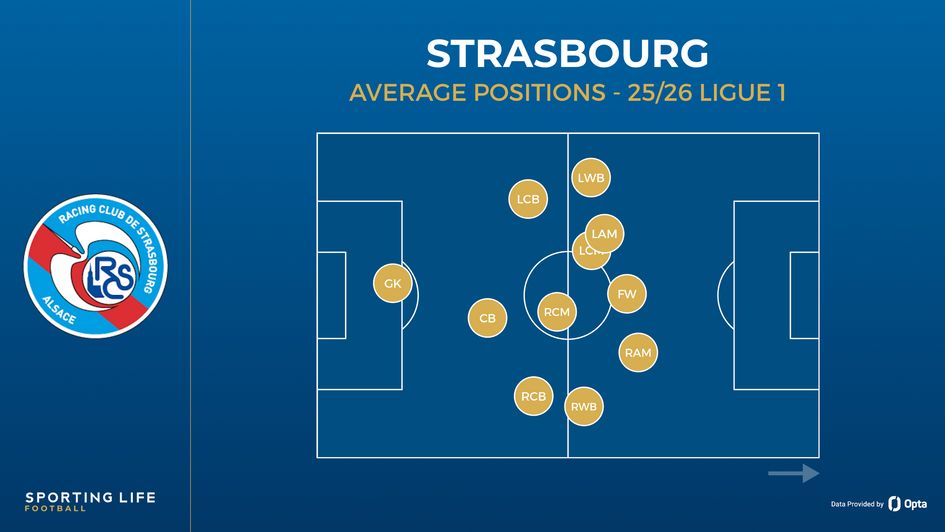
That blend of structure and adaptability – and Rosenior’s willingness to vary systems – is likely to be crucial at Chelsea.
The Stamford Bridge side have a squad laden with both experienced campaigners and explosive young talent, including Cole Palmer, whose 2025/26 campaign has been overshadowed by inconsistency and the weight of expectation.
A manager capable of nurturing creative players while ensuring defensive balance could unlock rejuvenate the supremely gifted England attacker.
Rosenior’s track record with young, developing players – and his confidence to deploy them in high-pressure environments – could be precisely what a transitional Chelsea side needs.

Yet, questions remain.
Can a manager without Premier League experience cope with the intensity and scrutiny that come with Chelsea’s lofty ambitions?
Will his tactical approach translate from Strasbourg’s settings to the unforgiving crucible of top-flight English football?
And crucially, can he realise the potential of a squad built for European – not just domestic – success?
For Blues supporters, Rosenior represents both continuity and change: continuity through his ties to the BlueCo multi-club ecosystem and change in his managerial pedigree and style.
Whether that gamble pays off will define not just his career but potentially the identity of Chelsea in the next era.
On paper, Rosenior’s story is one of steady ascent and intellectual coaching; in practice, his tenure at Stamford Bridge will be the ultimate test of that promise.
More from Sporting Life
Safer gambling
We are committed in our support of safer gambling. Recommended bets are advised to over-18s and we strongly encourage readers to wager only what they can afford to lose.
If you are concerned about your gambling, please call the National Gambling Helpline / GamCare on 0808 8020 133.
Further support and information can be found at begambleaware.org and gamblingtherapy.org.