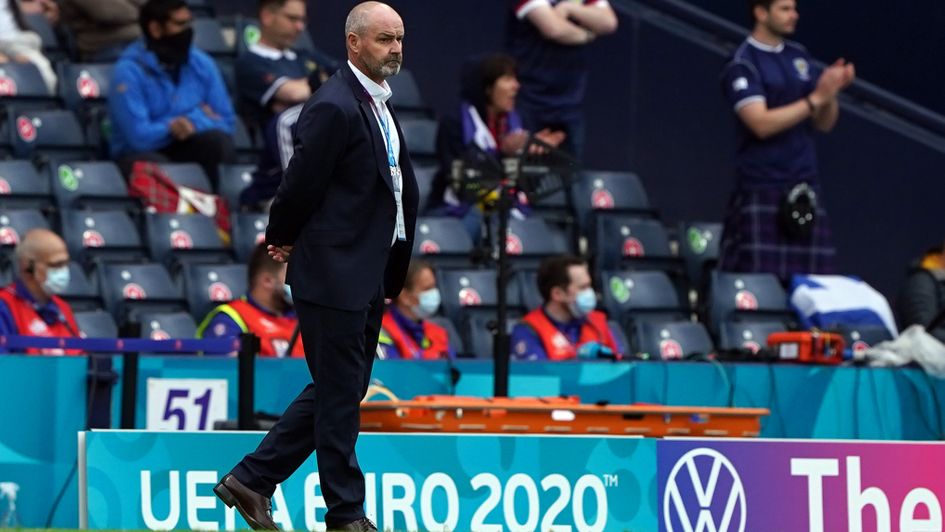
Having waited 23 years to make an appearance at a major tournament, Scotland won’t want to remember this result and performance.
Much of the pre-match talk around Steve Clarke’s team had been around a potential run to the last 16. Now, after a 2-0 defeat to the Czech Republic, avoiding three straight defeats at Euro 2020 might be the only achievable target.
The tone was set from the moment it emerged that Kieran Tierney had been ruled out through injury.
Scotland’s back three system was largely devised to get the best out of the Arsenal man, who had forged a strong relationship with Andy Robertson down the left. Without that, Scotland lacked forward thrust.

How Kieran Tierney's injury hindered Scotland
Robertson was Scotland’s best player, making six key passes, enjoying the second-most touches of the ball (80) and generally conducting much of his team’s attacking play, but the Liverpool full back struggled to burst into space due to being boxed in by the Czech Republic press. Tierney would have drawn defenders away.
Not only that, the absence of Tierney also robbed Scotland of any sort of composure in possession when playing out from the back. This was particularly evident in the first half when the Czech Republic just lined up their midfield on the halfway line to wait for a mistake.
Tierney, who could return for Friday’s clash with England, is the one player Scotland don’t have a suitable replacement for. His unavailability put Scotland on the back foot before a ball was even kicked, but Clarke didn’t react well to the news either. The former Chelsea assistant manager could have set up his team better.
Scott McTominay, for instance, could have been deployed in central defence, where he has played numerous times for Scotland, to help progress the ball out from the back. This would have prevented Liam Cooper and Grant Hanley, who both made more passes than anyone else in dark blue, from bypassing the midfield so often.
James Forrest or Ryan Fraser would have given more pace on the right side, which would have eased the reliance on the limited Stephen O’Donnell to get forward. Billy Gilmour or even Callum McGregor could have been used from the start to provide more control in the centre of the pitch.
Should Che Adams have started against the Czech Republic?
Clarke addressed one of his biggest mistakes by introducing Che Adams off the bench at half-time, with the Southampton striker making an instant impact by moving Scotland 10 yards higher up the pitch. But any momentum this change generated was halted by Patrik Schick’s stunner from the halfway line to put the Czech Republic 2-0 up.
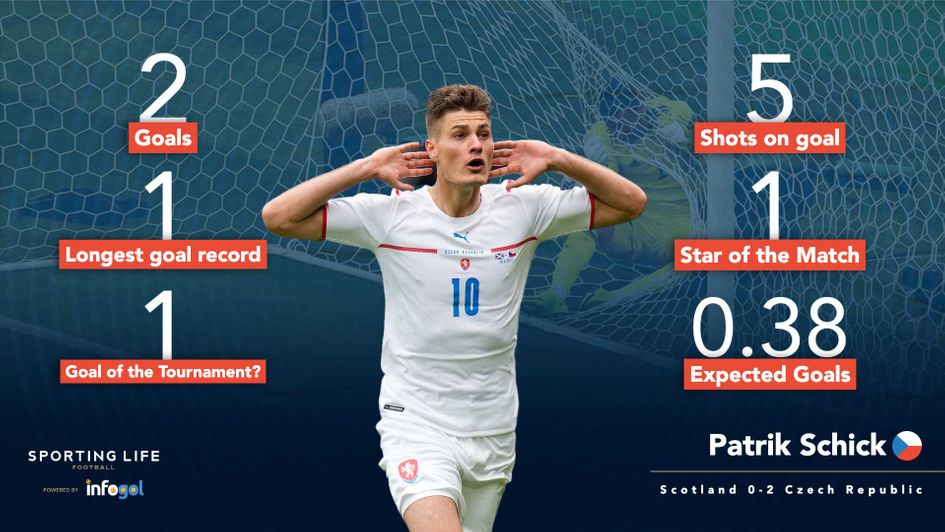
Adams will almost certainly start against England on Friday such was the cohesion he brought to Scotland’s attack when he came on. O’Donnell should also be replaced by a more attack-minded option (probably Forrest) to address the structural lopsidedness apparent in this opening tournament fixture.
Scotland, who had the chances to score two or three in the second half and finished with an Expected Goals value of 2.23 to Czech Republic’s 1.25, are a better team than they showed in this match, but that counts for little in a major tournament format.
To stand a realistic chance of getting out of Group D, Scotland will need four points from games against England, one of the tournament favourites, and Croatia, the 2018 World Cup finalists.
A sharper cutting edge will be required in the next two fixtures. Scotland registered 19 shots in total to the Czech Republic’s 10, but while the visitors to Hampden put seven on target, the hosts managed just four.
👍🏴 Two positives for Scotland:
— Sporting Life Football & Infogol (@InfogolApp) June 14, 2021
- Their 19 chances created has only been bettered by Italy (24) & Denmark (23) in the 8 matches so far
- Their xG of 2.23 is the third highest so far behind Austria (2.46) & Switzerland (2.6)
🤔 Will they be more clinical against England? pic.twitter.com/gdT0wKnwIw
If Adams starts against England, Clarke must ensure he isn’t isolated in the way Lyndon Dykes was in the first half here. Deploying the pair as a front two might be the best solution to that.
While Scotland boast their most accomplished group of players in decades, their biggest strength coming into Euro 2020 was the system and structure Clarke had put in place as manager. This unraveled somewhat against the Czech Republic who, in stark contrast, executed their game plan to perfection through set-pieces and solid defensive organisation.
Twenty-three years is a long time to wait between major tournaments but Clarke and Scotland have just four days before their next Euro 2020 fixture to make amends for all that went wrong in their opening game. There can still be salvation for them in this tournament if they learn some valuable lessons.