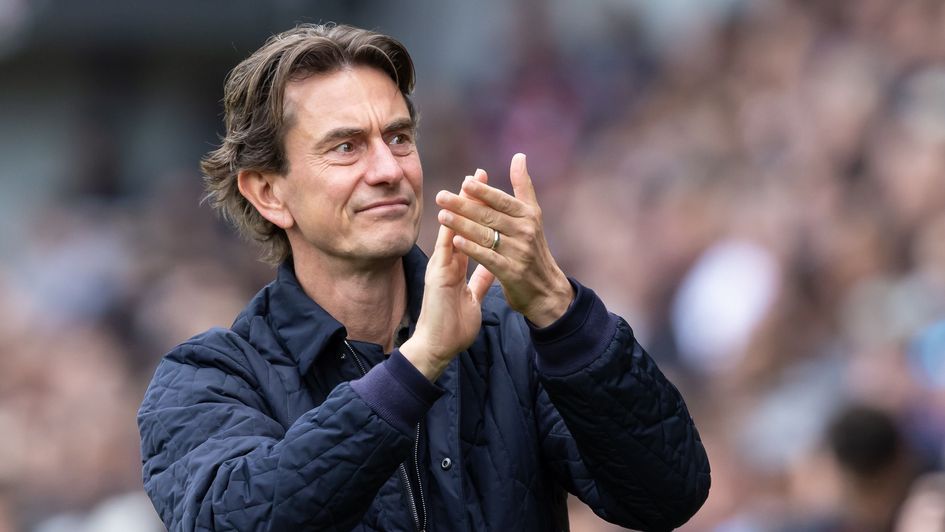
Thomas Frank’s time at Tottenham ended badly enough to damage his reputation, but not so badly that seven successful years at Brentford should be forgotten.
Now, Crystal Palace appear ready to offer him an immediate route back into top-flight management.
Palace have dismissed Pierre Sage after Sunday’s 3-1 defeat by Liverpool left them bottom of the Premier League table. Sage has won only two of his 10 league games, losing seven, while no other team in the division has conceded more than Palace’s 24 goals.
Frank has emerged as the leading candidate and is understood to have held talks with the club. He was interviewed in the summer before Palace appointed Sage and is reportedly keen on the job, although Sean Dyche, Frank Lampard and Vitor Pereira are among the alternatives being considered.

The obvious reservation is what happened at Tottenham.
Frank lasted less than eight months and departed with Spurs 16th, five points above the relegation zone. His 1.12 points per game and 26.9 per cent win rate were the lowest recorded by any Tottenham manager to take charge of at least five Premier League matches.
Yet Palace may be a more natural fit. Frank struggled to satisfy Tottenham’s demand for expansive football while also repairing a vulnerable team. At Brentford, there was no expectation that style should be separated from circumstance.
He built flexible, competitive sides that could dominate Championship opponents, defend deep against Manchester City and switch between those approaches within the same season.
Palace need that pragmatism. They have allowed 24 goals in 10 league games, faced more shots than any other side and kept only one clean sheet. Frank’s first priority would be to make them compact again.
The existing squad points towards a back three, at least initially. Palace have spent most of the season in a 3-4-2-1 and Frank frequently used 3-5-2 or 3-4-3 systems against stronger opponents at Brentford. He also introduced a back three at Tottenham when he wanted greater defensive protection.
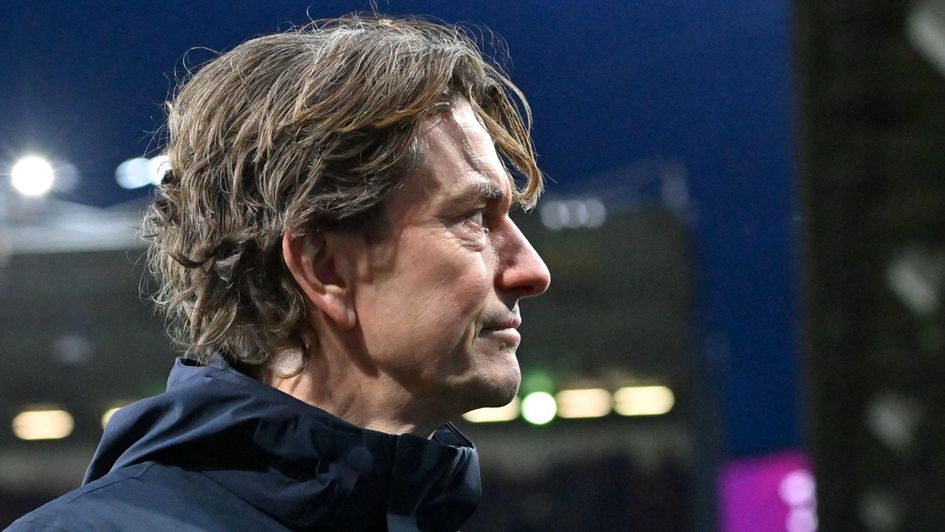
Chris Richards, Axel Disasi and Jaydee Canvot could form the initial defensive unit in front of Dean Henderson. Honest Ahanor, Chadi Riad and Takehiro Tomiyasu would provide alternatives when available. None can directly replace Marc Guehi or Maxence Lacroix, whose departures have contributed heavily to Palace’s decline, but a narrower structure would reduce the amount of open space they must defend.
Frank’s teams rarely press relentlessly for 90 minutes. They may jump forward man to man at goal-kicks or after backward passes, but they are equally comfortable retreating into a compact middle or low block. Palace would defend the centre first, encourage opponents to play wide and attempt to trap them near the touchline.
That should suit Adam Wharton. England’s midfielder has spent too much of this season trying to create while the structure around him collapses. Frank could pair him with Quinten Timber in a double pivot, with Jefferson Lerma offering a more defensive option when Palace need additional protection.
Wharton would become the main distributor. Frank has always valued midfielders capable of releasing runners quickly after turnovers, rather than simply accumulating possession. Wharton’s range of passing could launch Ismaila Sarr and Yeremy Pino into space before opponents have reorganised.
Palace’s wing-backs would be crucial. Tyrick Mitchell already has the stamina and defensive awareness to cover the left flank, while Oscar Mingueza could offer more creativity from the right. Anan Khalaili is another energetic option, particularly when Frank wants to press higher.

Frank’s Brentford regularly created overloads in wide areas, committing three or four players to one flank before switching play or crossing early. Palace could reproduce that pattern by combining Mitchell, Wharton and Pino on the left, while Mingueza links with Timber and Sarr on the opposite side.
The Dane would have several choices in attack once Palace’s injured players return. Jean-Philippe Mateta is the most obvious focal point. He can occupy centre-backs, bring others into play and provide a target for the direct passes that featured prominently at Brentford.
Jorgen Strand Larsen offers a similar profile, while Eddie Nketiah could play alongside either in a 3-5-2. Sarr, Pino, Dwight McNeil and Dario Osorio give Frank enough variety to retain the current 3-4-2-1 or move towards the 4-2-3-1 he increasingly favoured during his final Brentford season.
A likely first-choice attack would feature Pino and Sarr behind Mateta. Pino could drift into central areas to connect with Wharton, while Sarr attacks the space beyond Mateta. Against opponents who defend deep, Frank might introduce Nketiah as a second striker and push the wing-backs higher.
Set pieces would receive immediate attention. Frank turned dead balls into a major competitive advantage at Brentford and carried that emphasis to Tottenham. Palace desperately need similar work: they have conceded five set-piece goals this season and allowed chances worth 6.7 expected goals from those situations.
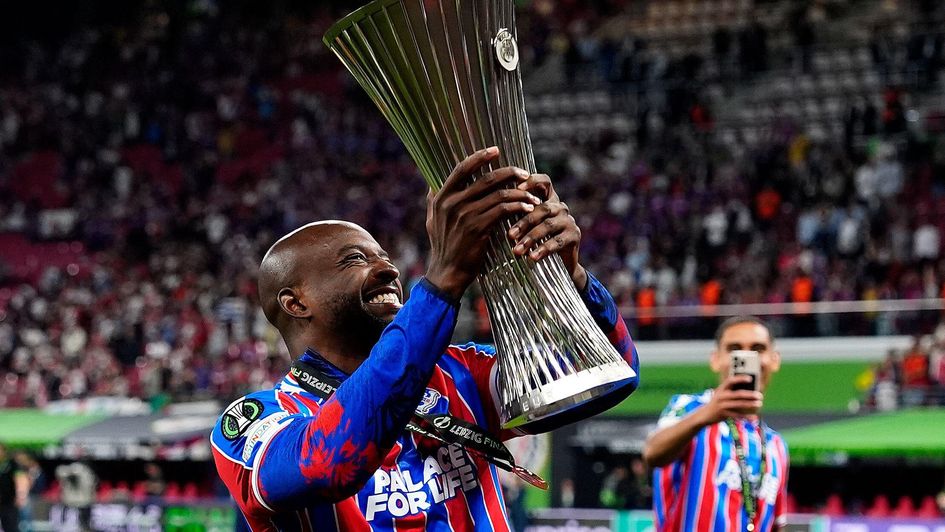
Disasi, Richards, Canvot, Mateta and Strand Larsen would give Frank ample aerial power. Wharton, McNeil and Pino can all deliver accurately. Palace would become more elaborate at corners, crowding goalkeepers, using blockers and attacking specific spaces rather than simply sending bodies into the box.
The failure at Tottenham should still inform expectations. Frank’s Spurs became cautious and predictable, with their attacking numbers declining as control became the priority. A Palace side already short of confidence cannot afford to retreat further into itself.
The difference is that Frank would not be asked to impose a grand attacking identity at Selhurst Park. He would be asked to organise an unbalanced squad, improve young players and find marginal gains without an enormous transfer budget. Those are the conditions in which he produced his best work at Brentford.
His Palace would be flexible rather than ideologically pure, alternating between a back three and back four according to the opposition. They would play more directly, defend narrower, attack set pieces aggressively and look to release Sarr and Pino quickly after regains.
It might not always be beautiful. Palace’s immediate concern, however, is no longer aesthetics. It is escaping the bottom of the table, restoring order and rediscovering the competitive edge lost since Oliver Glasner’s departure.
Frank has failed at a bigger club, but his most important body of work suggests he knows how to do exactly that.
More from Sporting Life
Safer gambling
We are committed in our support of safer gambling. Recommended bets are advised to over-18s and we strongly encourage readers to wager only what they can afford to lose.
If you are concerned about your gambling, please call the National Gambling Helpline / GamCare on 0808 8020 133.
Further support and information can be found at begambleaware.org and gamblingtherapy.org.