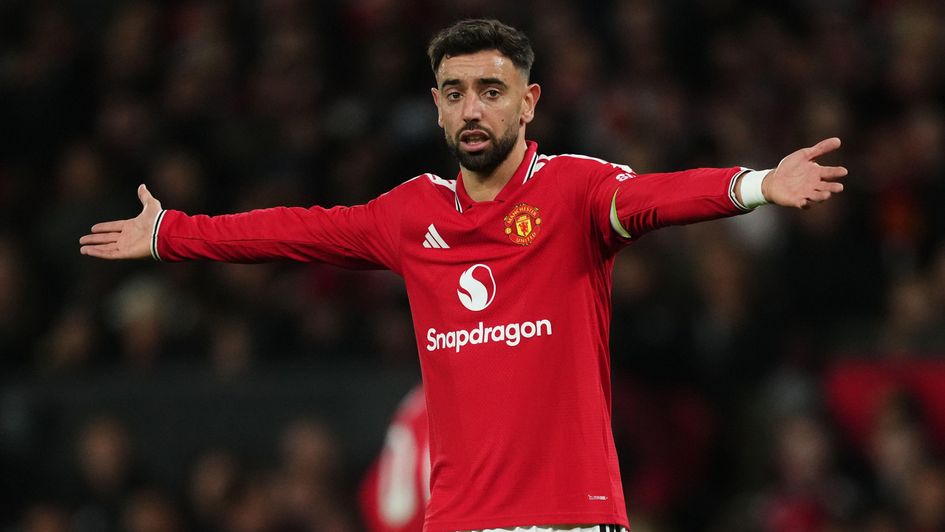
Bruno Fernandes struck the crossbar in Manchester United’s 2-0 defeat to Atletico Madrid on Tuesday.
In isolation, it was a near miss. In the context of United’s season, it felt like another reminder of how much Michael Carrick continues to need his captain to produce something from very little.
United have gone five matches without a victory and collected six points from their opening six Premier League fixtures, their poorest start since 1986. Carrick’s position has become precarious, with Antonio Conte, Fabian Hurzeler and Julian Nagelsmann already discussed as possible replacements.
If Carrick is to survive, he needs to solve several problems at once. United must press with greater cohesion, protect their defence more effectively and find a settled attacking structure.
The quickest route to improvement, however, may be restoring Fernandes to the level he reached last season.
Fernandes set a new Premier League record with 21 assists in 2025-26 as United recovered from a poor start to finish third. His influence increased after Carrick replaced Ruben Amorim and moved him back into his natural attacking role, where he registered six open-play assists during the second half of the campaign.
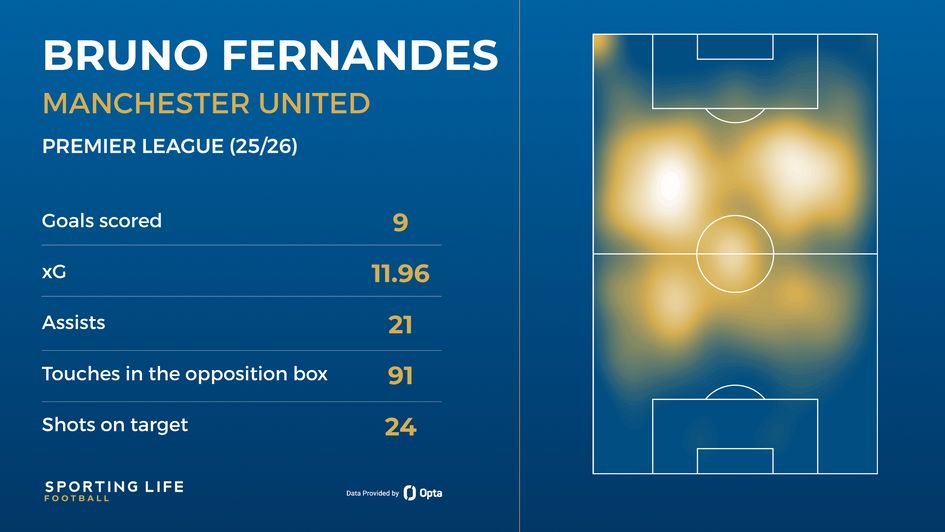
This season’s numbers initially appear respectable. Fernandes has three goals and one assist from six league appearances. All three goals came in the 5-2 victory over Ipswich, though, and he has now completed four successive league games without scoring or assisting, his longest barren run since the spring of 2025.
The performances have been more troubling than the output. Against Tottenham, Fernandes required 23 minutes to complete his first pass. At the Metropolitano, his shooting briefly threatened Atletico but too much of United’s attacking play bypassed him or asked him to receive possession far from goal.
Carrick has rarely contemplated removing him. Fernandes has played 96 per cent of all available minutes under the United manager. He has started every significant match and been substituted only three times, always after the 81st minute. His only appearance from the bench came in the Carabao Cup defeat to Brighton.
That reliance has become part of the problem. Fernandes is 32 and played deep into the summer at the World Cup. He has also carried a minor injury this season. Asking him to play almost every minute, press aggressively, drop into midfield and remain United’s primary creator is unlikely to produce his best football.
His position matters too. Fernandes can play as an orthodox midfielder, but his risk-taking becomes more damaging when he receives the ball close to his own defence. The passes that make him productive near the penalty area become turnovers that expose United in deeper positions.
Carrick must therefore resist using his captain to compensate for every weakness elsewhere. Carlos Baleba and Kobbie Mainoo have the athleticism and technical security to form the base of midfield. Youri Tielemans can provide distribution against opponents who defend deeply. That should release Fernandes to remain higher, find space between the lines and concentrate on creating chances.
The personnel ahead of him can also help. Benjamin Sesko has the height, movement and physical presence to attack Fernandes’ crosses, an option United have not exploited consistently, even when the Slovenian experienced periods of fitness.
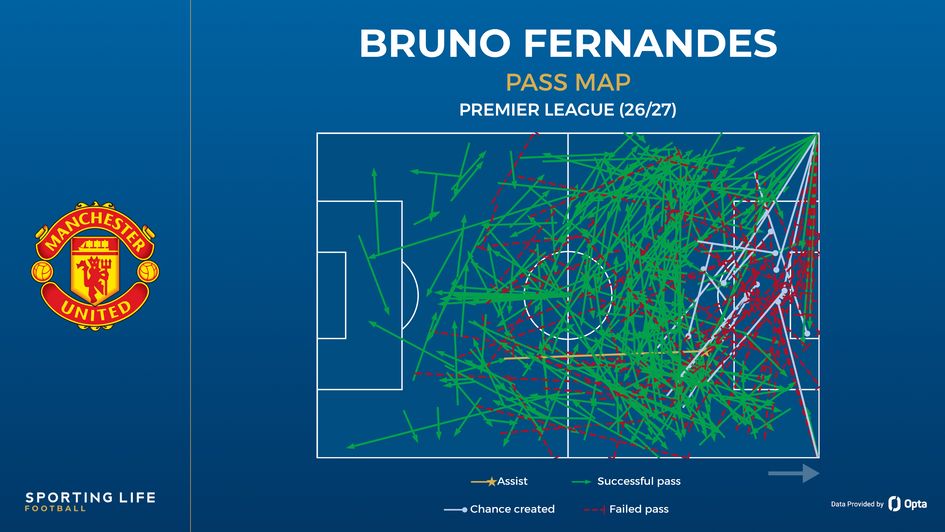
Earlier this season, United led the Premier League for in-swinging crosses while often playing Matheus Cunha, who prefers to move towards the ball, as their central striker.
Carrick admitted this week that United "don't have a timeframe" for Sesko's return from a persistent shin complaint. But the towering striker's presence at the point of attack would give those deliveries a clearer target.
Fernandes could operate behind him, with Bryan Mbeumo stretching the right and Cunha attacking from the left. That structure would place United’s best players in more natural roles rather than asking each of them to solve a different tactical compromise.
A spell out of the team has been suggested, with Mason Mount or Cunha available to replace him. Rest may be useful, particularly given Fernandes’ fitness concerns, but dropping him is not a tactical solution in itself. United do not possess another player capable of matching his passing range, chance creation or ability to decide close games.
Fernandes' body language has attracted criticism, too. Frustration has again become visible through complaints, gestures and weary reactions when moves break down.
Yet it is difficult to separate that behaviour from the responsibility he has carried through years of upheaval. Fernandes remains captain, chief creator, set-piece taker and the player expected to explain every poor result.
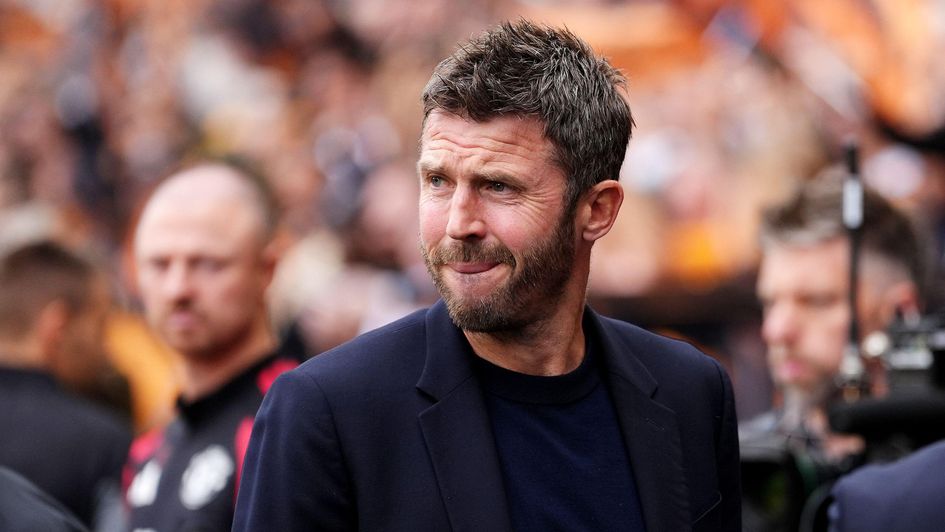
Carrick cannot remove all of that pressure, but he can make the football simpler. Keep Fernandes near goal, surround him with runners and give his deliveries a striker equipped to attack them. Reduce his minutes when matches allow and stop treating his versatility as permission to deploy him everywhere.
Sunday’s trip to Leeds is followed by visits to Como and Chelsea, with Bournemouth coming to Old Trafford in between. Carrick has little time to find a broader cure for United’s problems.
Rebuilding Fernandes will not repair the defence or settle the disorder above the manager. It could, however, restore the player most capable of dragging United through difficult matches.
Carrick’s survival may depend upon allowing his captain to become a match-winner again rather than asking him to hold the entire side together.
More from Sporting Life
Safer gambling
We are committed in our support of safer gambling. Recommended bets are advised to over-18s and we strongly encourage readers to wager only what they can afford to lose.
If you are concerned about your gambling, please call the National Gambling Helpline / GamCare on 0808 8020 133.
Further support and information can be found at begambleaware.org and gamblingtherapy.org.