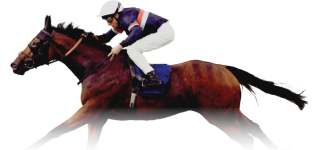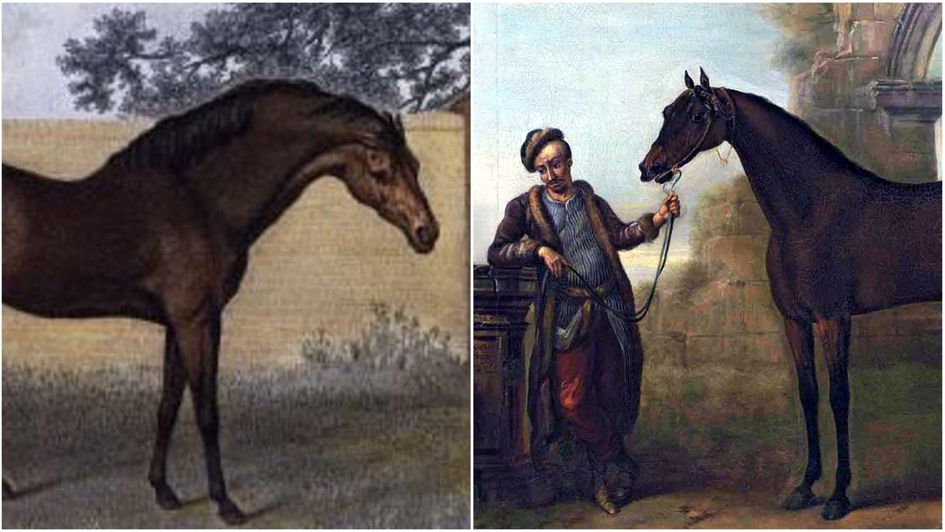
Pedigree Researcher Sally Wright looks at the influence of the three ‘foundation fathers’ of the Thoroughbred, and notably the fortunes of the waning male lines of the Godolphin Arabian and Byerley Turk, to ask, where are they now?
Just as their famous Thoroughbred foundation fathers had done hundreds of years ago, three young stallions - Aesterius, Rosallion and Electrolyte - all retired to stud for the 2026 breeding season. Each stallion is a perfect example of modern Western European Thoroughbred breeding in that they have won Group races over sprints and/or a mile, displayed excellent juvenile form, and entered prestigious British stud farms as healthy and wealthy prospects, garnering plenty of interest from breeders.
Mirroring the vast bulk of their equine peers, the three paternally descend from the stallion, Phalaris (1913), back to the famous foundation sire, the Darley Arabian (c.1700-1730). Now responsible for around ninety-five percent of all Thoroughbred male lines, the Darley Arabian’s vast global empire reigns supreme. Equally, the three young sires share important links to the two other ‘Big Three’ early foundation pillars of the breed - the Byerley Turk (c.1680-1703) and the Godolphin Arabian (c.1724-1753).
Although now almost extinct as a Thoroughbred male line, the Byerley Turk still appears as a paternal influence through Group 1 sprint winner, Ahonoora (1975), in Aesterius’ and Rosallion’s fourth generations, and in the fifth generation of Electrolyte’s pedigree through His Majesty (1968). Ahonoora’s popular son, Indian Ridge (1985), died too soon but left plenty of breeding sons (primarily in Europe) as well as good broodmares.
He got the crack sprinters, Compton Place and Namid, as well as Linngari, Dr Fong and Irish 2000 Guineas winner Indian Haven, who all stayed further, though at stud were always up against the greater commercial appeal of the sons and grandsons of Dubawi, Galileo and Storm Cat. More optimistically, a Trinity College Dublin genetic study (2001-2005) found that the Byerley Turk has contributed 3.3% of modern Thoroughbred genes through all his descendants. His imprint can still be found through his daughters, who helped to shape the female ‘taproot’ of countless pedigrees, including the official Families #1-3, #5, #8, #17, #27 and #41, and this ‘hidden legacy’ is still of interest to some breeders when selecting today’s genetic requirements.
The Byerley Turk sprung a surprise in a study by Wallner, et al (2017), who, having identified the individual haplotypes of the ‘Big Three,’ found that the legendary British racehorse and sire, St Simon (1881), a horse attributed to the Darley Arabian male line through Eclipse (1764), unexpectedly carried the Byerley Turk male-line signal. This pointed to a huge breeding hiccup some hundred-and-fifty years prior and a significant inaccuracy in the British General Stud Book (though it is unlikely to be amended, as the tight policy on ‘retrospective correction’ remains upheld to this day).
Acknowledging such a twist means that hugely significant racers and stallions such as Ribot (1952) and leading sire of broodmares Chaucer (1900) can now be attributed to the Byerley Turk. And although none left a modern commercial paternal line, this revelation plants the Turk much closer in the pedigree of the great Northern Dancer (1961), whose paternal grandsire Nearco’s dam Nogara was herself a great-granddaughter of St Simon through her male line. The 2017 Wallner study also potentially increases the Turk’s total genetic footprint in the Thoroughbred since the 2001-2005 study, given how influential a stallion St Simon has been.

The Byerley Turk’s impact outside of the Thoroughbred is also profound. His male line survives into the modern day in US breeds such as the Quarter Horse, Saddlebred, and Standardbred, variously developed for cutting and cattle ranching, pleasure riding and sulky/harness racing. Imported descendants of the Byerley Turk colonised the US in the 1700s and 1800s. The inaugural Epsom Derby winner Diomed (1777) was a grandson of Herod (1758) and having been imported to the US quickly moulded the Thoroughbred there, siring the phenomenal stallion, Sir Archy (1805), as well as influencing other American breeds.
The US trotter/pacer was also marked by another Byerley Turk male-line stallion, Denmark (1839), who was inbred to Diomed on his dam’s side. Early records indicate that about 60% of horses registered in the American Saddlebred stud book traced their tail male line back to Denmark.
If ‘total genetic makeup’ held the same industry status as male sire lines do, the Godolphin Arabian would be the undisputed king of the Thoroughbred, right into the modern day. Breeding historians will be well aware that the mercurial and difficult colt, Eclipse (who was lucky not to have been gelded), is responsible for the Darley Arabian’s enormous paternal reach but was out of a mare called Spilletta (1749), a granddaughter of the Godolphin Arabian by his undefeated son and eight-time champion sire, Regulus (1739), and was therefore genetically closer to the Godolphin Arabian by a generation.
In the previously-cited Trinity College Dublin study, the Godolphin Arabian’s total contribution through all ancestral crosses in the breed was found to be almost 14%, a truly outstanding DNA footprint for one individual, with his nearest rival, the Darley Arabian, at 6.5%. To date, this makes the Godolphin Arabian genetically more influential in the Thoroughbred than any other single original source. Translating it into pure numbers, a new crop of about 100,000 Thoroughbred foals every year would make the Godolphin Arabian personally responsible for some 13,800 of them, over 270 years after his death.
The pedigrees of Rosallion, Aesterius and Electrolyte reflect this, containing endless loops back to these early horses as well as sharing a more direct close-up cross to the Godolphin Arabian, through Waajib (1983), a grandson of Northern Dancer out of Coryana by Sassafras. Sassafras beat the legendary Nijinsky in the Prix de l'Arc de Triomphe of 1970 and also won the French Derby and French St Leger. A direct male line descendent of the Godolphin Arabian’s famous grandson, Matchem (1748), via the wartime St Leger winner, Hurry On (1913), Sassafras was inbred to the latter three times. Matchem and his sons and grandsons got many heavily Godolphin-crossed descendants.
Early British and North American stud records became fat around the mid-section with good, fertile mares and multiple Godolphin-line males, including Fearnought (1755) by Regulus, arguably one of the most influential colonial US imports ever. Here, the Godolphin Arabian’s male line strongly affected two very great legends, Northern Dancer and Native Dancer (1950), through both their dams, either via inbreeding in the former case or more directly on the dam’s male line in the latter. These two highly influential stallions went on to propagate the respective Sadler’s Wells/Galileo and Mr Prospector success stories of today.
Although the Godolphin Arabian’s Thoroughbred male line is now critically endangered in Europe and North America, continued through the remaining sons of Diktat, Dream Ahead and Breeders’ Cup Classic winner, Tiznow, it found support in South Korea (for a time) and Türkiye, where at least two breeding sons of Tiznow stand. A rare Godolphin branch also hangs on in South America.

Hunter's Moon (1926), an English-bred export by Hurry On (a half-brother to the mighty Hyperion) left a Northern Dancer-like legacy in a place where breeders aspired to a solid physical framework and extra stamina to tackle that hemisphere’s more gruelling distances. Breeding sons of Hunter’s Moon included Carnaval, Hamlet (also heavily inbred to the Byerley Turk’s St Simon), Holy Smoke and Postin (1940), and they all influenced Chilean, Argentinian and Peruvian racing and breeding for years. So prolific was Postin in South America that he fathered every runner in the 1955 Peruvian Derby and the 1956 Gran Premio Nacional.
A daughter of Hunter’s Moon, Himalaya, produced Argentina’s Champion Older Male of 1947/48, Endeavour II (1942), a massive creature of over seventeen hands high, who ended up at stud in the US and got Pretense (1963), who sired the good stallion Sham and Kentucky Broodmare of the Year 1994 recipient, Fall Aspen. More recently, Put It Back (1998), a Florida-bred son of the Godolphin US In Reality line, became a much sought-after stallion in Brazil, consistently ranking high on the General and Broodmares Sires Lists there.
Like the Byerley Turk, the Godolphin Arabian has significantly impacted non-Thoroughbred breeds. Two grandsons, Little Janus (1746), greatly helped to define the American Quarter Horse, and Jalap (1758) was crossed with cart and hunter mares to help shape the Cleveland Bay, a Yorkshire harness/carriage ‘rare breed’ that maintains a Stud Book to this day. Standardbred foundation sire, Messenger (1780), descended paternally from the Darley Arabian but is far more a product of the Godolphin Arabian, who appears three times close up in his pedigree. And the enormous impact of Hurry On and his son Precipitation (1933), the latter a ‘gentle giant’ of a horse who won the Ascot Gold Cup, have shaped the modern sport horse breeds of the European continent, notably the Selle Français, Oldenburg, Hanoverian and Dutch Warmbloods which dominate the world of showjumping and dressage.
Hurry On’s heavy build and dense bone didn’t suit Britain’s changing Flat scene after WW1 but it was helpful for European Olympic-standard eventing. Precipitation’s grandson Furioso II (1965) keeps the Godolphin Arabian flag flying into modernity through his iconic showjumping ‘F’ line of Florestan, and through Ferro/Ulft, Cocktail and Kannan/Voltaire, all exceptional sires of sires and broodmares.
In summation, whilst certain male lines wane within the Thoroughbred, they can flourish in other disciplines and types of horse. And a whole, not partial, genetic angle of view reminds us that ‘lost’ components are still present subsurface and are more resilient and adaptable in camouflage than they are often given credit for.
Sources
Timeform database
Racing Post website
- https://www.tbheritage.com/index.html
- https://www.tbheritage.com/HistoricDams/EngFoundationMares.html
- https://www.researchgate.net/publication/11619266_Microsatellite_diversity_pedigree_relatedness_and_the_contributions_of_founder_lineages_to_Thoroughbred_horses
- https://www.americanclassicpedigrees.com/st-simon-gb.html
- https://www.americanclassicpedigrees.com/endeavour-ii-arg.html
More from Sporting Life
- Free bets
- Racecards
- Fast results
- Full results and free video replays
- Horse racing news
- Horse racing tips
- Horse racing features
- Download our free iOS and Android app
- Football and other sports tips
- Podcasts and video content
Safer gambling
We are committed in our support of safer gambling. Recommended bets are advised to over-18s and we strongly encourage readers to wager only what they can afford to lose.al
If you are concerned about your gambling, please call the National Gambling Helpline / GamCare on 0808 8020 133.
Further support and information can be found at begambleaware.org and gamblingtherapy.org.