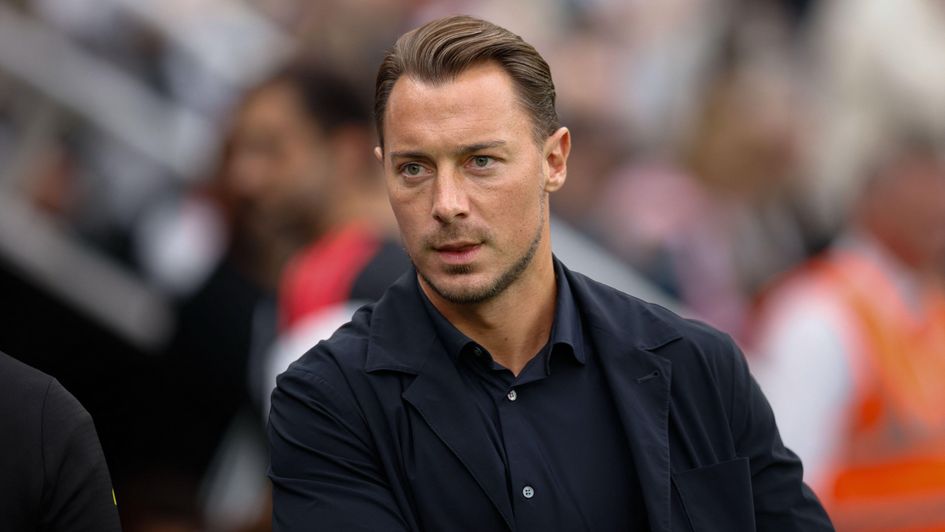
The first thing Newcastle supporters should know about Matthias Jaissle is that he is accustomed to arriving at clubs where the ownership structure does rather more than merely loom in the background.
His career as a coach was shaped by Red Bull and his route to St James’ Park has come through Al-Ahli, one of the four Saudi clubs controlled by the Public Investment Fund. Newcastle have paid around £9.5million to move him from one branch of the PIF football operation to another. It is not quite an internal promotion, but nor does it feel like the product of a worldwide search.
That should not obscure an impressive record. Jaissle is only 38, yet has won league titles in Europe and consecutive continental championships in Asia. Before Saudi Arabia, he collected two Austrian Bundesliga titles and a domestic cup with Red Bull Salzburg, whom he also led into the Champions League knockout phase for the first time.
Jaissle’s playing career was less extensive. A centre-back developed by Stuttgart, he joined Hoffenheim in 2007 and played under Ralf Rangnick during the club’s extraordinary ascent into the Bundesliga. Persistent knee trouble forced him to retire at 25, after which he moved into coaching as an assistant at Brondby before entering Salzburg’s development system.
We’re delighted to announce the appointment of Matthias Jaissle as Newcastle United head coach. ✍️
— Newcastle United (@NUFC) August 5, 2026
Welcome to the club, Matthias! 🖤🤍 pic.twitter.com/C1kNstwg8X
That education is evident in his teams. Jaissle’s football is aggressive, vertical and organised around winning the ball as close to the opposition goal as possible. At Salzburg, he generally preferred a narrow midfield diamond. His two strikers occupied the centre-backs, the attacking midfielder screened passes into the holding player and the midfield shuffled across to create pressing traps near the touchline.
Once the ball was recovered, Salzburg attacked quickly. This was not sterile possession for its own sake. The first pass was frequently played forward, with runners already moving beyond the defence. Width came mainly from the full-backs, while the deepest midfielder sometimes dropped between the centre-backs to assist the build-up.
Jaissle adapted at Al-Ahli, where a 4-2-3-1 better suited a squad containing Riyad Mahrez, Roberto Firmino and Allan Saint-Maximin. There were still recognisable Red Bull principles, particularly the counter-press and speed of attack, but his team became more comfortable controlling possession. He has also used a back three and switched to two centre-forwards when chasing matches. Unlike some graduates of football’s pressing academies, he does not regard a formation as a sacred text.
That makes projecting his Newcastle side slightly complicated, not least because it remains unclear who will actually be in it.
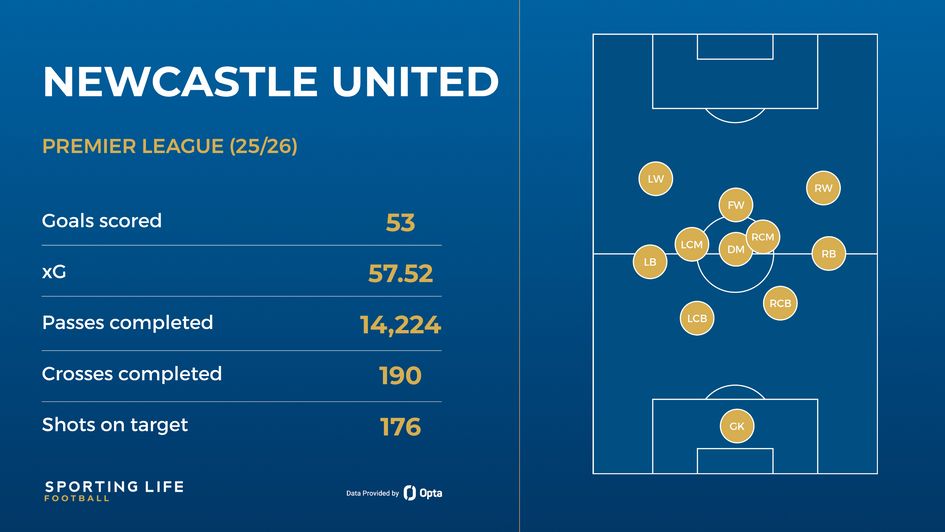
A front two would suit Nick Woltemade, whose ability to receive between the lines could complement the speed and directness of Yoane Wissa or William Osula. In a 4-2-3-1, Woltemade could operate as the No.10 behind Wissa, with Anthony Elanga and Harvey Barnes attacking from wide positions. Elanga, in particular, appears built for Jaissle’s football. He can press, carry the ball over distance and attack the space created when a centre-forward drops short.
Lewis Hall and Tino Livramento should also benefit. Both possess the energy to provide width from full-back and the technical ability to move into midfield. Hall could become especially important during the first phase of possession, allowing Newcastle to form a temporary back three while Livramento pushes higher on the opposite side.
Sven Botman is the obvious defensive reference point, although a high line will test his mobility after two injury-disrupted years. Malick Thiaw has the athletic qualities to defend larger spaces beside him, while new goalkeeper Lukas Hornicek’s willingness to sweep behind the defence helps explain why Newcastle spent £25.7million on the 6ft 6in Czech international. He is their only senior arrival aged over 21 this summer.
The midfield is where Jaissle’s blackboard begins to resemble a ransom note.
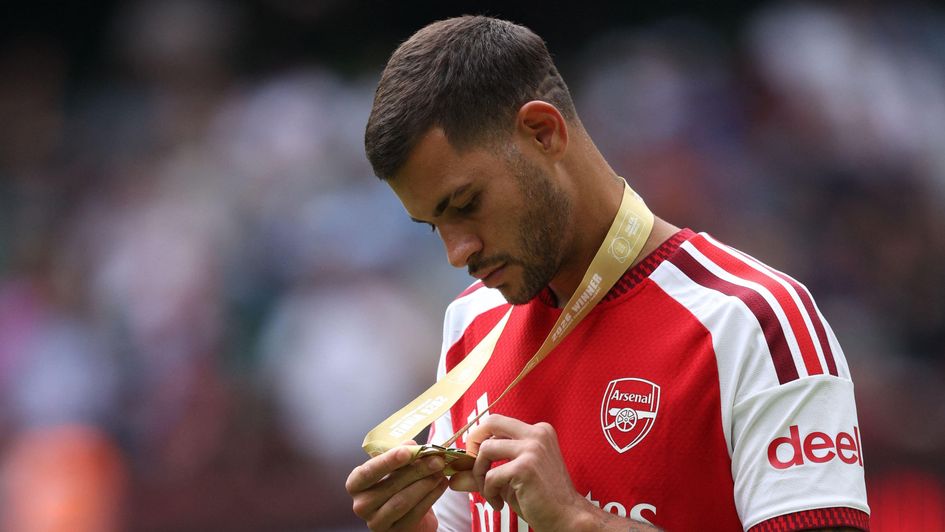
Sandro Tonali has joined Tottenham for £100million. Anthony Gordon has moved to Barcelona for £70million. Bruno Guimaraes, the captain and player around whom any sensible rebuild might have been organised, has been sold to Arsenal for £75million. Alexander Isak had already left for Liverpool the previous summer. Between them, Newcastle have removed the technique, leadership, aggression and attacking quality that once suggested Champions League football might become routine on Tyneside.
Joelinton remains, for now, and would bring the physical force Jaissle expects from his central players. Lewis Miley has the intelligence and composure to take on greater responsibility. But the summer additions have largely been prospects, including Aladji Bamba and Sean Steur, rather than footballers equipped to replace three established stars immediately. A proposed move for Pierre-Emile Hojbjerg has collapsed after the Marseille midfielder rejected Newcastle.
Jaissle has therefore inherited the sort of job that looks glamorous until somebody hands over the keys. Newcastle finished 12th last season and have no European football. Eddie Howe, who transformed them from relegation candidates into Champions League qualifiers and Carabao Cup winners, has gone. Four of the most important players from his peak side have followed him out, while convincing replacements have not arrived.
The wider concern is harder to quantify. When PIF bought Newcastle in 2021, the apparent direction of travel was obvious. There would be complications involving spending rules and commercial growth, but the destination was supposedly a permanent place among Europe’s elite. Five years later, the club are selling their best players, recruiting their manager from another PIF-owned team and attempting to place a positive frame around a summer of unmistakable retreat.

Perhaps this is a reset rather than a surrender. Newcastle have banked enormous transfer fees, reduced the age of the squad and appointed a coach with a strong development record. The remaining weeks of the window could yet produce the players Jaissle requires. But faith in the project once rested on the assumption that each setback would be met with greater ambition. That assumption no longer feels safe.
None of which is Jaissle’s fault. His methods should translate well to a crowd that embraced Howe’s intensity, and his career suggests he is more adaptable than the Red Bull label implies. Yet Salzburg were structurally dominant in Austria and Al-Ahli gave him some of Asia’s finest players. At Newcastle, he must build a pressing team after the club have sold many of its best pressers, and a possession game after losing the midfielders most capable of controlling it.
Jaissle may prove to be an excellent coach. The worry is that Newcastle have appointed him just as the job has stopped looking like an excellent opportunity.
More from Sporting Life
Safer gambling
We are committed in our support of safer gambling. Recommended bets are advised to over-18s and we strongly encourage readers to wager only what they can afford to lose.
If you are concerned about your gambling, please call the National Gambling Helpline / GamCare on 0808 8020 133.
Further support and information can be found at begambleaware.org and gamblingtherapy.org.