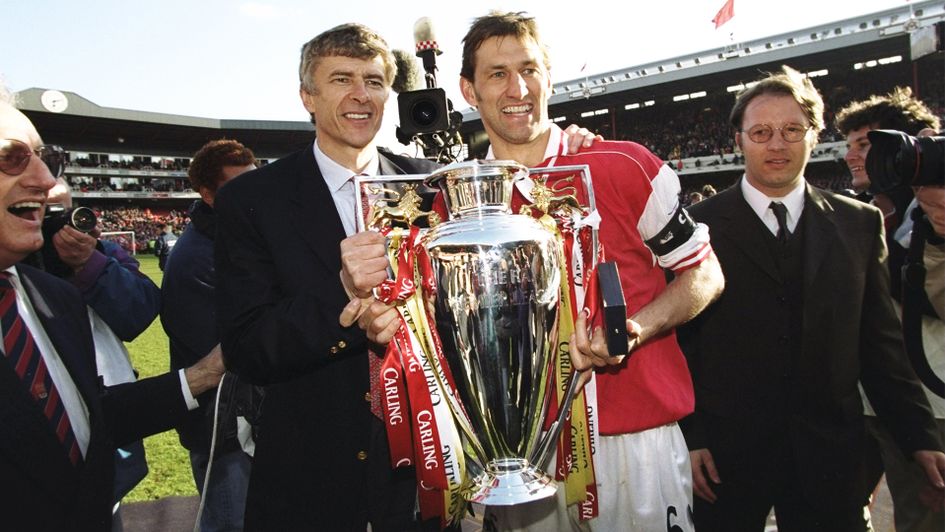
It was the news so many Arsenal fans have been longing to hear, and yet when it came Arsene Wenger’s departure felt somehow unreal, a strangely unsettling experience. The separation has been a long time coming but, like a broken marriage finally reaching divorce, the anticipated sense of relief has given way to instant nostalgia, to the sudden realness of the change.
Somehow, after 22 years inextricably linked, Arsenal and Arsene must contemplate a future without the other.
An outpouring of affection on social media speaks to this feeling. The end has come and with it all bitterness – most of it, anyway – has evaporated. In its place fans have begun celebrating Wenger’s glorious first decade and defending the clumsy transitional years. Those waving ‘Wenger Out’ placards on match-days may already be feeling a twinge of regret.
“I am proud to have been a rival, a colleague & a friend to such a great man” - Sir Alex Ferguson statement about Arsene Wenger on the #MUFC website pic.twitter.com/rduzFhZ5Tv
— Simon Peach (@SimonPeach) April 20, 2018
For all his faults (and there have been many over a semi-disastrous final two years at the Emirates), Wenger has left an astonishing footprint on English football. His revolutionary impact on the Premier League in the late 1990s cannot be overstated, nor can the brilliance of Arsenal’s ‘Invincibles’ 2003-04 season.
Nobody doubts his impact over that first decade, of his journey from the odd-ball foreigner who overhauled the English game to the genius auteur who reached the Champions League final in 2006. The final 12 years - the repeated failures; the stubbornness; the gradual decline - leave Arsenal fans pondering Wenger’s legacy.
Only now, with the ending in sight, can we begin to get some perspective and recognise his legacy is intact. These last years may not have been glorious, may not have fulfilled the promise of resurgence made when Mesut Ozil arrived in 2013 to end the austerity years, but eventually Wenger’s frustrating end game will be seen in a whole new light.
With the passing of time, events that seemed so important– a top-four finish in one season, a botched Champions League group stage in another - will come to feel trivial in comparison to the successive FA Cup wins and his earlier Premier League titles. However, even if his initial success doesn’t redeem him, the final few seasons will still shrink to a minor footnote for one important reason: Wenger’s unerring commitment to playing beautiful football.
#MerciArsène pic.twitter.com/bjP0wLMgee
— Arsenal FC (@Arsenal) April 20, 2018
Even isolating 2006 to 2018, no other club in English football can claim to have so unwaveringly committed to aesthetics, to playing in a style that is thrilling to watch whatever the scoreline. Wenger has been, as he said in 2015, “a facilitator of what is beautiful in man”, and for that every football fan should be thankful. It is why, many years from now, Wenger’s tenure will be wistfully recalled as an extraordinary time to be an Arsenal fan.
We won’t just remember Marc Overmars and Dennis Bergkamp gliding along the Highbury turf, or the second wave of Thierry Henry and Robert Pires in the early 2000s. We’ll also remember what Wenger gave us in the fallow years, from Andrey Arshavin to Cesc Fabregas, from Mikel Arteta to Robin van Persie. Entertainment is the true Wenger brand, the legacy that will outlast memories of individual seasons or the frustrations of a February collapse.

A decade from now and Wenger’s time at the club will be viewed in three distinct sections: the early domination, the successive Champions League qualifications under financial restrictions, and the final years, when Arsenal won three FA Cups in four years. The tediousness of their yearly collapses, or the draining of optimism as once-feared rivals move out of sight, will be forgotten; the empty seats and the banners flown over the Emirates will soon feel faintly ridiculous.
In the end an unerring belief in his own methods proved to be Wenger’s fatal flaw, but it is important not to diminish the impact his singular vision has had on the identity of the club. To this day, Arsenal under Wenger play lovely football, adhering to the same expansive possession-based principles that first shook English football when the Frenchman arrived in 1996. For that reason alone, his 22 years should be viewed not as the rise and the fall, but as a single tapestry: imperfect, yes, but unforgettable from beginning to end.
🤔 Who next for #AFC?
— Sporting Life (@SportingLife) April 20, 2018
💛 Thomas Tuchel?
🇩🇪 Joachim Low?
🔴 Patrick Vieira?
🐶 David Wagner?!@TomC_22 looks at who could replace Arsene Wenger…
👉 https://t.co/HXAKXqfR3W pic.twitter.com/dXImE3gZol