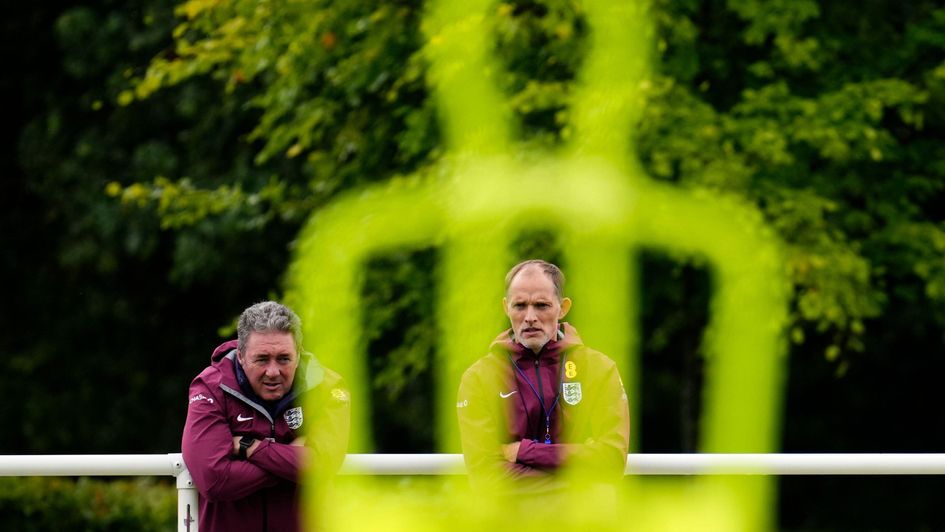
The terms of the Impossible Job have changed.
England used to be the modern Manchester United, hovering outside the elite in a climate of self-indulgence, exceptionalism and intense media scrutiny that turned every understandable defeat into a crisis.
The pressure is the same these days but the landscape different.
England are now Paris Saint-Germain: a team of superstars who look destined to win the top prize but who by spending 90% of their time beating minnows are tactically unprepared for what the knockout stages bring.

In theory, Thomas Tuchel knows how to deal with that scenario but his Champions League campaigns at PSG doesn’t particularly hold up to scrutiny.
In his first season Manchester United famously overturned a 2-0 first leg deficit to win 3-1 win Paris, a classic counter-attacking performance from interim manager Ole Gunnar Solskjaer that caught a PSG side simply unprepared for the fight.
In year two, Tuchel reached the final but this was the Covid-disrupted year when the Champions League frankly wasn’t cannon. Single knockout games came after months without football and in eerie empty stadia PSG eased past Atalanta and RB Leipzig – a very easy draw - before falling to Bayern Munich.
This is the context we need to keep in mind when listening to Tuchel’s press conferences this week, in which he emphasised the huge differences between playing a low-block 5-4-1 – as both Andorra and Serbia will this month – and playing World Cup games in stifling heat next summer.
“We will work from Tuesday on exactly these patterns that we want to see,” Tuchel said. “We need to make them clear, transport them to the players. And then everyone needs to learn them because we don’t have a lot of time, so they need to be understandable.
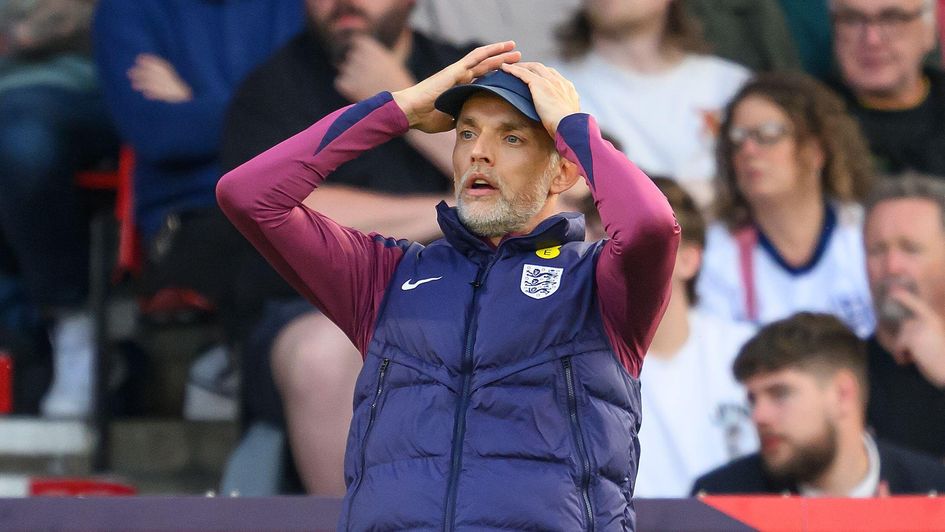
“Shall we now try to play [Andorra] in Birmingham like we play in Orlando? I think it’s simply not possible. We will maybe have more intensity, hopefully more sprints in Birmingham - very likely - than we have when we arrive in the USA.
“And we have to overcome these things first, before we think about a game model for America. But we cannot wait until we are there. We can then modify our model. But the model starts now and it starts on Tuesday.”
What Tuchel is saying is that England need to work on his core principles as well as how to break down a 5-4-1; need to simultaneously prepare for the immediate challenge and the entirely different one in the US.
Good luck with that.
Before the last international break Tuchel admitted that things “have not clicked yet,” before England went on to squeeze past Andorra 1-0 and lose 3-1 to Senegal, a performance described as “a bit frozen” by the England manager. The media went quite a lot further in their analysis.
But did any of it matter? Does it signify anything at all?
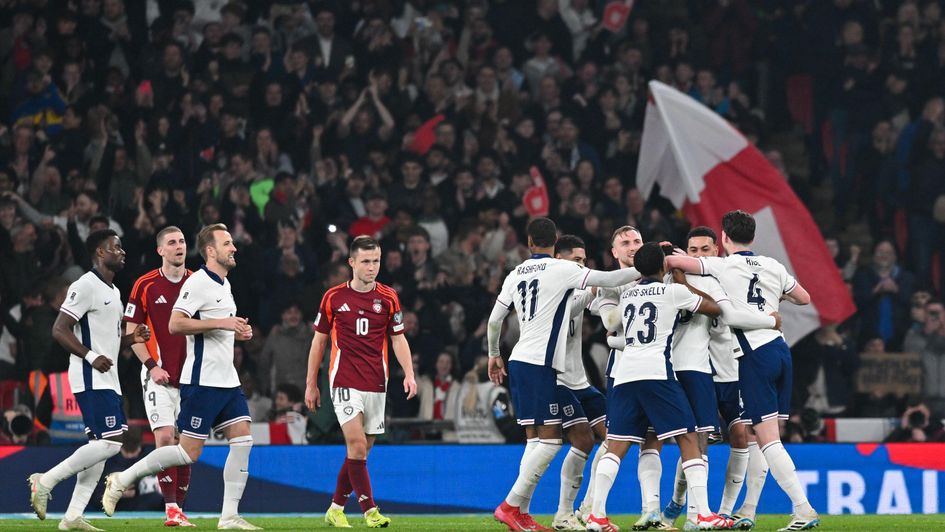
The problems facing Tuchel are the same as those that faced Gareth Southgate towards the end. Essentially the England job is two years of noise and bluster, all of it pointless, before somewhere between one and three matches against top-tier nations decide how an entire era is remembered.
Those knockout games will mostly come down to luck, as is always the case with cup competitions. Tactical strategy, in the club sense, doesn’t really factor into it, not with so many disparate parts coming together for short summer camps.
If there is anything Tuchel can do that Southgate could not we will find out in second-half tactical reshuffles and bolder substitutions.
The entire project will be distilled in a couple of moments, in a matter of minutes in early July. The inflexion points are so brief they probably cannot outweigh the random chance of football.
Nevertheless it is, best case scenario, what Tuchel will be judged on.
The worst case scenario stands in front of England this month. Tuchel spoke at length about the 5-4-1 – “both teams will play 5-4-1. It’s so difficult to break down a 5-4-1. Almost every team struggles to play against a deep 5-4-1” – because he knows that a performance like the one against Senegal or Andorra at Serbia could result in a defeat that would open the door to Serbia overtaking England at the top of the qualifying group.
Injuries have made that outcome more plausible than you might think.
For a squad missing Cole Palmer, Jude Bellingham and Bukayo Saka there is a surprising lack of in-form creativity to call upon if and when these matches drag on at 0-0.
Jack Grealish’s spurt at Everton has been ignored, Trent Alexander-Arnold’s game-changing directness overlooked. Marcus Rashford, Morgan Rogers and Ollie Watkins are struggling.
Can England really rely on Eberechi Eze and Jarrod Bowen, Anthony Gordon and Noni Madueke, against a powerful Serbia back three led by Nikola Milenkovic? Maybe. But only maybe.
It took an early combination between Saka and Bellingham, and a show of power from the latter, to beat Serbia in the Euro 2024 opener.
Failure to qualify for the World Cup does seem unlikely, yet that does not mean this week’s games won’t be filled with anxious moments, angry reactions, and a more general sense of congealment and fatalism.
It’s the England way.
Tuchel has only been in charge of four competitive games. He has just six more before the World Cup. His mini-era will be over in no time. How it’s remembered will come down to infuriatingly small details, ones mostly outside the manager’s control.
The tone of the job has changed over the last few years. But it remains more or less impossible.
More from Sporting Life
Safer gambling
We are committed in our support of safer gambling. Recommended bets are advised to over-18s and we strongly encourage readers to wager only what they can afford to lose.
If you are concerned about your gambling, please call the National Gambling Helpline / GamCare on 0808 8020 133.
Further support and information can be found at begambleaware.org and gamblingtherapy.org.