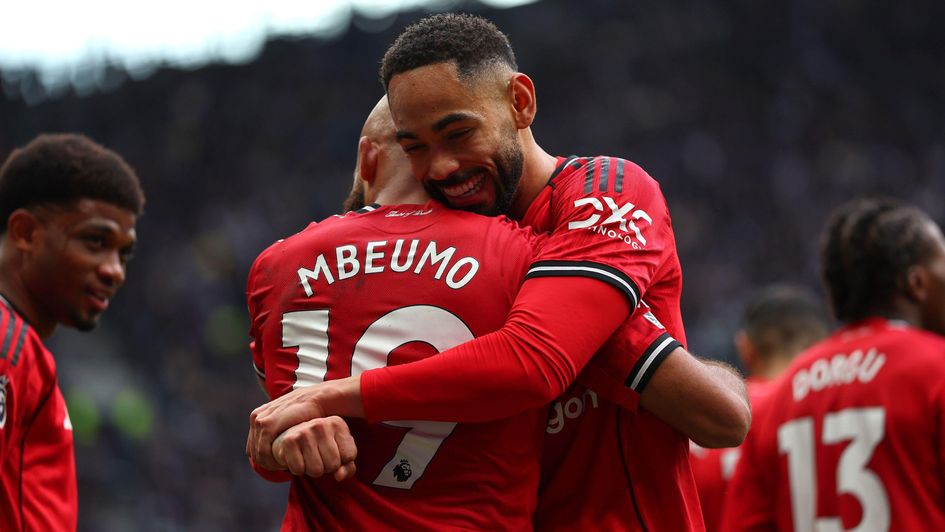
When Manchester United crashed out of the Carabao Cup to Grimsby, it felt like the writing was on the wall for Ruben Amorim.
The now-infamous picture of the Portuguese manager twiddling with the tactics board to beat a side in the fourth tier of English football was used as an embarrassing stick to beat him with.
In the face of insurmountable pressure amid the dreadful 24/25 campaign, compounded by losing the Europa League final, there has, finally, been an uptick in form.
Since the Grimsby loss, United have been beaten just twice in nine games, winning five and are on the longest unbeaten run under the former Sporting CP manager.
Though in his own words, United still ‘have a lot of problems’ and there is much work to do, the discourse is shifting.
So what’s changed, and what do they need to do next to improve?
The pressing matter
The problem with United under Amorim for so long was that teams knew exactly how to set up to nullify their attacks and how to exploit space in their midfield.
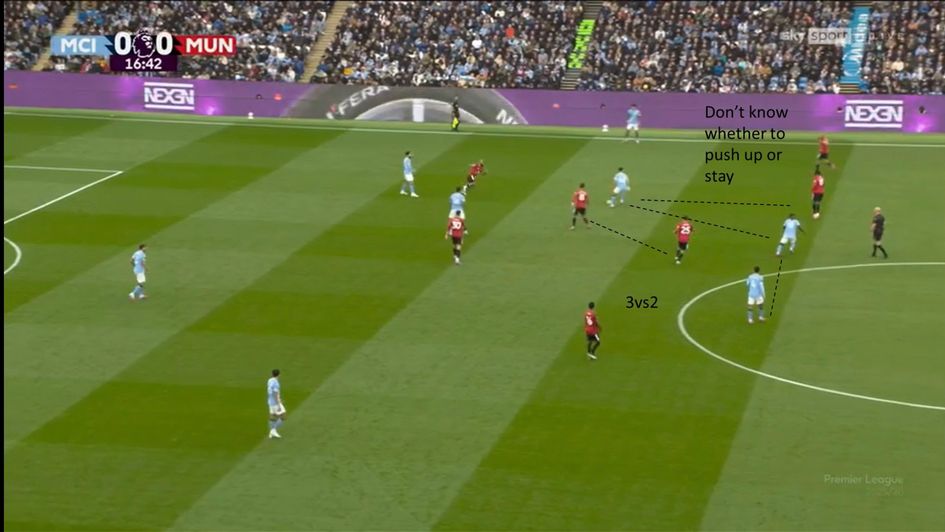
The vital change in the press means that before, attackers would drop into the centre of the pitch, overloading United’s midfield two with a confused Bruno Fernandes and Manuel Ugarte unsure as to whether to push up and press or not.
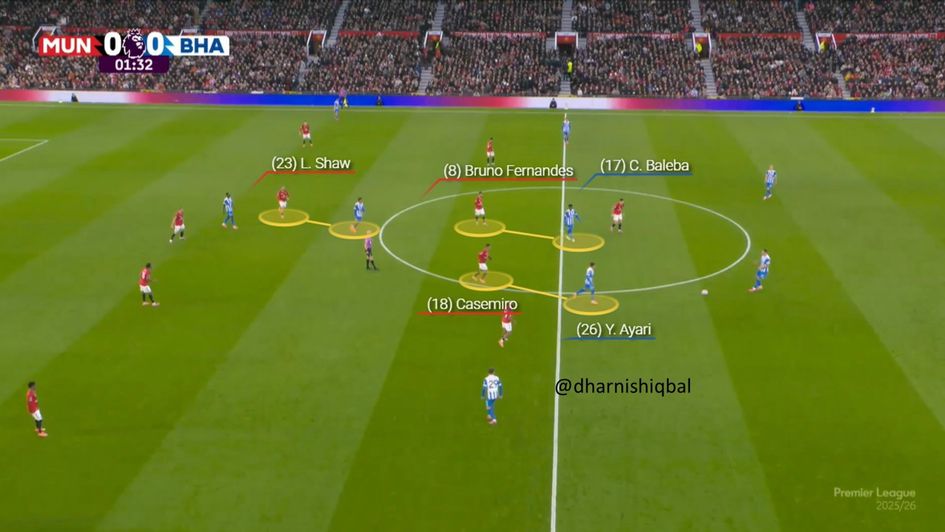
The tweak has come from centre-backs being more comfortable and aggressive in the system, as we’re now seeing one of the back three push up and follow an attacker when they drop in behind the midfield, with United matching up an opponent in central midfield 2v2.
Additionally, the front three in Matheus Cunha, Bryan Mbeumo and Benjamin Sesko are sitting off when a centre-back has the ball, compacting space in the centre and ready to jump on a full-back when the ball goes wide.
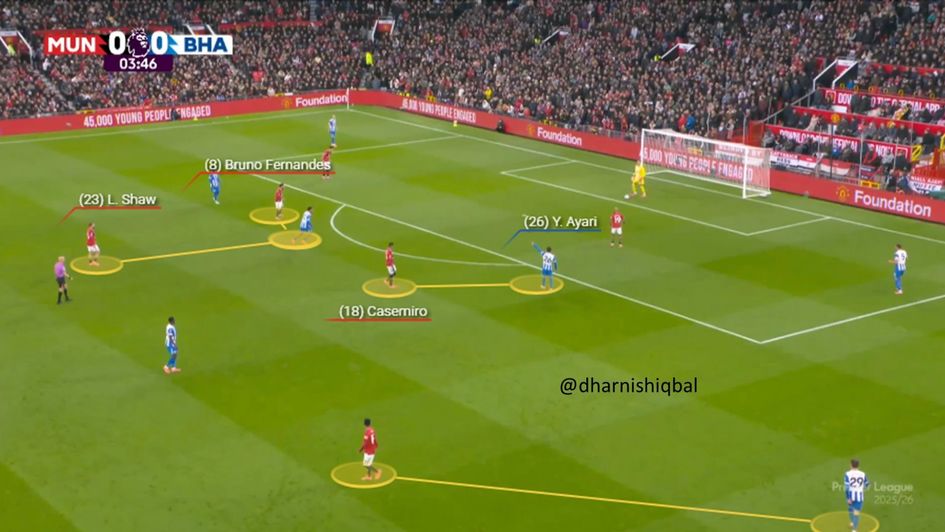
With results improving, the centre-backs have an improved comfort level in following the opposition striker. So much so that against Brighton, Matthijs de Ligt and Luke Shaw followed Danny Welbeck close to the edge of his own penalty area.
United are a completely different, more aggressive team at Old Trafford in this 4-4-2 press. It allows the wide wingers (which become Amad Diallo and Mbeumo/Cunha) to push up and close down a full-back.
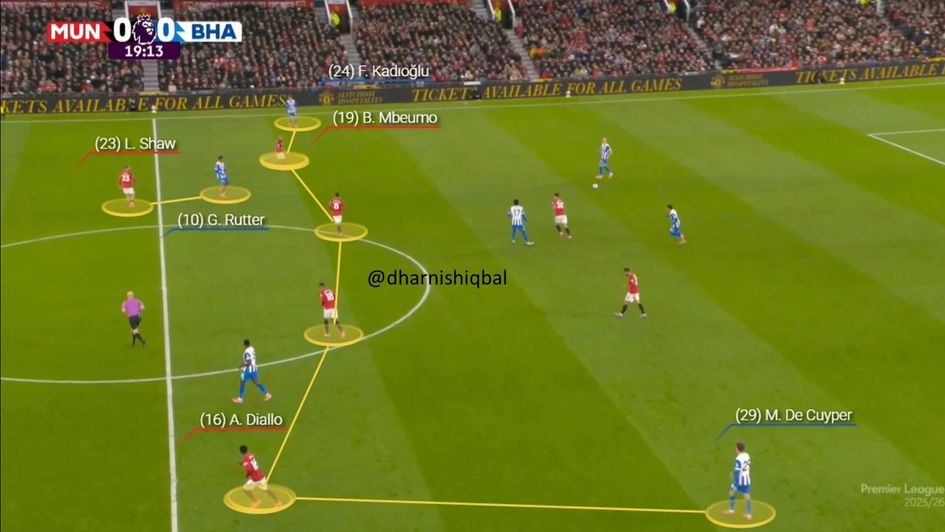
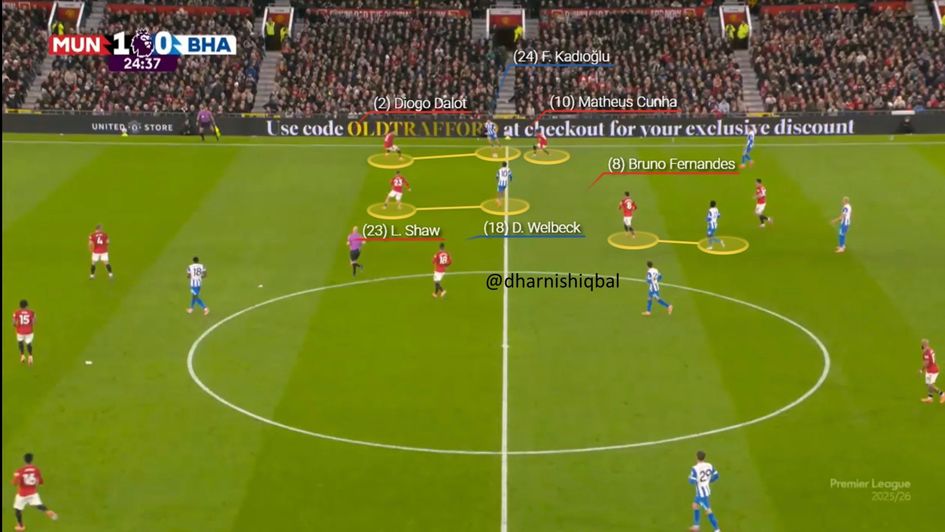
If the ball goes to the wide winger (Ferdi Kadioglu), the full-back (Diogo Dalot) can quickly close him down with Shaw cutting off the inside central option.
A smarter, tighter press that becomes an attacking weapon to cause turnovers and push high up the pitch, helped by an encouraging Old Trafford.
What do they need to do to improve?
The home form, front three clicking, and an aggressive press mean United can often put teams under pressure in the first half and rely on the excellent Mbeumo to convert chances.
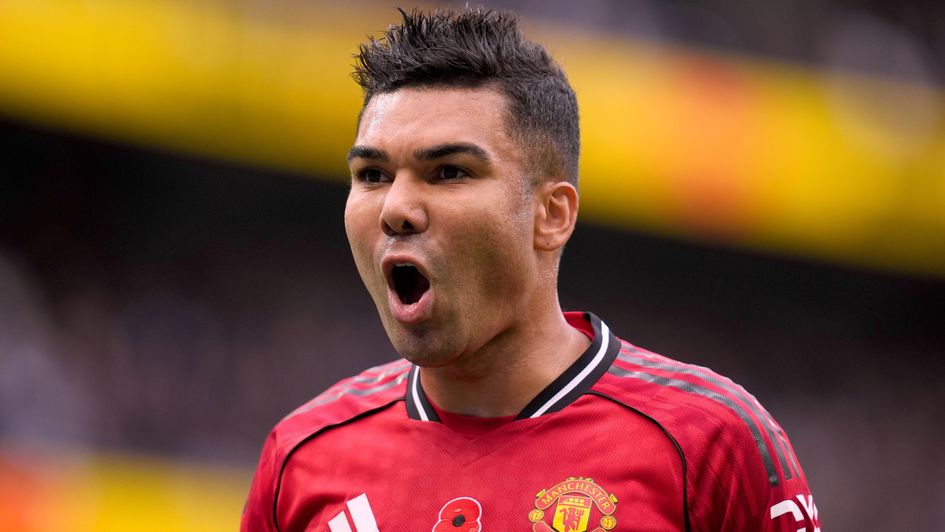
However, it’s almost as if they are a completely different team in the second half of matches once it’s time for Casemiro to be substituted.
The Brazilian’s minutes need to be managed. While he has returned to form stunningly, United collapse in his absence.
Inviting heaps of pressure after his red card vs Chelsea, enduring a scare vs Brighton when he was subbed off and losing deservedly to Brentford and Man City when he wasn't in the team.
United are as reliant on him in midfield as they were when he first joined, and need to find a way to control games without the former Real Madrid player.
The Red Devils' away form is the salient issue. It's one win on the road away to a crisis-ridden Liverpool team.
The turnovers, aggression and number of chances decrease without a Manchester crowd roaring them on.
As we saw in the last two games against Nottingham Forest and Spurs, United threw away leads as a result of retreating into a mid/low block in attempts to hold on for the win.
Though they valiantly fought back to grab late goals in both games and get two draws, the focus for Amorim needs to be on why they retreated to invite pressure in the first place.
Heading into the international break, the Forest and Spurs games are indicative of where United are at with Amorim. United have the tenacity, confidence and ability to claw their way back into games now as opposed to last season.
But there is still much work to do for Amorim’s recovery to be complete.
More from Sporting Life
Safer gambling
We are committed in our support of safer gambling. Recommended bets are advised to over-18s and we strongly encourage readers to wager only what they can afford to lose.
If you are concerned about your gambling, please call the National Gambling Helpline / GamCare on 0808 8020 133.
Further support and information can be found at begambleaware.org and gamblingtherapy.org.