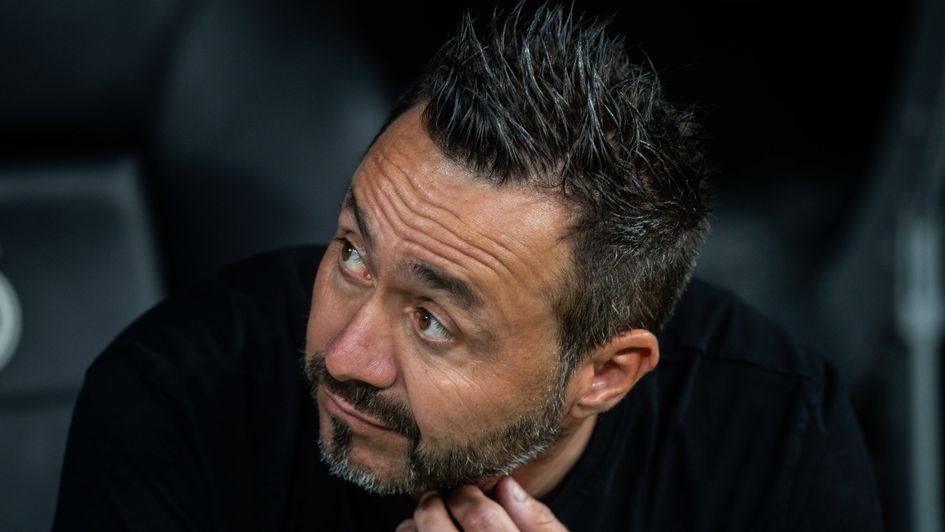
There is, it should be said, something gloriously unhinged about asking a coach as ideologically rigid as Roberto De Zerbi to parachute into a relegation fight with seven games left and simply...sort it out.
Tottenham, hovering a point above the drop and winless in the league since December, have effectively decided that the best way to put out a fire is with a flamethrower.
And yet, if you squint hard enough, you can just about see the plan.

De Zerbi’s entire coaching identity is built on control through chaos. His teams at Brighton, Marseille and Shakhtar Donetsk have all revolved around the same core principle: lure the opposition into pressing, then slice through them once they take the bait.
It is not possession for its own sake; it is possession as provocation.
At Brighton, that meant building from the goalkeeper into a 3-2 structure, inviting pressure onto technically secure defenders and midfielders before releasing wide players into acres of space.
The results, once the early turbulence subsided, were extraordinary: a sixth-place finish and European qualification, achieved with a win rate north of 40 per cent and some of the most distinctive football in the division.
At Shakhtar, albeit in a shorter spell, the numbers were even stronger – a win rate around 66 per cent – with similar positional play principles applied in a less tactically chaotic league environment.
Marseille, meanwhile, offered a glimpse of both the ceiling and the fragility. A second-place Ligue 1 finish in 2024/25 showed how devastating his ideas can be when aligned with squad buy-in, but heavy defeats and dressing-room friction by early 2026 underlined a recurring issue: if the structure cracks, it really cracks.
Which brings us to Spurs, a team whose structure is currently less “cracked” and more “non-existent”.
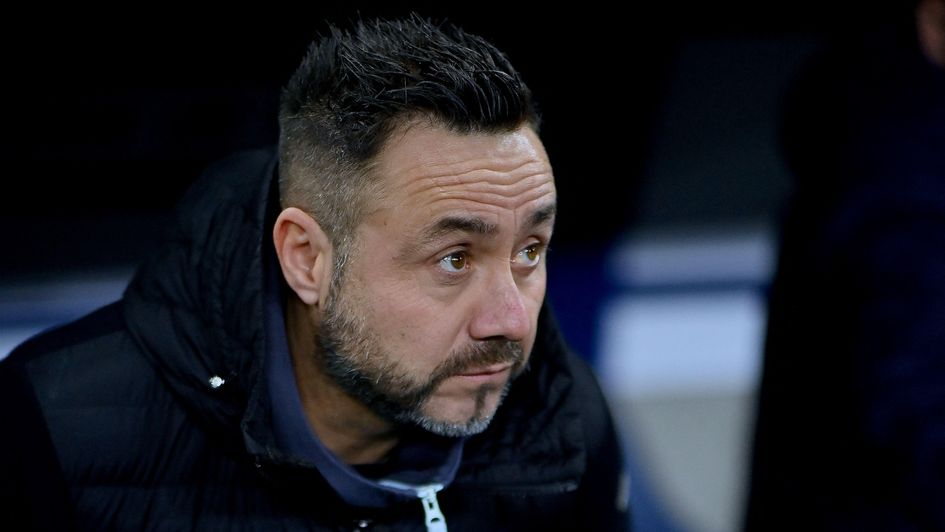
The immediate question is whether De Zerbi even has time to implement his football. History suggests not. His first five league games at Brighton yielded just two points, a reminder that his positional play requires both courage and repetition.
That is precisely what a relegation scrap does not allow.
So the escape plan, if it is to exist at all, will have to be a compromise – a slightly diluted De Zerbi-ball, rather than the full ideological sermon.
Expect the base shape to oscillate between the 4-2-3-1 he favoured in England and the 3-4-3 he used at Marseille. The latter may prove more practical in the short term, allowing Spurs to build with a back three and reduce the risk of catastrophic turnovers in central areas – a non-trivial concern given De Zerbi’s insistence on playing out under pressure.
Personnel-wise, the most obvious beneficiaries are Spurs’ technically secure defenders and press-resistant midfielders. Players comfortable receiving the ball facing their own goal – the kind De Zerbi actively demands – will be non-negotiable.
The goalkeeper, too, becomes a de facto playmaker; if he cannot clip passes through the first line or calmly recycle under pressure, the entire structure collapses.
Further forward, the wide players are critical. De Zerbi’s wingers are not decorative; they are the end point of the entire manipulation process, stationed high and wide to isolate full-backs once the opposition has been dragged out of shape.
Spurs’ survival may hinge on whether those players can consistently win one-on-one duels and convert territory into goals.

The No.10 role – or dual advanced midfielders, depending on the shape – is equally important. De Zerbi’s system thrives on players occupying the spaces between the lines, constantly offering angles for progression.
At Brighton, that role was fluid and interchangeable; at Spurs, it may need to be simplified into clearer responsibilities given the time constraints.
Out of possession, expect aggression. De Zerbi’s teams press man-to-man, often high up the pitch, aiming to win the ball back quickly and sustain territorial dominance.
But here lies one of the central tensions of this appointment: pressing systems are notoriously vulnerable if not perfectly synchronised. In a team low on confidence and short on preparation time, that risk is magnified.
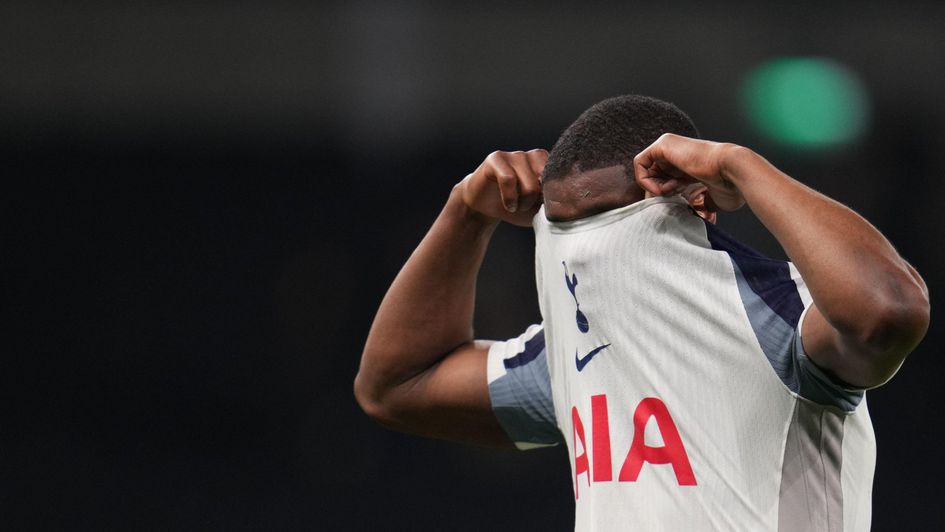
And Spurs, it hardly needs stating, are not a team brimming with confidence.
The strengths of this approach are obvious. If it clicks – even partially – Spurs could transform from a passive, anxious side into one that dictates games, forcing opponents into mistakes rather than waiting for them.
De Zerbi’s football, at its best, is proactive to the point of suffocation; it gives players a framework, a set of automatisms that can actually reduce the mental burden in high-pressure situations.
There is also a psychological benefit. Appointing a coach so wedded to a clear identity can act as a circuit breaker, shifting focus from fear of failure to execution of a plan. In a relegation battle, that is not nothing.
But the weaknesses are just as stark.
De Zerbi’s football is inherently high-risk. Playing out from the back under intense pressure invites errors, and errors in a relegation scrap are fatal. His tactical inflexibility – noted even during more stable periods at Marseille – raises further concerns about whether he can adapt to the brutal pragmatism often required in April and May.
There is also the small matter of time.
Seven games is barely enough to teach the basics, let alone the layered positional rotations that define his system. As one analysis of his previous jobs noted, even in more forgiving circumstances his ideas have taken weeks, if not months, to fully embed.
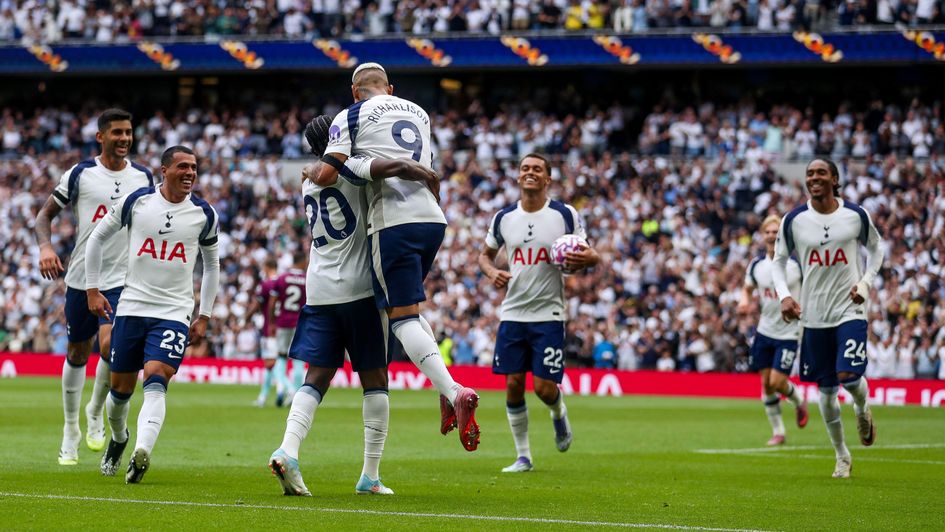
So what will De Zerbi’s Spurs actually look like over these final weeks?
Probably a strange hybrid. The principles – baiting the press, building short, attacking wide – will remain. They are non-negotiable. But the execution may be stripped back, with fewer rotations, more direct options and perhaps even the occasional concession to pragmatism when game state demands it.
In other words, expect De Zerbi-ball with stabilisers.
Whether that is enough to keep Spurs up is another question entirely. But if nothing else, their relegation fight is about to become significantly more interesting – and, quite possibly, significantly more chaotic.
More from Sporting Life
Safer gambling
We are committed in our support of safer gambling. Recommended bets are advised to over-18s and we strongly encourage readers to wager only what they can afford to lose.
If you are concerned about your gambling, please call the National Gambling Helpline / GamCare on 0808 8020 133.
Further support and information can be found at begambleaware.org and gamblingtherapy.org.