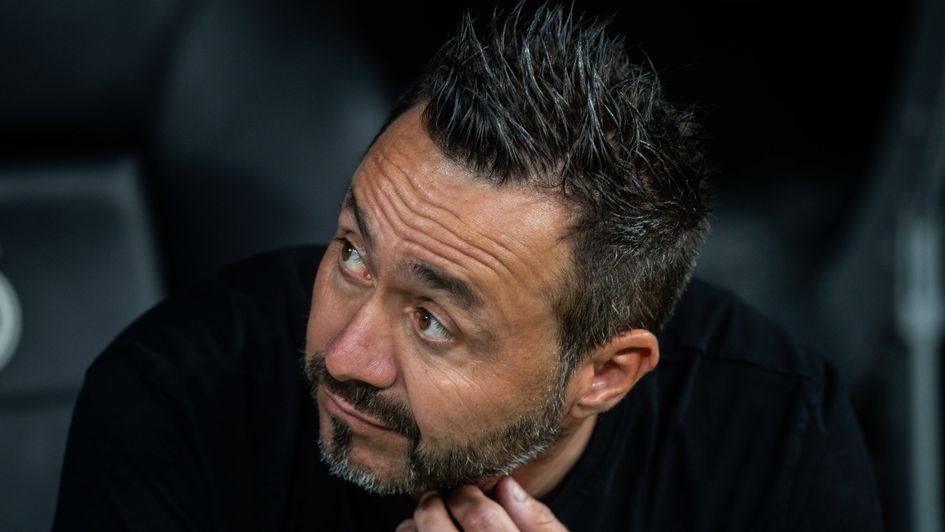
Tottenham spent the summer behaving like a club determined never again to find itself peering over the edge of relegation.
More than £300 million went on new players after consecutive 17th-place finishes, the second of which came under Roberto De Zerbi following Thomas Frank’s mid-season dismissal.
Three games into the new Premier League campaign, Spurs have one point and no goals.
That does not mean the rebuild has failed. It does, however, make one question feel considerably less premature than Tottenham would like: have they built an expensive new team, or an expensive Roberto De Zerbi team?

There is a difference, as Manchester United have spent much of the post-Sir Alex Ferguson era demonstrating.
United repeatedly appointed a manager with a distinctive idea, allowed him to stock the squad with players suited to it and then abandoned that idea when the results proved underwhelming.
His successor inherited an awkward collection of specialists, reputations and enormous contracts. Selling them required accepting huge losses, so most stayed and became progressively less useful.
David Moyes was allowed to bring Marouane Fellaini from Everton, only to be dismissed before the midfielder had completed his first season. Louis van Gaal arrived with a possession-heavy positional game and signed Daley Blind, Memphis Depay, Morgan Schneiderlin and Bastian Schweinsteiger.
Later, Erik ten Hag reached for players who understood his methods or had worked within a familiar Dutch ecosystem. Lisandro Martinez, Andre Onana, Antony and Matthijs de Ligt all followed him to Manchester.
Under Ruben Amorim, United signed a specialist wing-back in Patrick Dorgu and wide forwards who do not naturally provide much width in Matheus Cunha and Bryan Mbeumo. All of that makes sense when stocking up for Amorim's 3-4-3 system; less so when operating with a back four and a more conventional front three, as United now are under Michael Carrick.

Some of those signings have been good players and some good signings. That was never the whole problem. United kept changing the question and wondering why the previous answer no longer worked.
Antony became the most spectacular example. Signed from Ajax for £81.3 million at Ten Hag’s urging, he was sold to Real Betis three years later for an initial £19 million. United’s overall loss could reach roughly £60 million. He was not merely an expensive winger who underperformed. He was an expensive winger bought to perform a precise role for a manager whose authority did not last.
Tottenham may now be taking the same gamble on a still grander scale.
Jan Paul van Hecke, signed from Brighton for a reported £52 million, is the most obvious De Zerbi recruit. He played under the Italian on the south coast and understands the demands placed on a centre-back in his system: invite pressure, remain composed in tight spaces and pass through an opponent rather than around them.
De Zerbi described bravery in possession as central to the signing.
Mykhailo Mudryk, recruited on loan from Chelsea with a reported £75 million buy option, also has a prior relationship with the manager from their time together at Shakhtar Donetsk.
Savio, bought from Manchester City for £75 million plus potential add-ons, is a winger schooled in the positional principles De Zerbi values.
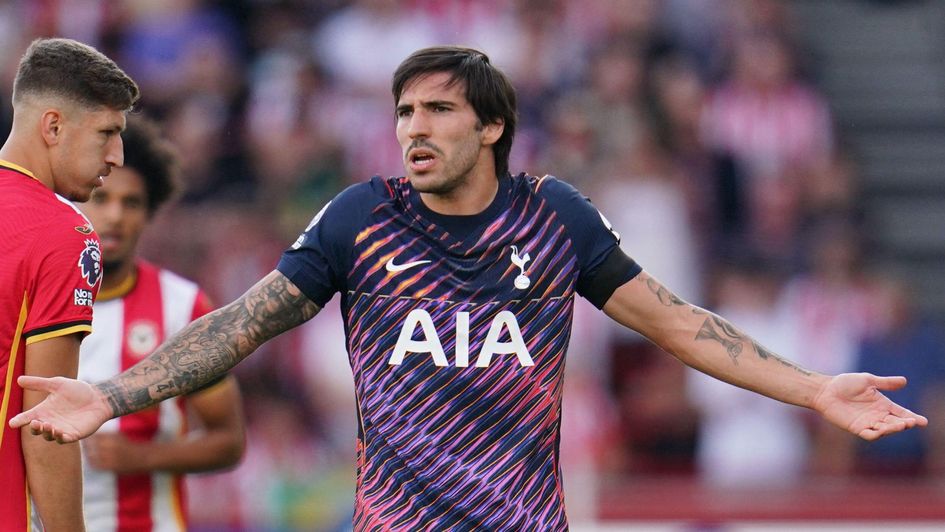
Mateus Fernandes and Sandro Tonali, signed for £85 million and up to £100 million respectively, provide the technical security and press resistance required to play through midfield.
Even the wider recruitment fits the same picture.
Marcos Senesi arrived on a free transfer to offer another left-footed centre-back comfortable with construction from deep. Andy Robertson brought experience and attacking width.
Omar Marmoush joined from Manchester City on a loan carrying an obligation to buy reportedly worth £50 million, giving De Zerbi a mobile forward capable of moving across the front line.
The individual quality is not really in doubt. Tonali has been one of the Premier League’s finest midfielders. Fernandes impressed even as West Ham were relegated. Van Hecke developed into an accomplished defender at Brighton, while Savinho has the technique and acceleration to trouble almost any full-back.
The concern is how much Tottenham have paid for a group who principally only work only under one particular set of instructions.
De Zerbi’s football asks unusual things of players. Goalkeepers and defenders are encouraged to hold the ball until opponents commit. Midfielders receive under intense pressure. Attacks can appear slow before accelerating suddenly once the press has been broken.
When it works, it makes opponents look foolish. When it does not, it can make the team attempting it appear needlessly vulnerable.
A replacement manager might want his centre-backs defending deeper and releasing the ball sooner. He might prefer direct wingers, a fixed centre-forward or a more destructive holding midfielder.
A £52 million defender selected partly because he already speaks De Zerbi’s footballing language then becomes a less obvious asset. A pair of midfielders costing a combined £185 million can begin to look like an indulgence rather than a foundation.
Spurs are not yet trapped. De Zerbi deserves time to organise a squad transformed in the space of one window, particularly after inheriting a team which had just endured another desperate season. New players need familiarity, injured attackers need to return and three matches represent evidence of a bad start rather than proof of a doomed project.
There are also important differences between Tottenham now and United at their most chaotic.
Spurs have generally bought players in or near their prime, while Tonali, Fernandes, Savinho and Van Hecke should retain substantial market value. The recruitment is stylistically coherent, which is preferable to collecting famous names without any thought as to how they might interact.
But coherence can become dependence. Tottenham’s summer only makes sense if De Zerbi succeeds, or if any eventual replacement shares enough of his principles to use the squad he leaves behind.
That is the wager. Spurs have not merely backed their manager. They have handed him a squad worth hundreds of millions and allowed him to shape it in his own image.
Manchester United can explain what happens next if the image cracks.
More from Sporting Life
Safer gambling
We are committed in our support of safer gambling. Recommended bets are advised to over-18s and we strongly encourage readers to wager only what they can afford to lose.
If you are concerned about your gambling, please call the National Gambling Helpline / GamCare on 0808 8020 133.
Further support and information can be found at begambleaware.org and gamblingtherapy.org.