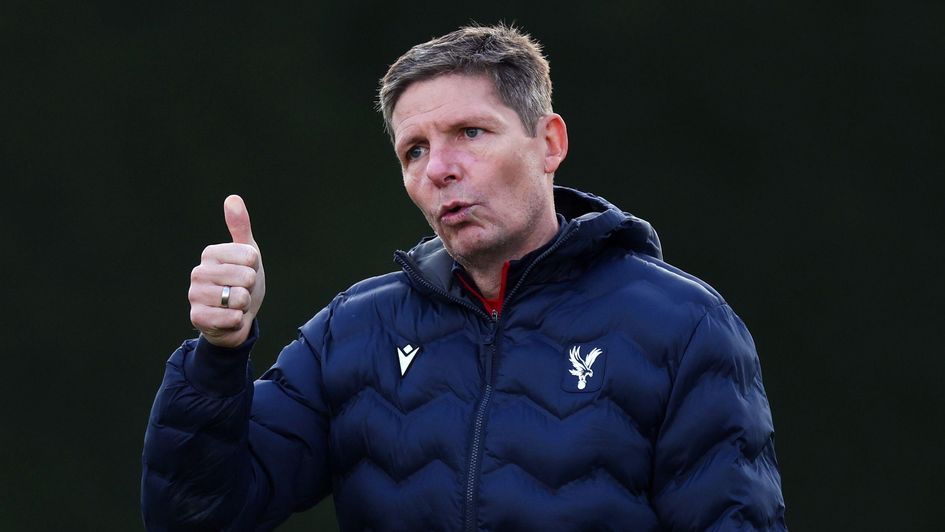
When Oliver Glasner took over at Crystal Palace he was supposed to steady a club that had flattered to deceive – tidy up the defence, make the most of the home advantage offered by Selhurst Park’s claustrophobic architecture and keep Palace comfortably mid-table.
- Published before Premier League gameweek 16
Instead, barely 18 months into his reign the Austrian has the Eagles sitting in the Premier League’s top four, turning a pragmatic project into something dangerously entertaining. Palace’s 2-1 victory at Fulham on 7 December – a game settled by a late Marc Guehi header – left them fourth in the table, the kind of moment that makes Palace fans drool at their club’s European prospects and rival scouts take notes.
What has made this leap feel less like a flash in the pan and more like genuine evolution is the clarity of Glasner’s football. The side press with a purpose, the defensive shape is remarkably disciplined for a club that has traditionally relied on individual spark rather than systemic excellence and the midfield now looks more like a conveyor belt than a collection of hopefuls.
Glasner has married structure with the sort of counter-attacking venom Palace fans have always wanted: quick transitions, purposeful wide play and a centre-back trio that read situations rather than simply hoping they get lucky. The result is a side that win ugly and pretty in equal measure – and crucially, win more often than not.
Defensively, Palace have been a surprise story. Across the campaign to date they have conceded only 12 goals, a statistic bettered only by Arsenal and Aston Villa and one that underpins their recent climb up the table. That solidity has come from an organised backline, a midfield that screens effectively and wing-backs who time their forward forays carefully so the unit doesn’t get sliced open.
The underlying numbers bear out Palace’s rigidity, too, as they boast he seventh-best expected goals against total for the season so far. The metrics tell the story beneath the headlines and explain why Palace are not merely surviving at the sharp end of the table but genuinely competing.
All of this progress has, naturally, attracted attention. Reports in the last week have linked Glasner with interest from some of England’s biggest clubs, with Manchester United and Liverpool repeatedly named as suitors in the rumour columns. Whether those whispers are opportunistic noise or genuine inquiries, they represent the classic trap for an overachieving club: the manager who built the system becomes the light switch everyone wants to flip.
For Palace, the more immediate danger is not simply losing a coach but losing the continuity and tactical nous that have been their engine. A managerial exit would not just be a headline – it would be a seismic sporting and cultural challenge.
The fixture list over the next month reads like a Premier League stress test, too. Palace face Manchester City, Arsenal (EFL Cup), Tottenham, Newcastle and Aston Villa in quick succession – a run that will measure whether Glasner’s side can compete with the division’s very best or whether the gloss will come off once the pitch gets steeper.
Those opponents are not only top-quality on paper; tactically they present five very different problems: City’s territorial dominance and positional overloads, Arsenal’s near-faultless defence and high intensity, Spurs’ transitions and set-piece threat, Newcastle’s physicality and attacking quality, and Villa’s mix of technical control, late-game craft and undeniable recent momentum.
How Glasner rotates, and whether Palace have the depth to absorb the inevitable injuries and suspensions during the busy Christmas period, will define whether this is a fairy-tale surge or a fleeting moment of brilliance.
Complicating matters further is a story that has been quietly gnawing at Palace all season: Marc Guehi’s contract situation. The 24-year-old has been the defensive talisman, captain and a figure whose presence alone stabilises the team. But multiple outlets have suggested Guehi is likely to leave Selhurst Park when his deal expires at the end of the season – a prospect that sends tremors through the recruitment strategy.
Replacing a home-grown, captaincy-ready, Premier League-proven centre-back without a transfer fee to bankroll the hunt is a near-impossible equation. If Guehi does depart as a free agent, Palace will lose more than a player: they will lose a leader whose importance transcends statistics and whose absence will demand both cash and imagination to cover.
So what comes next for Palace? The short answer is that a run of tough fixtures and incessant transfer chatter will produce an answer. If Glasner weathers the next month, keeps focus on the pitch and Palace continue to draw strength from their defensive system and the industrious players around Guehi, there is no reason they can’t sustain their climb.
Equally, if the rumours harden into offers and lines are drawn in the sand – or if Palace elect to cash in on Guehi in January rather than allowing him to walk for free – the club’s current uptick could tip quickly back towards the mean.
The beauty of Glasner’s project is that it has been built on more than charisma; it’s tactical, repeatable and, crucially, visible to every player in the dressing room. That makes Palace a good club to manage, but it also makes Glasner a very tempting proposition for clubs with deeper pockets.
The task for Palace’s hierarchy is clear: find a way to secure the manager and the captain or prepare a succession plan that doesn’t collapse the structure they have so painstakingly constructed.
The coming weeks will tell whether the Eagles have the wings to keep rising or whether they were only ever flying close to a ceiling. For now, Selhurst Park is buzzing – and that, in itself, is a dangerous thing for the rest of the Premier League to ignore.
More from Sporting Life
- Fixtures, results and live scores
- Home of This Week's Acca
- Football and other sports tips
- Download the Sporting Life app
- Podcasts and video content
Safer gambling
We are committed in our support of safer gambling. Recommended bets are advised to over-18s and we strongly encourage readers to wager only what they can afford to lose.
If you are concerned about your gambling, please call the National Gambling Helpline / GamCare on 0808 8020 133.
Further support and information can be found at begambleaware.org and gamblingtherapy.org.