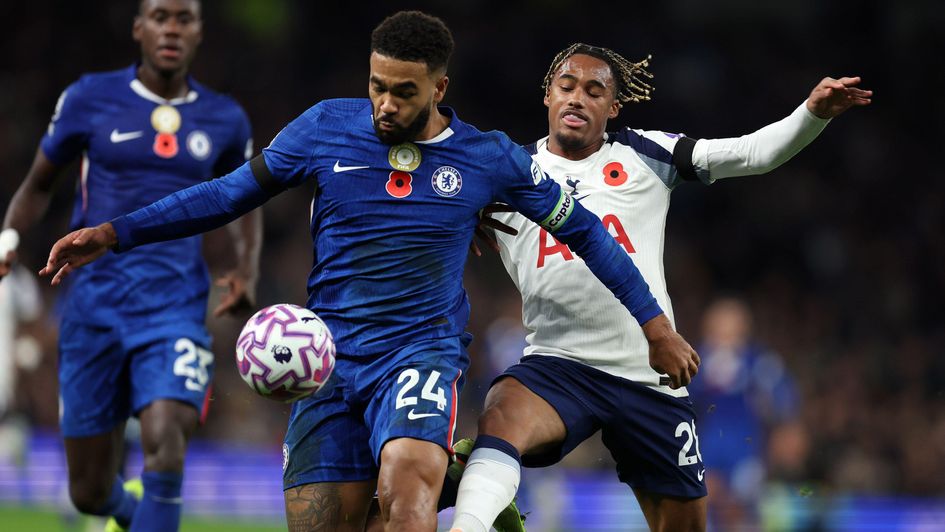
Liam Rosenior’s dismissal just three months into a six-and-a-half year contract has exposed the worst aspects of BlueCo’s model of commodification and pillage, but looking beyond their perma-crisis it forms part of a wider pattern.
Chelsea are in freefall, Manchester United have been bandaged up but can’t quite be considered out of their catastrophe years, Liverpool are struggling, and Tottenham Hotspur are completely off the scales and into the realm of the miraculous; an inverse Leicester City.
The ‘Big Six’ are in meltdown, their demise so absolute that the term has fallen out of common usage, yet the widely-held belief the moniker should be scrapped misunderstands what the term means and why it is that the Premier League has been shaken out of its natural shape.
Last season Man Utd finished 16th and Spurs 17th, and so, with Chelsea’s four-game losing streak leaving them in danger of dropping as low as 12th this weekend, we might see two of the ‘Big Six’ finish in the bottom half of the table in consecutive seasons.

That does not mean the ‘Big Six’ is dead, for the simple reason that the term reflects the financial realities of modern Premier League regulations and the ballooning wealth of those clubs compared to the rest of the country.
The Deloitte Money League (DML) has all six in the top nine richest clubs in the world, and the drop from England’s sixth-wealthiest (Chelsea) to its seventh (Aston Villa) is 23%, from an annual turnover of £507 million to £390 million.
We should use the term ‘Big Six’ more, not less, to help keep in mind the absurdity of the failures emerging at Stamford Bridge, the Tottenham Hotspur Stadium, and Old Trafford in particular, but also to help us understand why exactly this is happening.
For decades outsiders have assumed football’s financial bubble will burst and the industry will eventually devour itself, and although there is no sense of wide-scale impending collapse it does feel as though football has finally run out of growth; run out of resources to plunder.
In Chelsea and Man Utd we see the beginning of the private equity era: the deliberate hollowing out, or at least attempts by American billionaires to maximise profits with seemingly no interest whatsoever in the sport itself.
This is the inevitable endpoint to an industry that has goaded these kinds of interventions, swelling without regulation for more than 30 years. Here is a partial explanation for the demise of the ‘Big Six’ automatically finishing in the top six positions in the table – although it isn’t a complete picture.
A more interesting, and unexpected, consequence of the Premier League’s financial power (Wolves, the league’s bottom club, are the 29th richest club in the world according to the DML) is that the middle tier of clubs appears easier to run at an elite level than the ‘Big Six’.
For those in Brighton’s, Bournemouth’s, or even Aston Villa’s position, there is enough money swilling around to get a world-class recruiting team, one of the top coaches in Europe, and to motivate a squad of up-and-comers to become stronger than the sum of their parts.
Meanwhile there is something about extreme wealth that appears to attract bad owners, even worse executives, and an unavoidable situation of over-paying for supposedly ready-made stars.
In other words, Bournemouth are able to spend £20 million on three players and get a hit rate of one-star-player-in-three, whereas Man Utd have to get their £80 million signing right – and face an onslaught of agents, clubs, and media figures who fuzz up the picture with their recommendations and scrutiny.
Truthfully, nobody saw this coming.
Nobody thought that the line graph of wealth and competence was a horse-shoe shape; nobody predicted that clubs becoming multi-billion pound businesses would attract the worst kind of person: entitled, privileged men who simply don’t understand, or care to understand, football.
BlueCo are of course the elite example of this phenomenon although it was first done by the Glazers, who still majority-own Man Utd.
Liverpool supporters are beginning to remember how much they disliked their owners prior to Jurgen Klopp’s solo mission to defy the narrative, while Spurs’ commercial success and footballing failures under Daniel Levy are well documented.
Long-term, this might be a disaster for football, certainly if United’s and Chelsea’s owners emerge richer than when they arrived, setting a template for other vulture capitalists to swoop in.
But there is no doubt that in the short-term, at least, the Premier League’s colossal wealth has created a flatter competition than at any other point this century.
The pinnacle of which could be Tottenham getting relegated, billion-pound clubs finishing again in the bottom half, and two out of six Champions League places going to mid-tier clubs.
From here, it would only take a slight relaxing of the PSR/SCR rules for the rest of the league to fully catch up and put together title challenges.
Once a few more clubs like Villa and Newcastle get a taste of the big time – Brighton, by the looks of things, could sneak into the Champions League in sixth – the appetite will grow for a vote on rebalancing the regulations.
Then, and only then, would the idea of a ‘Big Six’ truly come under threat.
More from Sporting Life
Safer gambling
We are committed in our support of safer gambling. Recommended bets are advised to over-18s and we strongly encourage readers to wager only what they can afford to lose.
If you are concerned about your gambling, please call the National Gambling Helpline / GamCare on 0808 8020 133.
Further support and information can be found at begambleaware.org and gamblingtherapy.org.