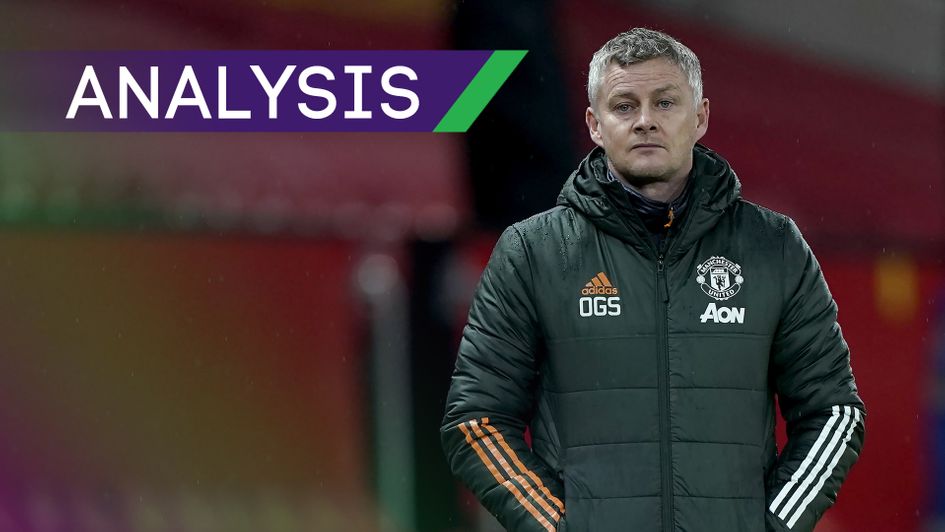
Manchester United's record of turning deficits into wins this season is remarkable despite losing to Sheffield United in midweek. Richard Jolly takes a deep dive ahead of the Red Devils' trip to Arsenal.
Not for the first time over the past quarter of a century, Manchester United will look to Ole Gunnar Solskjaer for a fightback.
A shock defeat to a Sheffield United team who had made the worst start in Premier League history means they go to Arsenal on Saturday looking for a reaction and a response to the season’s most surprising setback.
Which, helpfully, might be their specialist subject, particularly on their travels.
Solskjaer, of course, capped the most famous fightback in their history against Bayern Munich in the 1999 Champions League final.
Now, despite being beaten by the Blades, the numbers make it clear that United are the Premier League’s comeback kings. Throw in an FA Cup win against Liverpool from a losing position last week and going 1-0 down can just seem like a prelude to the inevitable drama to come.
That was a win with a difference: in a different competition and at Old Trafford whereas, after trailing to Chris Wilder’s team, United equalised but then lost at home in the Premier League.
Instead, Solskjaer’s remarkable record of turning defeat into victory is based on United’s exploits on the road. They became the first team in Premier League history to win six consecutive away games after trailing. It felt all the more remarkable as those matches were their first six away games of the season. This month, they added a seventh similar win, at Fulham.
Wednesday’s date with the Blades presented a different scenario: a game when they trailed, levelled and lost. But it had common denominators with their previous setback, against Saturday’s opponents Arsenal.
They are the last two times United went behind without staging a fightback. And the timing is similar: Oliver Burke’s winner came in the 74th minute, Pierre-Emerick Aubameyang’s November decider in the 69th.
And one of the keys to United’s comebacks lies in time. Because they have often gone behind early, they have had longer to respond. In those seven wins from behind, they conceded first in the 40th, 2nd, 19th, 23rd, 38th, 5th and 5th minutes. It gave them an average of 65 minutes to hit back.
But while some of Solskjaer’s charges have inherited his fondness for injury-time goals, they have not left it as late to level as United did in the Nou Camp in 1999. They equalised in three minutes against Brighton and six against Everton. The longest period of time between the opposition opening the scoring and United getting their first goal was 27 minutes.
The exception in their run is the 3-2 win at Southampton: the only time they went 2-0 down, the game they were behind in for longest (51 minutes) and one of two, along with the trip to Brighton, when they required an injury-time winner.
A third game, at Newcastle, was altered when United went ahead in the 86th minute; they scored five goals in total - including two at Newcastle and one at Everton - in 'Fergie (or Ole) Time', but three were to extend leads.
In those seven matches, United were winning two and drawing three at half-time, losing only to Southampton and West Ham. In total, they trailed for 146 minutes, an average of 21 per game. They led for 166. To take a maximum 21 points from matches when they were only ahead for 20 more minutes than they were behind is remarkable.
And yet weight of pressure has told. United have outshot their opponents, registering 51 attempts on target to 32; perhaps that accounts for some of the late goals.
They have ‘won’ five of those seven games by emphatic margins on expected goals. The two anomalies are at Brighton, where Leandro Trossard hit the woodwork three times and Albion’s xG of 2.98 was almost double United’s 1.58, and West Ham, where it finished 2.53-1.79.
The identity of the biggest individual contributor is perhaps unsurprising. Bruno Fernandes has scored United’s first goal in two of those seven games and their second in a further two. In total, he has five goals and four assists in those matches. Marcus Rashford ranks as the second catalyst, with three goals and four assists, including the first goal once and the second once.
That United have a growing number of threats is reflected by the extra involvement of two others: Paul Pogba has scored in two of the last three comebacks while Edinson Cavani’s four league goals have all come in wins from behind.
Cavani has become United’s modern-day Solskjaer, with his goal against Everton and his brace and assist at Southampton all coming in matches he began on the bench.
In total, United have four goals from replacements in those seven matches, with Rashford getting the other at West Ham. They also have three assists from substitutes: Cavani, Fernandes and Juan Mata. It all speaks to a strength in depth.
Arguably, the opposite experiences have come at Old Trafford. They have gone behind in the seventh minute to both Crystal Palace and Tottenham and not come back. Indeed, they led against Spurs and lost 6-1. Since then, Tottenham have lost leads and United have rallied when they have been behind.
Now, their tally of points from losing positions – 21 – is not far off Arsenal’s actual total. It is also approaching their total the last time they won the title: they took 29 points after going behind in 2012-13, Sir Alex Ferguson’s final season.
Since then, their tradition of comebacks has faded. They only claimed four points after trailing in 2015-16, perhaps a reflection of how few goals and how little ambition Louis van Gaal’s side had. Now they top the comeback table. If they are to top the actual table again, it will be aided by those powers of recovery.