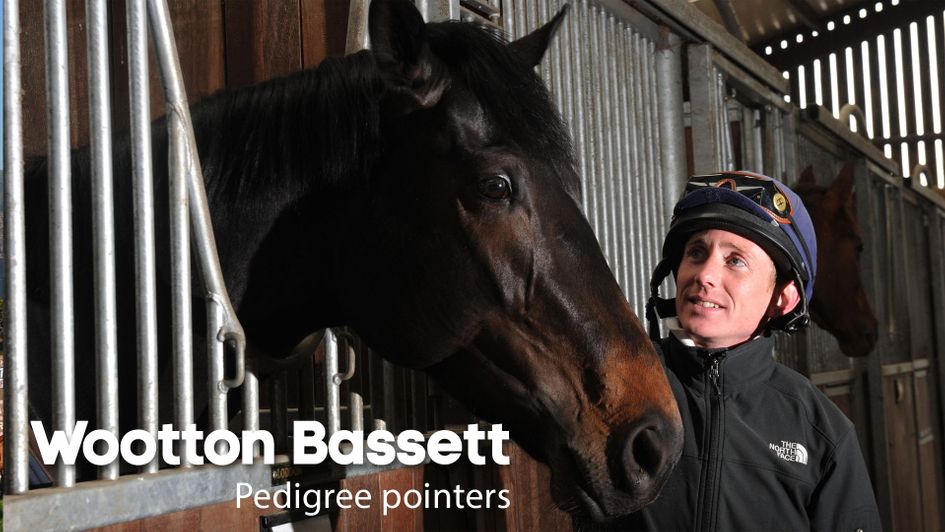
Cassie Tully looks at the rise in popularity of Wootton Bassett, a sire whose stock has risen significantly following the exploits of Almanzor.
Breeding the athletes that give rise to our sport is a fickle business, and just how paramount a horse’s racing career is for him to go on and succeed as a sire has been previously touched upon in this column.
The best racehorses merit a higher fee and attract both a higher quality and quantity of mates. These are the fundamental elements that culminate in greater opportunity to succeed and a reduced level of either quantity or quality mares will undoubtedly hinder a sire’s progress.
It is less frequent, but there have been some great sires to overcome impoverished beginnings and their quality genes have still made their way through to plenty of top level successes.
Iffraaj was a horse that overcame a lack of popularity in his first couple of years at stud. He did not manage to score at Group 1 level on the racetrack but was far from devoid of any talent with three Group 2 wins at 4 and 5 years as well as placing in the July Cup. Starting out at €12,000 in Kildangan, his fee sank as low as €6,000 in his fourth year at stud.
It did not stay there for long as that year his first runners hit the track and that first crop yielded five Stakes winners including the unbeaten French champion two-year-old, Wootton Bassett.
Wootton Bassett, although an unbeaten Group 1 winner at two, is another who still had to work from the bottom to overcome his disappointments at three.
Handled by Richard Fahey, Wootton Bassett won his maiden on debut and followed up with three conditions race wins before launching straight into his Group 1 victory in the Prix Jean Luc Lagardere.
Full of hype, hope and dreams going into his sophomore year, Wootton Bassett started only four times, all at Group 1 level and did not place in any of them.
Not the most conventional campaign, racing solely at conditions and Group 1 level with nothing in between, the disappointments in his third year greatly overshadowed his two-year-old feats when retiring to Haras d’Etreham.
His fee was set at €6,000 and he covered only 47 mares in 2012. Those figures dipped even further – a €5,000 fee and 29 mares in 2013 and a €4,000 fee in the following two years.
That first year resulted in only 16 two-year-old starters in 2015 and six were winners. There was one horse in particular with some promise however, a horse who won his first three starts including a Listed race at Bordeaux.
This horse ended up single-handedly resurrecting his father’s name from the ashes - Almanzor.
The following year those promises were fulfilled and then some. A French Derby win followed by beating Found in both the British and Irish Champion Stakes before she went on to win the Arc.
That first crop which resulted in only 21 starters altogether, ended up harvesting the European Champion three-year-old of 2016, as well as the Stakes winning filly Do Re Mi Fa Sol who also placed in a Group 2.
To produce any level of Stakes winner from only 21 starters is a noteworthy result and Almanzor certainly forced people’s attention. Wootton Bassett’s fee subsequently hiked to €20,000 for 2017 at which he covered 113 mares and has been fully booked each year since.
In the mean time, the Stakes winners did not cease emerging for Wootton Bassett, despite the lower fee and mare numbers after his initial year at stud. In total, he has still only had 172 starters from three crops of racing age.
90 of those horses are winners (52%) and they include four Group 3 winners.
Godolphin’s Wootton was third to Without Parole and Gustav Klimt in the St James’ Palace Stakes at Royal Ascot and was second in the Group 1 Jebel Hatta to Dream Castle at Meydan in addition to his Group win.
Wooded and The Summit are both three-year-olds that have already won Group 3 races at ParisLongcamp and Chantilly this year since racing has returned. Both of whom are entered in the French Guineas next week.
Listed winners Helter Skelter and Waltham also hold entries to the Classic. And two of his Listed placed fillies Mageva and Tamahere hold entries for the fillies version of the race.
All of these horses are still conceived off the `€4000-€6000 price range, the majority of whom are not from pedigrees exploding with black type, to say the least.
Wootton Bassett has the added appeal of being from two very distinct sire lines in today’s top European stallions, where so many of the bloodlines are made up of Sadler’s Wells and Danehill.
Wootton Bassett’s pedigree is free from both, and any other bloodlines that are currently in the top 50 stallions standing in Europe for that matter.
Along with so far proving himself to be a source of quality, he is an ideal outcross for most mares, as well as being one of the only few stallions in Europe (aside from his father and paternal brother Ribchester) to be carrying on the Gone West branch of Mr Prospector.
The most important thing to note at this moment in time is that Wootton Bassett’s most expensive and best bred crop to date will be appearing as two-year-olds in 2020. Sometimes you don’t need a crystal ball.
Responsible gambling
We are committed in our support of responsible gambling. Recommended bets are advised to over-18s and we strongly encourage readers to wager only what they can afford to lose.
Sky Bet's responsible gambling tools are detailed here and if you are concerned about your gambling, please call the National Gambling Helpline on 0808 8020 133, or visit begambleaware.org.
Further support and information can be found at GamCare and gamblingtherapy.org.