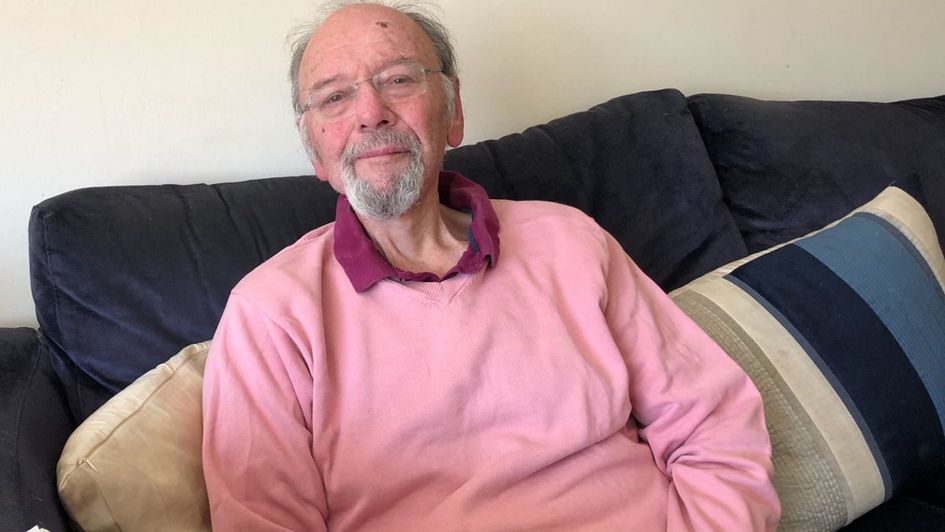
From the starting point of an annual punt on the Grand National and further inspired by my grandmother’s joy of a 'flutter on the horses', I started buying the Sporting Life and Racing Post as a teenager in the 1980s.
Initially drawn to the colours and detailed layout of the racecards, I soon became aware that at the back of the newspaper there were also tips for sporting events. I reckoned I knew a bit about football so rather glossed over those bits and was drawn instead to the golf previews written by a bloke called Jeremy Chapman.
Within weeks, Jeremy’s golf section soon became my first port of call. I loved his logic, enthusiastic arguments and writing style and, most importantly, the fact that he was tipping winners. Not just the 8/11 or 5/4 shots of football or the 11/4 favourite in a horse race but golfers at prices of 33/1, 50/1 and higher. This seemed bordering on fortune telling given that there were 156 players in the field.
I’d had a somewhat patchy interest in golf before then. I loved the Masters and the Open but didn’t tune in or take much notice of much else. Jeremy, however, helped open me up to a whole new way of absorbing the sport – following his tips either via TV or, in those days, even checking out leaderboards on Ceefax or Teletext.
Via a couple of lucky breaks, I managed to get a job at Sporting Life in 1997 when it became a digital service and, inspired by Jeremy, I landed the job as their golf tipster. The weekly puzzle of trying to solve who might win a PGA Tour or European Tour event fascinated me but there was always a feeling of validation if Jeremy had tipped the same player in the newspaper. And, of course, I had to make sure my bets were on quickly as when Jeremy spoke, the oddsmakers listened and prices would soon crash.
One thing I always admired Jeremy for was his ability to react quickly to emerging talents. I guess after a while it can be tempting to stick with the tried and tested but Jeremy taught me to always keep viewing professional golf with a fresh eye. In other words, to track who might be ahead of the handicapper.
It was a great thrill to meet Jeremy for the first time in 2006 and what better venue than at an Open Championship. I didn’t tip the winner, Tiger Woods, at Hoylake that year but managed to bag some each-way returns via Jim Furyk at 50s. Jeremy asked me on Sunday evening how I’d got on and although I rather muttered something about Furyk coming fourth, he took great delight in me having a winning week. To this day, I remember him being full of congratulations, saying it was a 'brave choice' given that Furyk had missed his last five Open cuts.
Twenty years on, I still think there is a generosity of spirit between those in the golf tipping community as we know that there can be barren runs. Jeremy set the tone for that, always encouraging me and others rather than giving any sort of hint that we were stepping on his ground or that he knew more.
I got wind this Christmas that, very sadly, the only thing that would stop Jeremy picking winners would soon come to pass. It was tough to write but I wanted to get in touch and let him know what a huge impact he’d had on me and how much I had enjoyed reading his previews and noting his tips for nearly 40 years.
He replied the very next day with one of the sweetest and most fascinating messages you could imagine. I knew very little of what he revealed and, wow, what an absolutely fascinating insight into the origins of golf betting. I’ll let Jeremy talk you through it as I know he was keen to share his amazing story.
"Thank you so much for your message, David. It took me back to how it all started...
"The Brits post-war were so hopeless at golf internationally, the game was never going to have huge betting appeal. Then Tony Jacklin came along, won the Open and US Open and in 1969 was the heroic, charismatic figure in an amazing Ryder Cup dead-heat. The tie was a 66/1 shot in those days for a match which GB&I on paper had no chance whatsoever of winning.
"Jacklin created a market for golf betting and I just happened to be around to cash in on it. Until then, the bookies barely bet on the sport. Outside the Open and Piccadilly World Match Play, nothing. Even the Masters meant little in those days and no Europeans played in it.
"You wouldn’t find a golf tipster in magazines or newspapers until I spotted a gap in the market, not only pushing it in the Life but providing several layers with my tissue as they had no golf experts. In that pre-internet era I even had to get them the runners in the States (by fax!) as the PGA Tour got the shakes at any mention of betting in those days and refused to help them.
"And I had the field to myself! I got Coral involved in sponsoring the Welsh Open and brought Hills and Chandler into on-course golf betting at the Ryder Cup. Then I had an incredible long run of winners, many at fat prices, and being wined and dined, asked for my autograph on trains by strangers. It was heaven! I was writing about my own prices in several instances – how mad was that?!
"Then the internet came along and suddenly I was no longer in a position of power. All the data and info was readily available to everyone and golf tipsters started to pop up everywhere, not least Keith Elliott with his annual, and, of course, in 1985 the Racing Post started up in opposition to the Life with Pricewise and any value dried up as nobody wanted to be seen to be sticking out.
"It was a great time to be in the thick of it. Golf writing was only a sideline as far as my job as deputy editor of the Life was concerned but somehow I turned it into a niche industry. It warms my heart that I inspired people like you who have gone on to make a decent living out of it, some more astute and knowledgeable than I ever was. They put the hours in and reap the reward. Today’s punters have much to be grateful for.
"After 55 years and 963 winners I’m golfed out, glad to be away from it and taking only a layman’s interest in what goes on. But it’s been a great life and I wouldn’t change it for anything. Thank you again for taking the time and trouble to write to me. It means a lot (and I do remember the Furyk conversation).
"Wishing you and yours a wonderful Christmas and a sackful of winners in 2026."
Isn’t that incredible. It’s clear from the tributes on social media what many ex-colleagues and friends thought of Jeremy. "He was a lovely man," said former Racing Post editor Bruce Millington. Everyone seems to agree.
Having tipped close to 1,000 golf winners – my god! – it’s tempting to try and delve into what his secrets were. But that’s rather missing the point. What we should all learn from Jeremy is the absolute glee he took in tipping them. Celebrate the successes, don’t get too down on the near-misses and revel in the shared enjoyment that golf betting can bring.
When you next bag a golf winner, raise a glass to the man who started it all. Thanks, Jeremy.