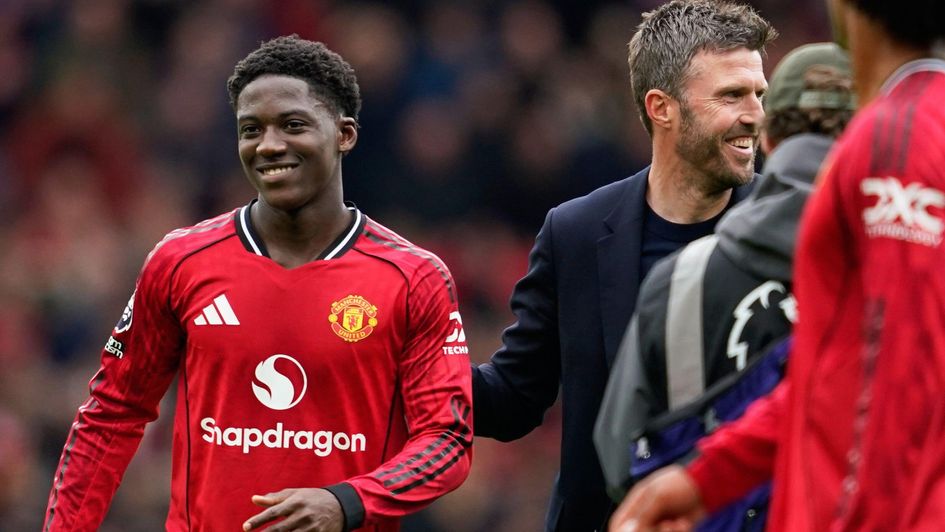
There are seasons that define clubs, and there are seasons that define careers. For Kobbie Mainoo, 2025-26 has been both – a campaign that hinged on a decision made in January, when Manchester United finally pulled the lever and sent Ruben Amorim out the door.
Because this is not just a story about a young midfielder scoring a winner against Liverpool – though he did that, and in doing so secured Champions League football with a nerveless finish at Old Trafford. It is a story about how close Manchester United came to losing him entirely.
Rewind a few months and Mainoo was, absurdly, expendable. Under Amorim, he was marginalised to the point of irrelevance – frozen out, exiled, his place in the squad questioned despite having been one of the club’s brightest lights before the Portuguese coach’s arrival. There were whispers of a move, of frustration, of a player wondering how his trajectory had stalled so violently.
And then, sliding doors.
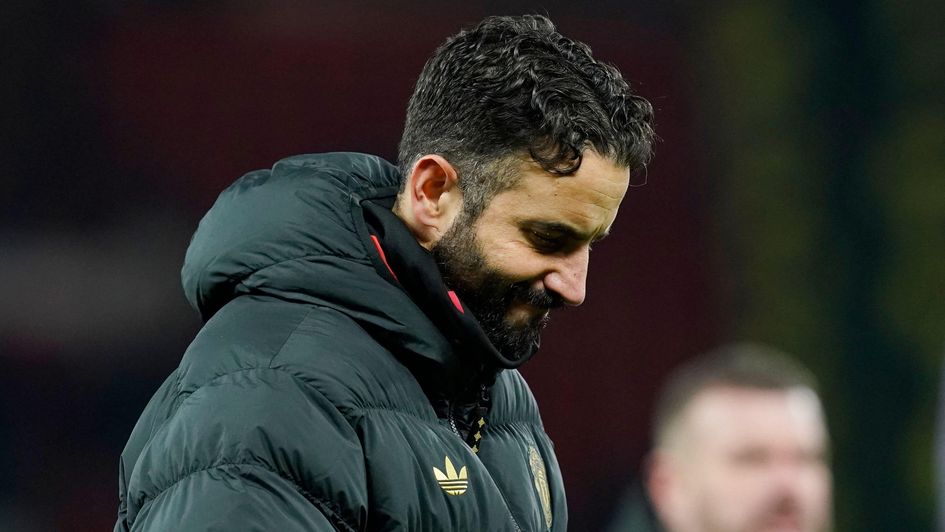
Amorim was sacked in early January after a miserable run and deep disagreements over direction and tactics. The change did not just alter United’s season; it rewired Mainoo’s future. Within weeks, he was back in the side. Within months, he was indispensable.
And last week, he signed a new long-term contract through to 2031, before punctuating it with the most symbolic goal of United’s season – the winner against Liverpool that sealed their return to Europe’s top table.
Under Michael Carrick – understated, pragmatic, and crucially willing to trust what was in front of him – Mainoo has been used in the role that always made sense: the connective tissue of United’s midfield. Not a rigid No.6, not an overburdened No.10, but the player who knits phases together. He receives under pressure, he carries, he releases and – increasingly – he arrives.
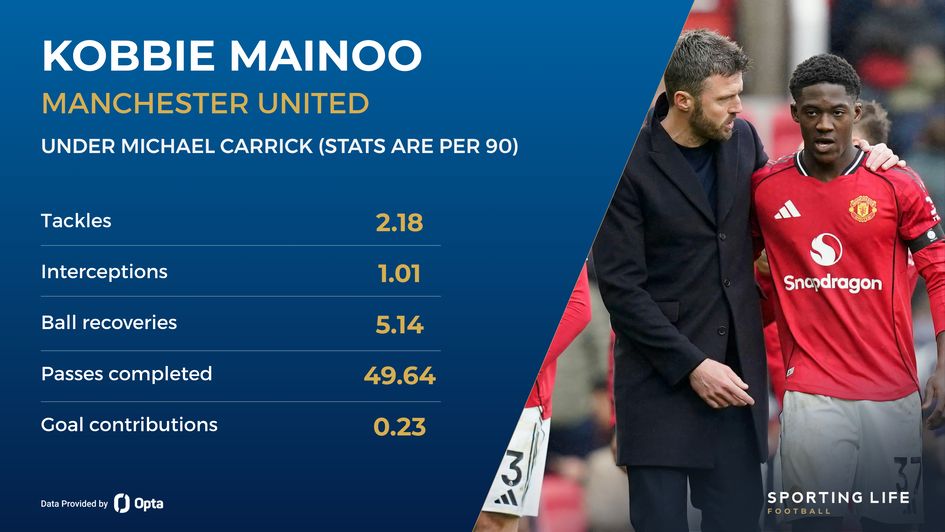
That last trait matters. His winner against Liverpool was not a fluke or a Hollywood moment parachuted into an otherwise quiet game. It was the logical endpoint of a midfielder now encouraged to influence the final third, to trust his instincts, to step beyond the sterile positional constraints that had defined his time under Amorim.
There is a quiet irony in all this. Amorim was supposed to be the moderniser, the tactical savant. Yet his handling of Mainoo now looks like one of the more baffling misreads of recent Premier League management.
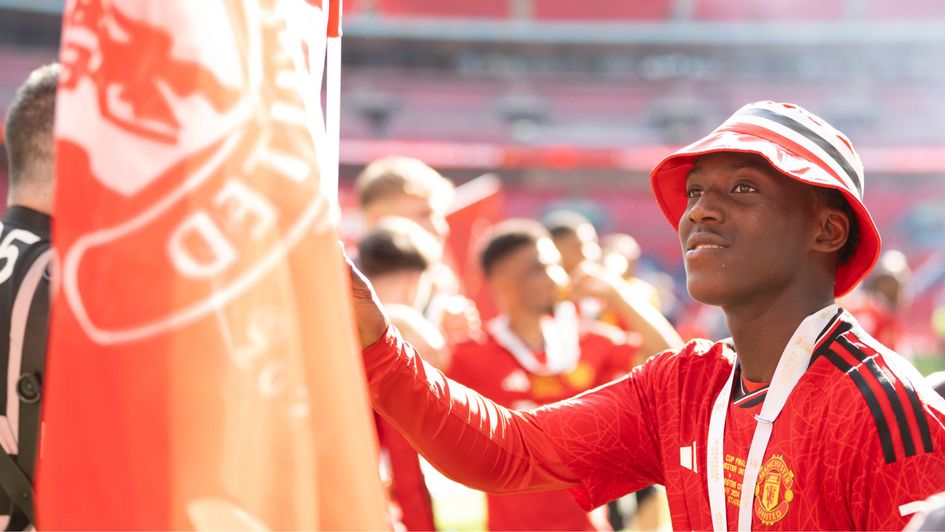
This was a player who had already shown, at 19 and 20, an ability to perform on the biggest stages – scoring in an FA Cup final, shaping games with composure beyond his years – and yet was treated as a problem to be solved rather than a solution to be built around.
It was not just a mistake. It was a category error.
Mainoo is not the kind of midfielder you “fit in” to a system. He is the kind you build the system around. Carrick, to his credit, has recognised that. The structure now is simple enough to sound almost reductive: get the ball to Mainoo, give him options and let him decide. The complexity comes in the movement around him, the angles, the willingness of others to defer.
That is why United’s summer becomes so important. Because for all of Mainoo’s brilliance, he should not have to do everything. With Casemiro edging towards the exit, the club are actively searching for a midfield partner capable of complementing him – someone with positional intelligence, defensive discipline and the ability to share the load in deeper areas.
The names that are being linked – Adam Wharton, Aurelien Tchouameni, others in that mould – all point to the same conclusion. United do not need another Mainoo. They need the player who allows Mainoo to be fully himself.
Get that right, and the midfield becomes balanced rather than burdened. Get it wrong, and there is a risk of drifting back into the same structural incoherence that made Amorim’s tenure unravel.
But zoom out, and the bigger picture is even more striking. Because Mainoo’s revival has not just powered United back into the Champions League – achieved after a dramatic climb up the table under Carrick, including wins over elite opposition – it has reshaped the trajectory of his international career too.
This summer’s World Cup now looms as a stage he is expected to grace, not one he might have watched from home. A few months ago, that was a genuine possibility. Form, visibility, confidence – all had dipped. England managers tend to trust what they see week-to-week, and what they were seeing from Mainoo under Amorim was… not much.
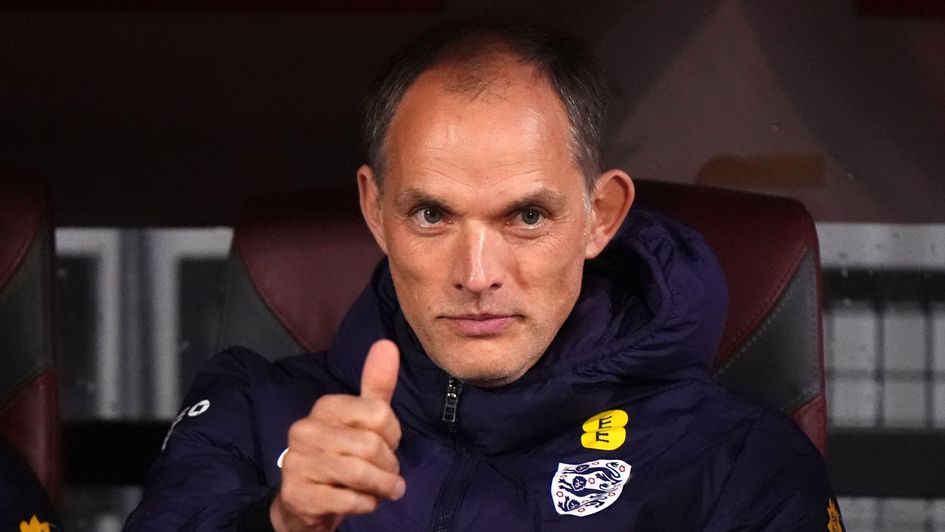
Now, Thomas Tuchel sees a midfielder dictating games at Old Trafford, deciding matches against Liverpool and carrying himself with the assurance of someone who knows exactly where he belongs – someone who must be considered for a starting berth in England’s midfield alongside some combination of Declan Rice, Jude Bellingham and Elliot Anderson.
Had Amorim stayed, it is not difficult to imagine a very different outcome. A transfer request formalised. A summer exit rationalised. Another talented academy product added to the long list of “what ifs” that haunt modern United.
Instead, the club made the call. Late, perhaps, but decisive. And in doing so, they did not just salvage a season. They salvaged a cornerstone.
There is a temptation, after moments like Sunday, to talk about destiny. About narratives that were always meant to be. But Mainoo’s season is not destiny. It is contingency. It is the reminder that careers are fragile, that context matters, that one managerial decision can tilt everything.
The goal against Liverpool will live long in the memory. The contract will shape the next five years. But the real story of Kobbie Mainoo’s season is the one that almost wasn’t – and the fine margins that ensured it became something else entirely.
More from Sporting Life
- Fixtures, results and live scores
- Home of This Week's Acca
- Football and other sports tips
- Download the Sporting Life app
- Podcasts and video content
Safer gambling
We are committed in our support of safer gambling. Recommended bets are advised to over-18s and we strongly encourage readers to wager only what they can afford to lose.
If you are concerned about your gambling, please call the National Gambling Helpline / GamCare on 0808 8020 133.
Further support and information can be found at begambleaware.org and gamblingtherapy.org.