


< Return to Understanding Decimal OddsGo to Placing a Lay Bet on the Betfair Exchange >

New Customer Offer
Get £40 In Free Horse Racing Bets When You Bet £10
New customers only. First single & E/W bet only. Odds of 1/1 or greater. 4 X £10 bet tokens. Free bet stakes not included in returns. Free bets for Horse Racing only. Free bets are non withdrawable. Free bets expire after 30 days. Eligibility restrictions and further T&Cs apply.
New Customer Offer
Get £30 In Free Bets When You Bet £10
Place a min £10 bet on Sportsbook on odds of min EVS (2.0), get 3x £10 in Free Bet Builders, Accumulators or multiples to use on any sport. Rewards valid for 30 days. Only deposits via Pay by Bank, Apple Pay or Debit Card will qualify. T&Cs apply. Please Gamble Responsibly.
New Customer Offer
Get £30 In Free Bets When You Bet £5
New Customer offer - Use promo code YSKAST. Place a min £5 bet on the sportsbook at odds of min EVS (2.0) and get £30 in free bets. Free bet rewards valid for 30 days. Only deposits via Pay by Bank, Debit Cards & Apple Pay will qualify for this offer. T&Cs apply. Please Gamble ResponsiblyPlacing a Back Bet on the Betfair Exchange
Back betting is the most basic type of bet there is. You wager money on a certain thing happening, and if it does happen, you win. Placing a back bet on the Betfair Exchange is the same as placing a back bet with a normal bookmaker except on the Betfair Exchange you will usually get better odds.
something that’s just as easy to do as it is with any other online bookmaker – and is usually a better option, as the Betfair Exchange gives you better odds in the majority of cases.
Back Betting is Easy on the Betfair Exchange
The Betfair Exchange offers you a new way of betting compared to a traditional bookmaker and this can make people cautious of using it. In reality, while the underlying principle of the exchange is different, the experience for a customer looking to back a selection is very similar.
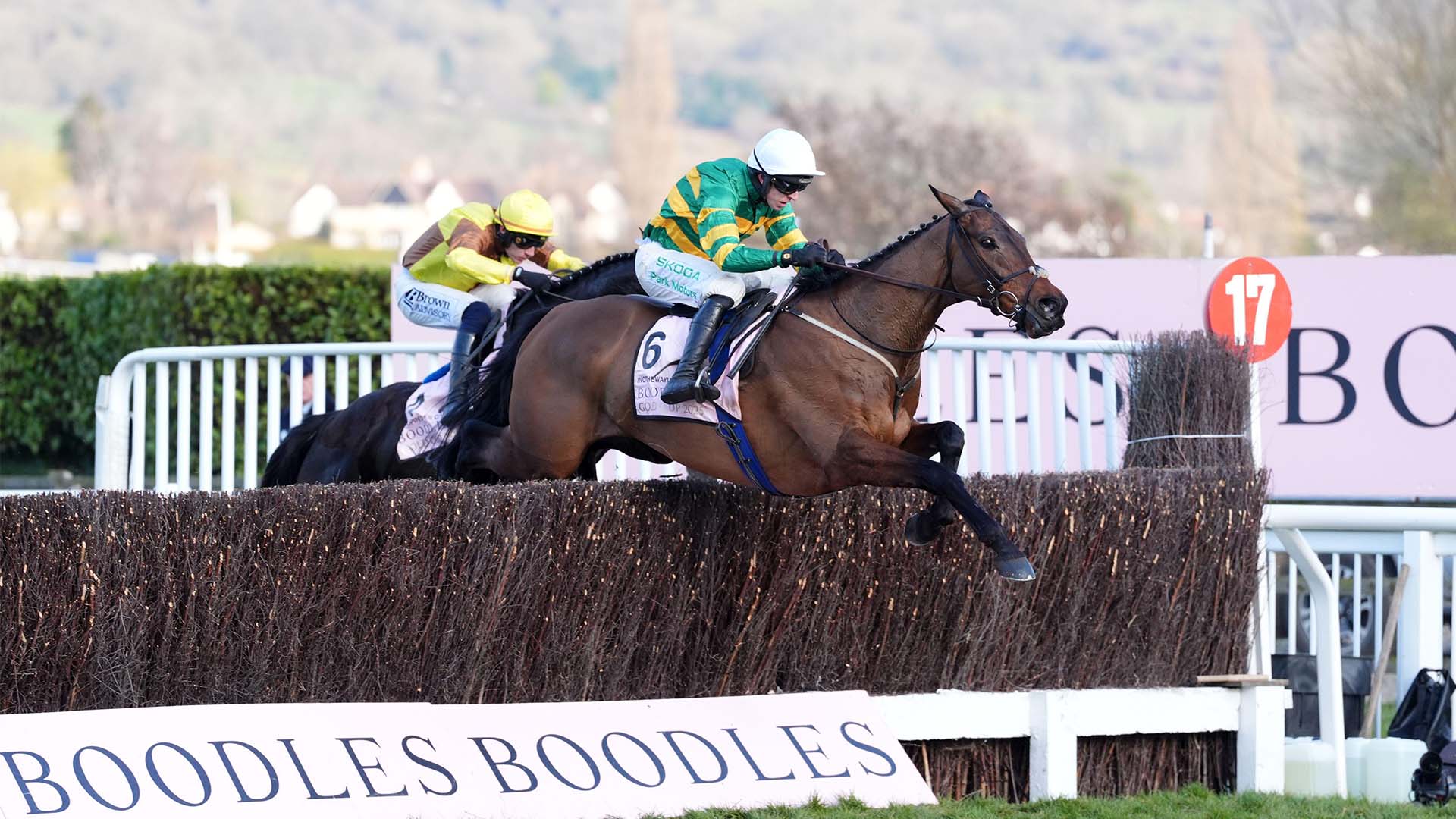
Let's say you're watching the Cheltenham Festival and want to back a horse to win the Cheltenham Gold Cup. You simply hit the 'Horse Racing' button from the Sports menu and find the correct racecourse and time. Once you select this you will enter the market, which may look overwhelming at first for two reasons:
1) Odds are represented in decimals, rather than the fractions you’re used to seeing with regular bookmakers.
However, though you might not be used to seeing them, decimal odds are easy to understand – as you can see in our Decimal Odds Guide. In fact, once you see how they work, they’re often far easier to use than fractional odds – particularly when dealing with shorter prices. This is why most sportsbooks will already show decimal odds on some markets, and they will usually let you switch from one system to the other altogether.
2) There are different columns of odds next to each possible selection – one is blue, one is pink. If you’re using the Exchange on desktop, there are also white columns on either side of those – if you don’t want to see the columns, you can turn off market depth in ‘Settings’, in the top-right of your screen (find it in the A-Z menu on mobile).
These columns are unique to exchange sites, as they show two markets that exist side-by-side: the ‘back’ market, and the ‘lay’ market. As mentioned, a back bet is betting on something to happen, whilst a lay bet is betting on it not to happen. This is more or less the core principle behind the Exchange.
We cover Placing a Lay Bet in a later section, for now the important thing to know is that there is no need for you to ever place a lay bet, if you don't want to. In fact, you can even turn off the lay columns if you like – again, hit ‘Settings’ and un-check the box for a back-only market, just like using a sportsbook.
How do I Place a Back Bet?
Going back to our example, placing a back bet is very straightforward. You want to back a horse in the Cheltenham Gold Cup, so you find the horse you want, and you simply click the price next to it in the blue column. The blue indicates that it’s the current best price available to back your selection, on the Exchange.
The pink column is for lay betting, but for the purposes of placing a back bet, you can ignore the pink column completely, and focus on the blue.
Let’s say the horse has odds of 9.0 (that’s 8/1, in fractions) in the blue column. You click on the 9, and the bet is added to your bet slip. You then enter your stake (the Exchange has a minimum stake of £2) – let’s say £10 – press 'Place Bets', confirm, and the bet is on. It’s as simple as that.
Backing each-way on the Exchange is done in exactly the same way, though you will notice the minimum bet is in effect £4, as you are placing £2 on the ‘win’ part and £2 on the ‘place’ part of the bet. This means you could not place a £1 each-way bet on the Exchange. Unlike with other bookmakers, there is a separate ‘each-way’ market on the Exchange – though for the best price, you can bet £2 on your horse in the ‘Win Only’ market, and separately, £2 on the ‘Place’ market – which again, is done in the exact same way.
Back to our example: if the horse wins, you’ll get back £90 – your £10 stake returned and £80 profit – minus a small percentage for the commission. Since commission is paid to the Exchange for every bet settled, Betfair can give a much fairer price to the customer, because unlike with other bookmakers, Betfair doesn’t have to add a profit margin on its prices to make money. Hence why the Betfair Exchange generally maintains best prices on over 90% of UK and Irish horse racing – and why you’re still banking more profit than you would be doing elsewhere. Read our Understanding Betfair Exchange Commission guide to see how that impacts your returns in more detail.
So, if you’re a casual punter, and you just want to place simple bets like this to fairly low stakes, that’s pretty much all you need to know. It really is just like using any other online bookie. The main difference is that the Exchange doesn’t let you place your own multiples – but the flip-side is that single bets are, more often than not, available at a better price.
Placing Bigger Bets, at a Better Price
You’ll notice that underneath any price on the Exchange there’s an amount of money written in smaller text. This shows how much money you’re able to place on that bet, at the odds given. For example, let’s say your horse has a value of £30 appearing underneath its 8.5 odds in the blue column. That means you can place anything up to £30 at those odds on your horse to win, from the minimum of £2.
Let’s say you’re feeling confident though, and you want to put £50 on that horse. It’s likely that you’ll be able to place all £50, but you might have to accept a shorter price on the remaining £20 of your bet, or wait for your outstanding amount to be matched. On the desktop version of the Exchange, you’ll see more white columns (remember you can turn off market depth in ‘settings’) either side of the blue and pink ones, that indicate how much money can be bet at less favourable odds.
You now have a choice. You can:
1. Accept the best odds as given in the blue column, place the first £30 at 8.0, and place the extra £20 on your horse at the next best odds given
2. Place your first £20 at odds of 8.0 and wait to see if your remaining £20 is ‘matched’ at that same price of 8.0
3. Choose the odds you want, and see if anyone will match them. This is called Setting Your Own Odds.
4. Accept the Betfair starting price, or BSP, for your horse. If you can’t already see the option for BSP, you’ll need to turn it on in ‘Settings’. Just like with any other bookie, you won’t know what the Betfair SP is until the race goes off. But if you think your horse’s price is likely to drift before the race, and you don’t want to miss getting your bet on, this could be the way to go
The Exchange gives customers the ability to offer their own prices on something to happen, or not to happen. So when a price is ‘matched’, it means someone else using the Exchange is willing to take your money at the odds you want. So it will be that person, or people, who will pay out on your bet if you win, or who will collect your stake if you lose. If you choose this option, you don’t have to do anything else – the Exchange will accept the rest of your bet automatically if your stake is matched, and refund your stake if it is not.
Remember – when it comes to placing a back bet, there’s no need to treat the Exchange in any other way than you would any other online betting site.
Want to grab some free bets from our bookmaker partners? Head to our Free Bets Hub for the latest offers and boosts from Sky Bet, Paddy Power and Betfair!

Sign Up for Free!
The No.1 place for Sports Betting Insight, Data & Content.
- Watch Race Replays
- Follow & track your favourite horses, jockeys & trainers
- Get premium insight from our experts
Links
Browse our catalogue of sports free bets and betting offers.